

Pet hair, paw prints, and mystery smells can make a fabric sofa feel like a full-time chore. For busy house owners and parents, safe upholstery cleaning matters because the couch is usually the most used spot in the home.
The safest way to clean a fabric couch with pets is usually simple: remove dry debris first, deodorize next, and use as little moisture as possible unless the cleaning code clearly allows more.
This guide covers the cleaning code, the right tools, smart stain care, and the point where home couch cleaning should give way to a professional.
Quick Cleaning Checklist
- Check the upholstery tag for cleaning codes.
- Vacuum the fabric couch thoroughly.
- Perform a hidden spot test for colorfastness.
- Use the approved cleaning solution based on the tag.
- Blot stains gently and dry the area completely.
Key Takeaways
- Check the upholstery tag first. W means water-based cleaners are usually fine, S means dry-cleaning solvent only, WS allows either, and X means vacuuming or professional care only.
- Vacuum before using any spray, foam, or machine. Dry pet hair turns into wet lint fast, and that makes stains harder to treat.
- Use distilled water, a white cloth, and a hidden spot test before any stain treatment to reduce the risk of dye transfer and mineral rings.
- Sprinkle baking soda on dry fabric for 15 to 30 minutes to freshen surface odors, then vacuum slowly with an upholstery tool.
- Steam or hot water extraction should only be used when the tag and brand care guide allow it. Some fabrics, including certain Sunbrella upholstery, should not be steamed.
- Call a professional for urine that reached the cushion core, missing care tags, antique fabrics, or odors that keep coming back after home cleaning.
Considerations Before Cleaning a Fabric Couch

Before any homeowner starts spraying a fabric sofa, the safest move is to pause and check the tag, vacuum the loose mess, and test a hidden seam. That small routine prevents most DIY damage.
In the latest ANSI upholstery cleaning standard from the IICRC, cleaning codes are treated as the starting point for choosing a safe method. That is why the label matters more than a viral cleaning hack.
Identify the upholstery cleaning code

Most sofas hide the care tag under a seat cushion, on the lower frame, or near a zipper. Bassett Furniture says the cleaning code on its fabric pieces is typically underneath the center seat cushion, which is a helpful place to check first.
Homeowners should read the code before they choose between distilled water, upholstery shampoo, a dry-cleaning solvent, or no liquid at all.
| Code | What it means | Safest home method | What to avoid |
|---|---|---|---|
| W | Water-based cleaners are allowed | Blot with distilled water, mild soap, or approved water-based upholstery cleaning products | Heavy soaking and stiff brushing |
| S | Solvent only | Use a dry-cleaning solvent made for upholstery, or call a pro | Water, steam, and vinegar mixes |
| WS | Water-based or solvent-based cleaners may be used | Spot test first, then use the gentlest option that works | Assuming all WS fabrics can handle deep steam |
| X | Vacuum only or professional care only | Vacuum, brush lightly, and book help for stains | Any DIY wet cleaning |
If the tag is missing, it is safer to treat the piece like delicate upholstered furniture and get professional advice instead of guessing.
Test for colorfastness

A colorfastness test takes less than two minutes, and it can save the full cushion. Dampen a white cloth with distilled water or the exact cleaner planned for use, press it on a hidden seam for 10 to 15 seconds, then check for dye transfer, texture change, or a dark ring.
Several upholstery care sheets recommend distilled water for light fabric cleaning because it is less likely to leave mineral spotting behind than tap water. That makes it a safer first choice for spot testing.
- Use a white cloth, not a colored towel.
- Test the cleaner at the same strength planned for the stain.
- Let the test spot dry fully before calling it safe.
- Stop immediately if color shows on the cloth.
If the test fails, the couch may need dry-cleaning solvent only, or a professional sofa cleaning service.

Understand fabric types and their cleaning compatibility

The cleaning code tells a homeowner what chemistry is allowed, but the fiber still changes how careful the process needs to be. Microfiber and polyester usually forgive light spot cleaning better than linen, rayon blends, wool, or velvet.
Sunbrella is a good example of why the brand guide should override a broad rule. In its current upholstery care instructions, Sunbrella allows mild soap and water but says not to use a steamer.
- Microfiber and polyester: Usually handle light water-based spot care well on W or WS codes.
- Cotton and linen blends: Clean up nicely, but they show water rings if they dry slowly.
- Velvet, wool, silk, rayon, suede: Better left to a specialist unless the maker gives clear home-care steps.
- Leather: Leather furniture cleaning uses leather-safe products, not baking soda pastes or fabric sprays.
Brands such as Pottery Barn, Bassett Furniture, and IKEA may use different covers and weaves across collections, so the tag on that exact couch matters more than the store name.
Tools and Supplies You’ll Need

A good pet-safe couch cleaning kit does not need to be huge. Most families do best with one strong vacuum, one dry deodorizer, one mild stain option, and one tool that lifts fur without roughing up the fabric sofa. The goal is to match each tool to one job, not to throw every cleaner in the cabinet at the sofa cushions.
Step-by-Step Guide to Safely Clean a Fabric Couch

The safest couch cleaning routine starts dry and stays controlled. Most mistakes happen when a homeowner grabs a spray bottle first and forgets that the couch is already full of fur, dust, and loose grit. A cleaner order is vacuum, deodorize, spot treat, blend the area gently, and dry fast.
- Vacuum the full sofa, including under cushions and along seams.
- Use baking soda on dry fabric if odor is the main issue.
- Pre-treat stains with the mildest cleaner allowed by the tag.
- Brush lightly only if debris is trapped in the weave.
- Blot away residue and dry the area quickly.
Vacuum thoroughly to remove dust and pet hair
Start with the vacuum before any stain treatment. Run the upholstery tool in overlapping passes, then switch to the crevice tool for seams, folds, and the space under sofa cushions. For heavy shedding, two passes in opposite directions usually pull more hair free than one slow pass.
Sprinkle baking soda to deodorize the fabric
Once the couch is dry and hair-free, add a light dusting of baking soda over the main seating area. Let it sit for 15 to 30 minutes, then vacuum it out slowly so the powder and loosened debris come up together. If the odor comes from a recent pet accident that soaked into the cushion, baking soda freshens the surface but may not reach the padding below.
Pre-treat stains with a mild cleaning solution
Fresh stains should be blotted first with a dry cloth. Once excess moisture is removed, test a small amount of mild cleaner on a hidden spot, then work on the stain. For W or WS fabrics, a few drops of clear Dawn dish soap in distilled water often work for food, mud, or body oil transfer. Blot the stain from the outside in, rather than rubbing the center and spreading it wider.
- For light stains, use a white microfiber cloth and blot.
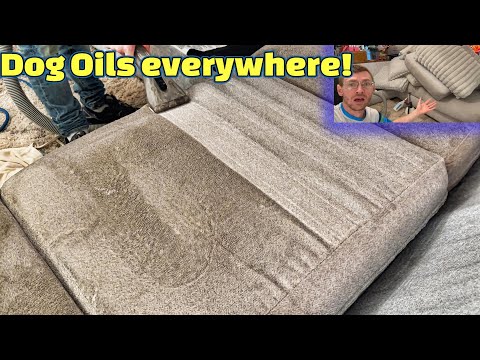
- For stubborn pet spots on water-safe fabric, a Bissell Little Green stain cleaner can help because it sprays, scrubs, and extracts in one pass.
- BISSELL says its Little Green Portable Carpet Cleaner comes with a 3-inch Tough Stain Tool and a HydroRinse tool, which makes it a practical choice for spot cleanup instead of full-couch soaking.
One common mistake noted in cleaning forums is skipping the pre-vacuum. Pet hair can clog a portable extractor fast, so dry debris should always be removed first.
Use a gentle brush to loosen dirt
A gentle brush helps after the stain is lightly treated. Brush in short strokes, staying with the fabric nap, and avoid excessive pressure on seams, piping, and worn armrests.
Wipe off excess solution with a damp cloth
After spot treatment, blot the area with a cloth lightly dampened with clean distilled water. This lifts leftover soap or vinegar residue so the spot dries softer and cleaner.
- Blot; do not scrub.
- Use as little moisture as possible.
- Set a fan nearby so the cushion dries fast.
If the spot feels cool or damp hours later, more airflow is needed.
When to Consider Steam Cleaning

Steam cleaning can be useful but is not the automatic next step for every dirty couch. The tag, the fabric guide, and the depth of the mess decide whether a steam method is safe or risky. It works best on water-safe fabric with widespread soil when more than a surface cleanup is needed.
Benefits of steam cleaning for deep cleaning
For compatible upholstery, the hot water extraction process flushes out loosened soil and detergent residue more thoroughly than hand blotting. It is useful on broad areas of traffic soil across seat panels and armrests.
| Method | Best for | Main strength | Main risk |
|---|---|---|---|
| Hand spot cleaning | One spill or one paw mark | Low moisture and good control | Can leave rings if done unevenly |
| Portable extraction | Pet spots and medium soil on W or WS fabric | Sprays and removes residue in one step | Can clog with pet hair if not pre-vacuumed |
| Professional hot water extraction | Large dirty areas and recurring odor on approved fabric | Deeper rinse and stronger extraction | Incorrect fabric choice can cause shrinkage, browning, or bleed |
Steam is not a shortcut for skipped preparation. The couch should always be vacuumed first.
Fabrics suitable for steam cleaning
Microfiber, polyester blends, nylon, and many sturdy woven synthetics are often safe for steam or extraction cleaning, especially with W or WS codes. Even then, the maker’s care guide should take priority. Sunbrella instructs not to use a steamer, and some care guides caution against extraction even on water-safe covers.
- Usually safe: microfiber, polyester, nylon, and sturdy performance fabrics with W or WS codes
- Use extra care: cotton, linen blends, and textured weaves that may show rings
- Avoid home steam cleaning: silk, wool, velvet, suede, leather, S code, and X code upholstery
Maintaining Your Fabric Couch With Pets

The easiest couch cleaning job is the one that avoids a rescue mission. Regular habits keep the fabric couch in good shape and reduce the need for deep cleaning.
Pet homes need a routine that works on busy days.
Regular vacuuming and brushing
A quick vacuum twice a week works better than one long weekend session. It keeps pet hair, crumbs, and dander from settling into the fabric. The IICRC consumer tip sheet notes that frequent dry vacuuming prevents embedded soil buildup in sensitive fabrics.
Use slipcovers or washable throws
A washable throw on the favorite pet spot protects the main upholstery from body oils, drool, and muddy paws. Removable covers make it easier to manage messes since the cleanup shifts to the laundry.
Train pets to avoid the couch
A cleaner couch is one that pets use less often. Reward-based training works when a pet has a comfortable alternative, like a pet bed or mat placed near the seating area.
- Place the pet bed near the couch so the pet still feels included.
- Reward calm behavior on the bed with treats or praise.
- Use a clear cue such as place or bed.
- Maintain consistent rules for quicker progress.
The AKC’s training guidance on the place behavior follows this idea of sending the pet to a set spot until it settles.
Common Upholstery Cleaning Mistakes to Avoid

Most ruined couches are damaged by overconfidence, too much cleaner, or using a product that does not match the cleaning code.
Some frequent mistakes in pet homes include improper chemical use and over-saturation.
Using harsh chemicals
Bleach, ammonia-heavy products, and strong degreasers strip color, stiffen fibers, and leave residues that attract more dirt. The CDC advises that bleach should never be mixed with ammonia, and the ASPCA recommends keeping pets away from areas with strong cleaning fumes. OxiClean White Revive is listed as a laundry-only whitener and stain remover, not for general upholstery cleaning.
Over-saturating the fabric
Excess liquid can soak past the fabric into the foam, fiberfill, and wood structure. A couch may seem dry on the surface long before the interior is dry. The EPA states that wet furnishings should dry within 24 to 48 hours to help prevent mold growth. If a cushion remains damp the next day, the issue may be more than a typical cleaning problem.
Skipping the spot test
Skipping a test spot can turn a small stain into a larger repair. A hidden seam can reveal dye bleed, shrinkage, fabric fuzzing, or a cleaning ring before the main area is treated. This is especially true for linen, cotton, or rayon blends, which can discolor even after careful cleaning.
When to Call a Professional Cleaner

Some cleaning challenges are best left to professionals. A professional cleaner has stronger extraction, specialized cleaning products, and extensive experience with delicate fabrics that exceed most homeowners’ methods.
This is especially true when stains reach the cushion core, the fabric is antique, or odors return on humid days.
Persistent stains or odors
If a stain appears to fade while the odor lingers, the contamination likely lies deeper than the surface. The IICRC consumer upholstery guide describes urine odors as a below-the-surface issue that may reach fiberfill or cushion cores. A light cleaning may not treat deep contamination, sometimes requiring extra odor treatment, deeper extraction, or replacement of cushion inserts. HomeAdvisor’s 2025 cost guide estimates professional cleaning of an upholstered sofa in the $100 to $300 range, which may be more cost-effective than replacing a damaged couch.
Delicate or antique fabrics
Silk, velvet, wool, tapestry-style upholstery, faded vintage fabrics, and pieces with loose trim should be handled by a qualified professional. Such fabrics can bleed, shrink, distort, or brown even when the stain is minor.
- Ask whether the technician handles delicate upholstery, not just carpet cleaning.
- Confirm that they inspect for cleaning codes, fiber type, and colorfastness before treatment.
- Inquire about their method to control moisture and drying time.
- Ensure they follow recognized standards such as IICRC upholstery procedures.
Conclusion

Safe upholstery cleaning starts with the tag, the vacuum, and a light hand. For most pet homes, regular vacuuming, a quick lint roller pass, baking soda on dry fabric, and careful spot treatment keep the couch in good shape. If the fabric tag forbids liquid, the cushion stays damp, or odors persist, professional help is the safer next step. Effective cleaning tips and cleaning hacks are integrated throughout these steps.
FAQs
1. What is the safest daily routine to keep a fabric couch clean when you have pets?
Vacuum the fabric couch every few days to lift pet hair and crumbs. Use a lint roller and wipe spills quickly, and spray a fabric protectant on high-use spots.
2. How do I remove fresh pet stains and pet odor from upholstery?
Blot the spot with a clean cloth; do not rub. Mix mild soap with water or use an enzyme cleaner made for pet messes, and test it on a hidden area first. Rinse with a damp cloth and dry the area quickly.
3. Can I steam clean a fabric couch if I have pets?
Yes, but only if the couch tag allows wet cleaning. Use a low-moisture setting and dry quickly to avoid mold and lingering pet odor.
4. How do I stop new messes and keep the couch smelling fresh?
Put washable covers on the couch and wash them often. Groom your pet and keep a small spot cleaning kit handy for quick fixes.
Before-and-After Case Study
A homeowner shared a story where following these steps improved the overall look of a fabric couch. The fabric regained its original color and pet odors diminished noticeably, showing that careful cleaning can restore a well-loved piece of furniture.


