Has a mattress ever looked clean, but still smelled a little sour at bedtime?
That combo of yellow rings and lingering odors is usually sweat, body oils, and humidity teaming up. A good mattress protector helps a lot, but when stains already show, a simple plan works best.
For day-to-day upkeep, many homeowners start with a quick mattress vacuum routine and then move to gentle spot treatments.
This guide walks through easy, parent-friendly options, including hydrogen peroxide, baking soda, and white vinegar, plus drying and prevention tips that protect mattress hygiene and mattress lifespan during your deep cleaning.
Key Takeaways
- Start dry: strip bedding, vacuum seams, then spot-test any cleaning solution on a hidden area of the mattress fabric before tackling sweat stains.
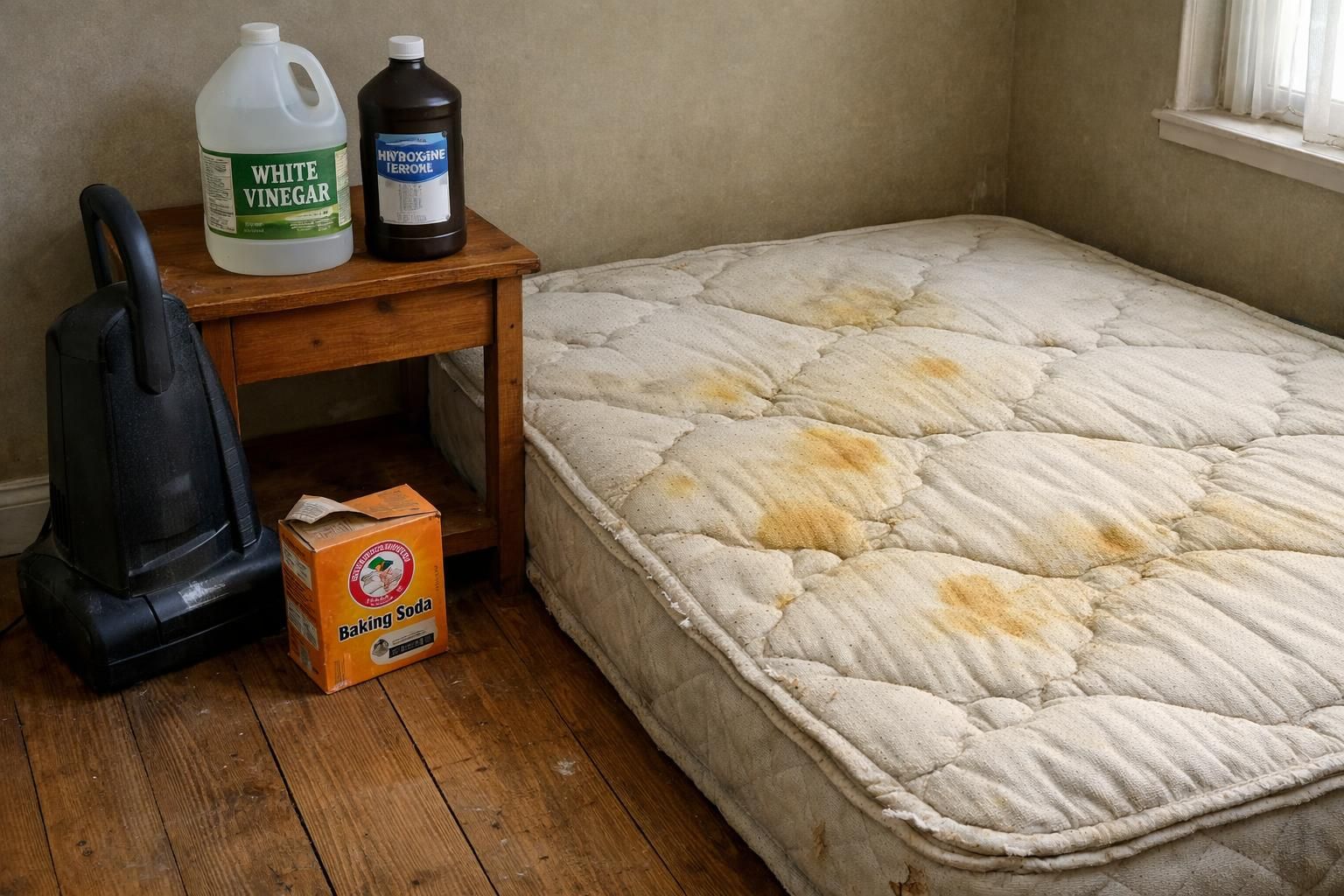
- For yellow stains: mix 8 oz cool water + 8 oz hydrogen peroxide + 2 to 3 drops clear liquid dish soap in a spray bottle, dampen the area lightly, then cover with baking soda and wait at least 15 minutes before vacuuming.
- For smells: use a thick layer of baking soda (or activated charcoal nearby), then let the mattress air-dry for several hours or overnight before making the bed.
- For deodorizing and protein stains: use a 1:1 white vinegar and water mist (separately from peroxide), or choose an enzyme upholstery cleaner, then dry thoroughly with airflow.
- For prevention: wash sheets weekly, use a waterproof mattress cover or mattress protector, and consider replacement if the bed is old, deeply stained, or still smells after repeat cleaning (Sleep Foundation notes many mattresses are replaced around the 6 to 8 year mark under normal use).
- If DIY cleaning fails, a professional mattress cleaning service can extract moisture safely.
Why Do Sweat Stains And Odors Occur on Mattresses?
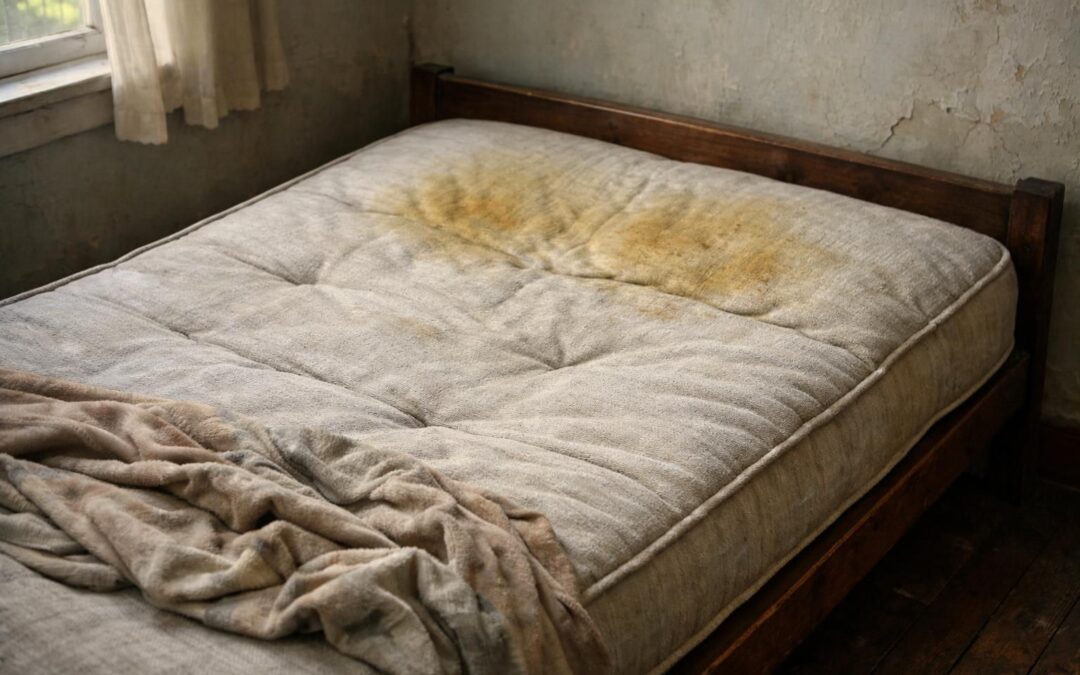
Sweat does not just sit on the surface. It wicks through sheets, carries salts, and drags body oils into the mattress fabric and upper comfort layers, especially on foam mattresses.
Over time, moisture and oils oxidize (natural oxidation), which can leave yellow stains. Odors show up when bacteria break down that oily residue, or when dampness lingers long enough to create a musty, mildew-like smell.
Dry steps help first. Vacuuming mattress seams and sprinkling baking soda can lift loose debris and freshen the surface, while targeted spot treatments like hydrogen peroxide or white vinegar options can help with stubborn discoloration when used carefully.
Causes of Yellow Stains
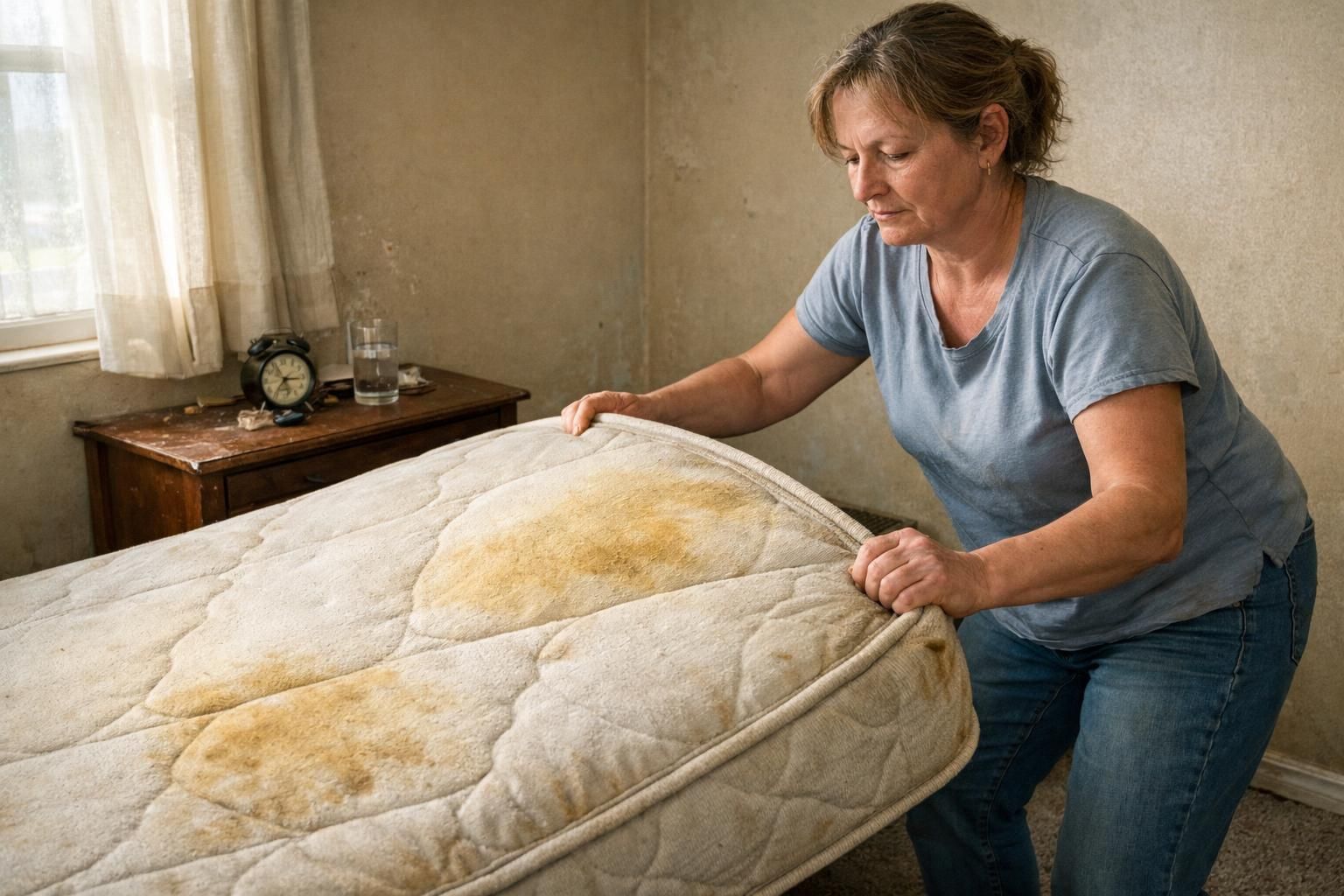
Yellow stains usually come from a mix of sweat salts, body oils, and time. The same oxidation that discolors underarm shirts can discolor a mattress cover, especially in warm rooms or for hot sleepers.
Some mattresses yellow faster because of their cover material, quilting, or how tightly the top fabric holds onto oils. Pillow-top styles can also trap moisture longer than a flatter sleep surface.
For homeowners, the most helpful mindset is this: discoloration is a signal, not a moral failing. It signals that moisture reached the mattress fabric, and the cleaning goal is to lift what is removable, then prevent new buildup with stain prevention tools like mattress protectors.
- Fresh, pale yellow marks: often respond to peroxide plus baking soda spot treatment.
- Old, darker yellow stains: often need repeat cycles, enzyme cleaning products, or professional extraction.
- Yellow plus a sour odor: usually needs odor control plus faster drying, not just stain removal.
Older beds can show more persistent yellow stains because the mattress has had more years to absorb sweat and body oils. That buildup can also affect mattress hygiene and mattress lifespan, especially without a mattress protector or a consistent cleaning schedule.
How Sweat Leads to Odors
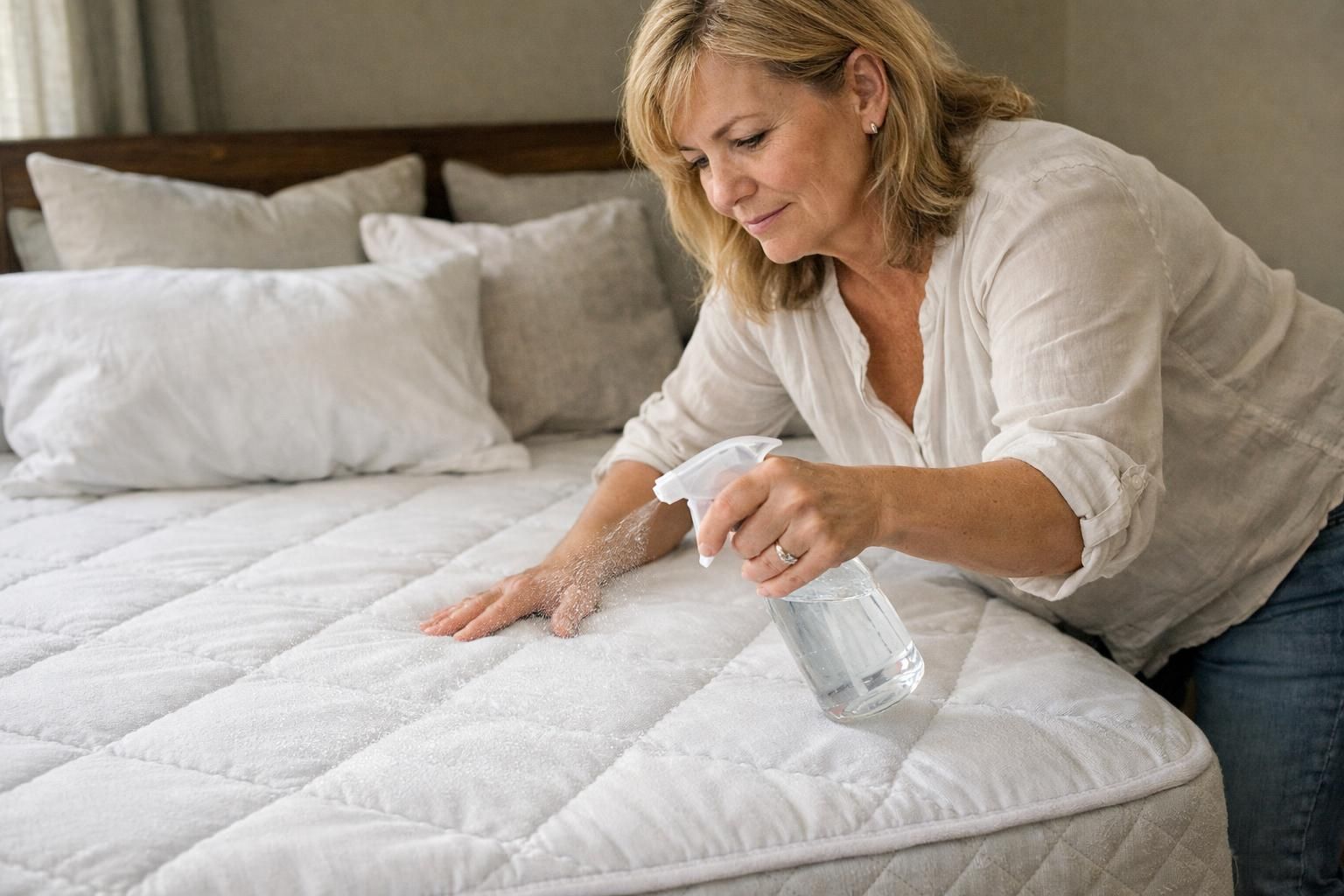
Sweat itself is not always the main smell. The odor usually happens after moisture soaks in, mixes with body oils, and bacteria digest it.
Timing matters. A fresh sweat patch that dries quickly might never smell, but a damp area that stays wet inside foam can sour over time.
To cut smells fast, a homeowner can vacuum first, then use one odor approach at a time: baking soda for absorption, vinegar mist for deodorizing, or an enzyme cleaner for organic residue. Fast airflow matters as much as the cleaning solution.
Preparing Your Mattress for Cleaning
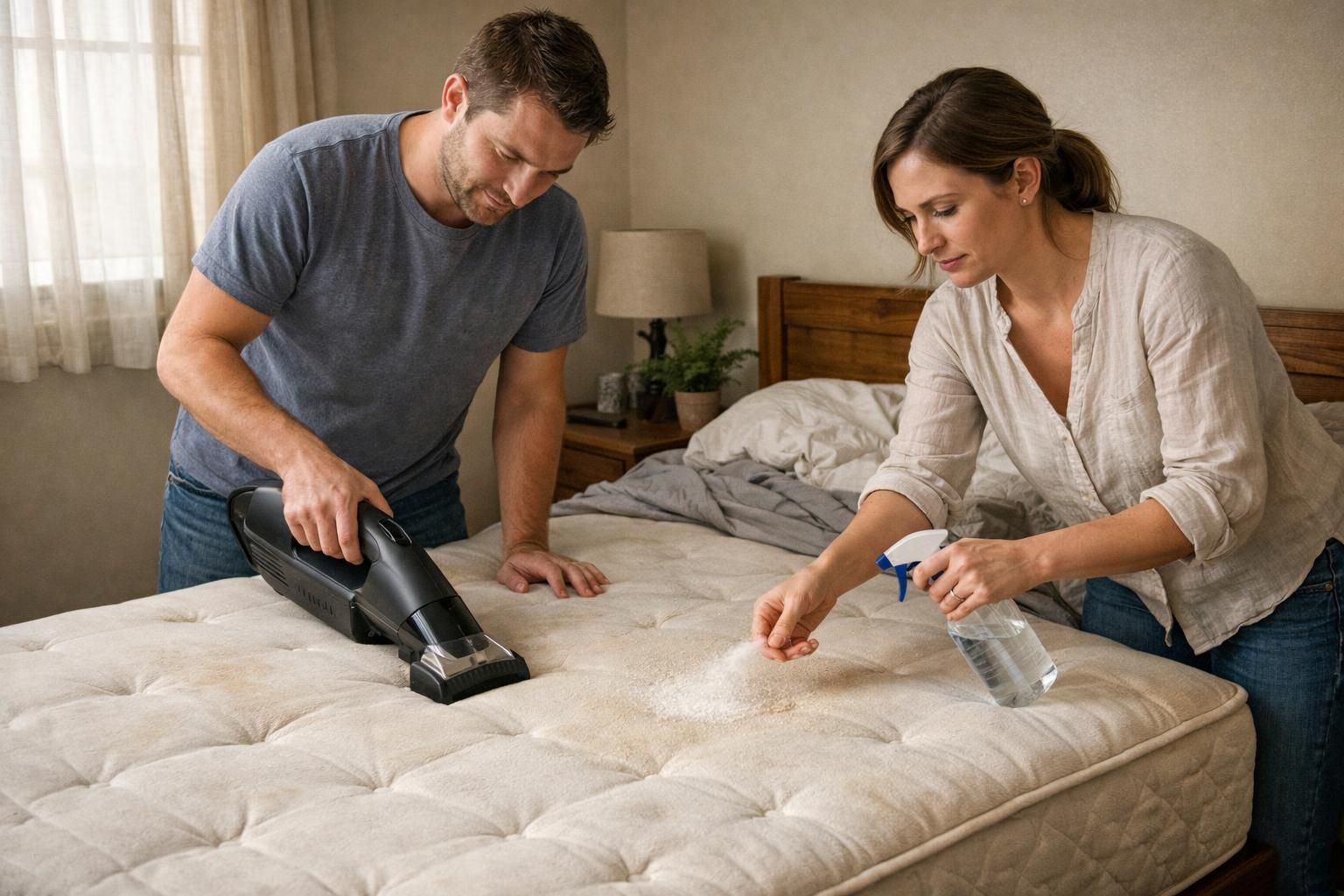
Good mattress cleaning starts with setup. Homeowners should strip the bed, check the care tag (some covers unzip and are washable), and gather towels, a spray bottle, and a fan or dehumidifier.
Spot-testing is non-negotiable. Even gentle cleaning solutions can change color on certain mattress fabric, and hydrogen peroxide can lighten patterned covers.
Removing Bedding and Protectors
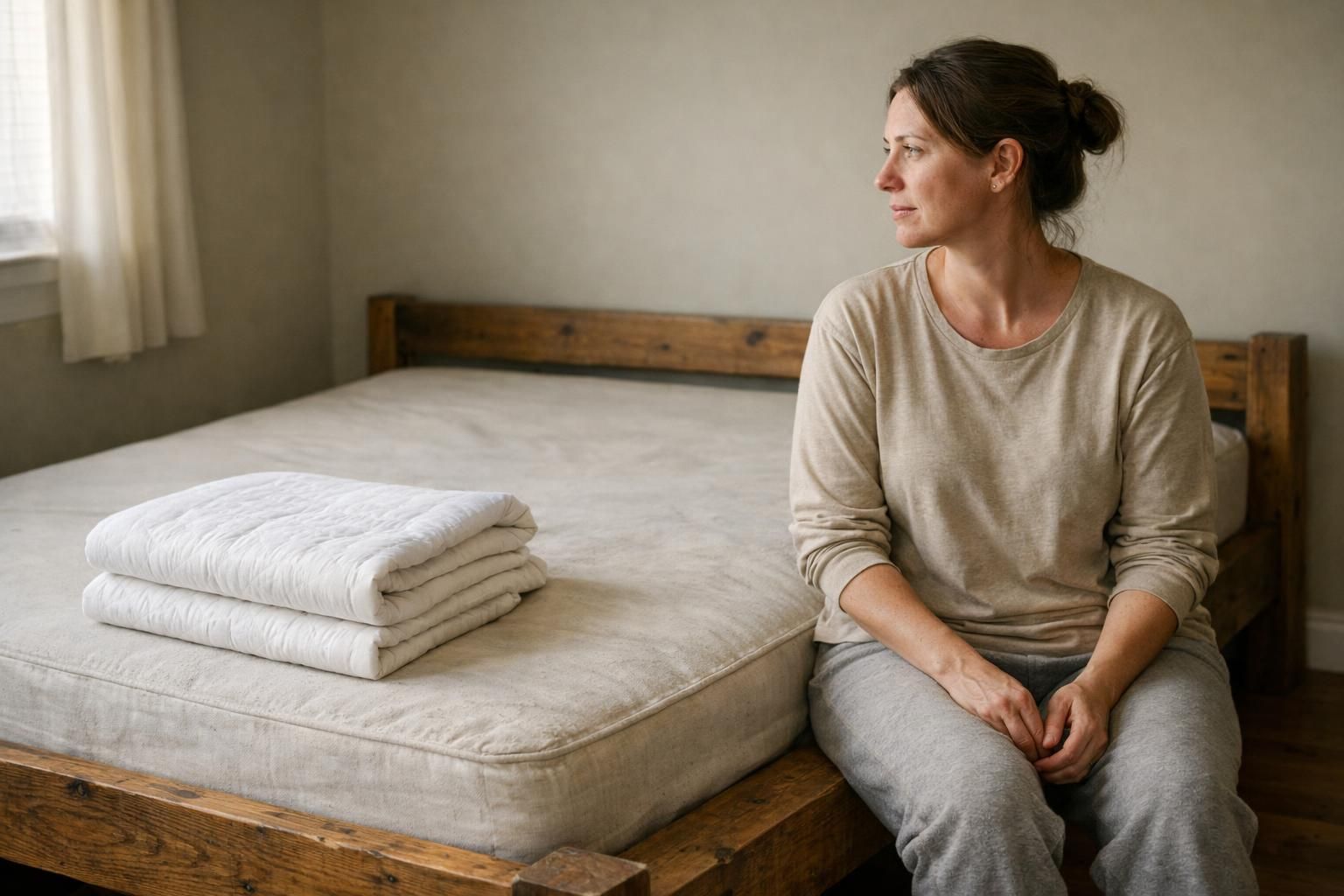
All bedding should come off first, including pillows and the mattress protector. Wash what is washable right away so oils do not set in.
Weekly sheet washing helps reduce sweat stains and odors before they reach the mattress. For families with kids, this also makes it easier to spot fresh urine stains early, when removal is simpler.
After stripping the bed, leave the mattress bare. This makes vacuuming mattress seams easier and prevents cleaning residue from transferring back onto bed sheets.
Vacuuming the Mattress Surface
Vacuuming mattress surfaces removes dust, skin flakes, and crumbs that trap odors. An upholstery attachment helps clean seams where debris collects.
Baking soda can help, but technique matters. A light layer works better than a thick cake, and it should be vacuumed slowly so the powder does not just smear around.
- Use an upholstery tool for seams and piping.
- Vacuum in two directions (lengthwise, then crosswise).
- After baking soda sits, vacuum twice, and empty the canister or change the bag if suction drops.
- If a vacuum struggles with fine powder, brush up residue with a dry cloth first, then vacuum.
Methods to Remove Sweat Stains from Mattresses
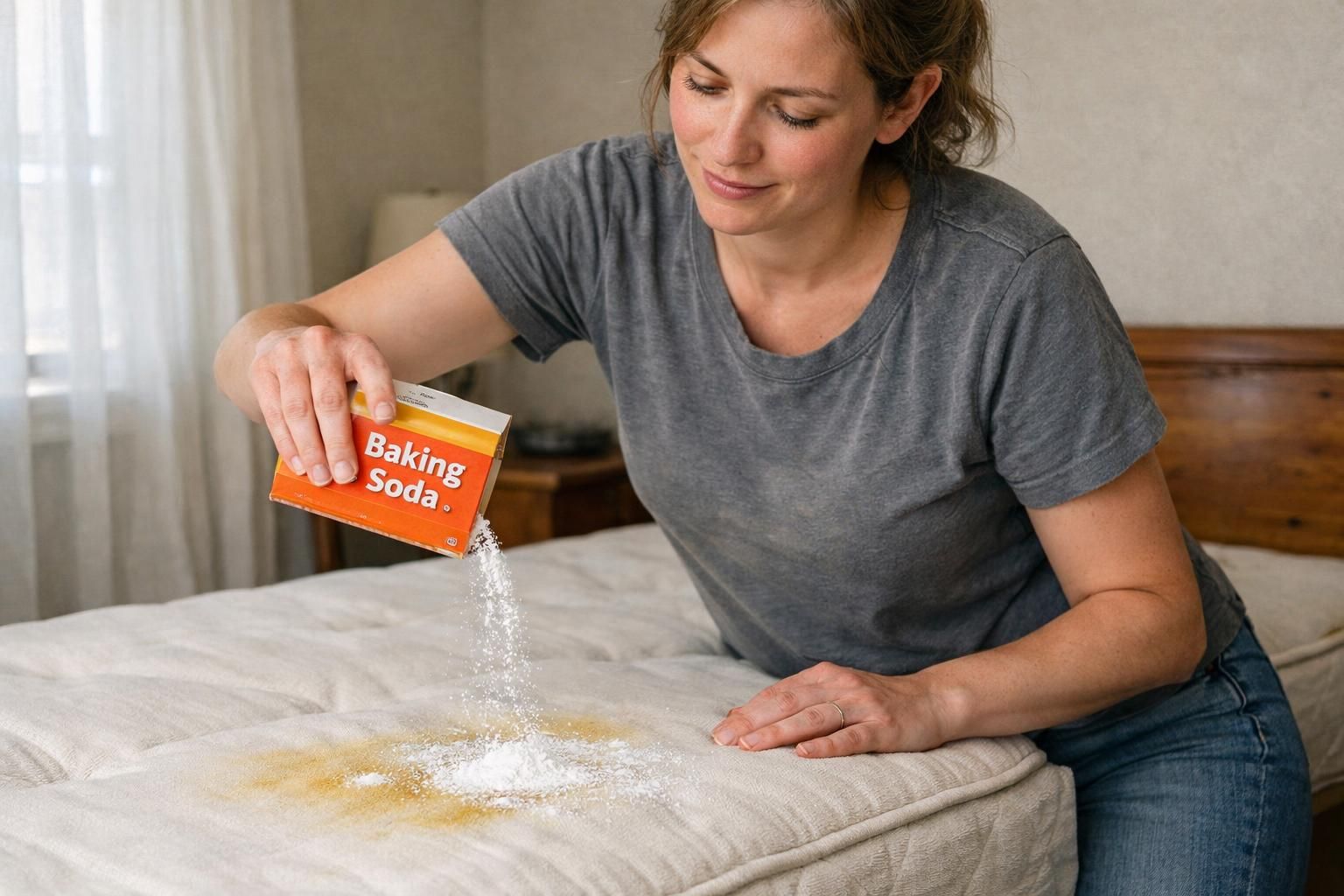
There is no single best method for every stain. A parent will get better results by matching the cleaning solution to the stain age and the mattress material, then keeping moisture low.
One safety note worth repeating: do not mix hydrogen peroxide and vinegar in the same container or spray bottle. A New Jersey Department of Health hazard alert warns that this combination can form peracetic acid, which can irritate the eyes, skin, and respiratory system.
| Situation | Best First Try | Why It Works | Common Pitfall |
|---|---|---|---|
| Fresh sweat stains | Peroxide + dish soap + baking soda | Targets oils and lifts discoloration | Over-wetting foam mattress layers |
| Old yellow stains | Enzyme upholstery cleaner, then baking soda | Enzymes break down organic residue | Not letting the product dwell per label |
| Odor without visible stain | Baking soda, airflow, and humidity control | Absorbs moisture and smells | Putting sheets back on too soon |
Method 1: Hydrogen Peroxide, Baking Soda, and Dish Soap
This is a practical option for sweat stains and yellow stains that live near the surface. It is also a good first pass before moving to store-bought cleaning products.
- Mix 8 oz cool water, 8 oz hydrogen peroxide, and 2 to 3 drops of clear liquid dish soap in a spray bottle.
- Strip bedding and a mattress protector, then vacuum the mattress surface to remove dust mites, crumbs, and loose debris.
- Lightly spray the cleaning solution on the sweat stain until the area is just damp, then sprinkle baking soda over the spot.
- Wait at least 15 minutes, then work the baking soda gently into the top fibers with a soft brush or toothbrush.
- Vacuum up the baking soda, then blot with a barely damp cloth to lift residue.
- Blot again with a dry towel to pull out as much moisture as possible.
- Let the mattress air dry completely with a fan, open window, or dehumidifier before replacing bed sheets.
- If stains persist, repeat once. For very old discoloration, switch to an enzyme cleaner or schedule a deeper professional clean.
Chemical Safety Tips
Use cleaning solutions as directed. Wear gloves and ensure good ventilation when using hydrogen peroxide, white vinegar, and other cleaning supplies. Never mix hydrogen peroxide and white vinegar in the same container or spray bottle. Always test any cleaning solution on a hidden area of the mattress fabric before full application.
Method 2: Vinegar, Dish Soap, and Water
This option is often chosen when the main problem is smell, or when a homeowner prefers to avoid peroxide on a colored or patterned mattress fabric.
Use plain white vinegar and keep it separate from peroxide products. After using vinegar, the area should dry fully before any other treatment goes on top.
- Mix a small amount of dish soap with water to make light suds.
- Dip a clean white cloth into the soapy water, wring well, then blot stains from the outside edges inward.
- Mist the area with equal parts white vinegar and water, then let it sit briefly.
- Blot again with a clean cloth to lift moisture and residue.
- Finish with airflow: fan, open windows, or a dehumidifier, then wait until the mattress is fully dry.
Method 3: Using a Store-Bought Upholstery Cleaner
For set-in mattress stains, an enzyme upholstery cleaner can outperform DIY mixes because enzymes keep working while they stay damp. Many of these products use enzyme blends designed to break down organic residue.
Named options commonly found in the U.S. include Nature’s Miracle (its product pages describe an enzymatic blend), Rocco & Roxie (sold as a professional-strength stain and odor eliminator), and BISSELL enzyme-action formulas.
- Follow the label for dwell time, then blot, do not scrub.
- Use white towels so dye does not transfer to the mattress.
- After the area dries, use baking soda for odor control, then vacuum thoroughly.
- If a strong fragrance lingers, many experienced cleaners switch to an unscented enzyme formula next time.
Natural Remedies for Stain and Odor Removal
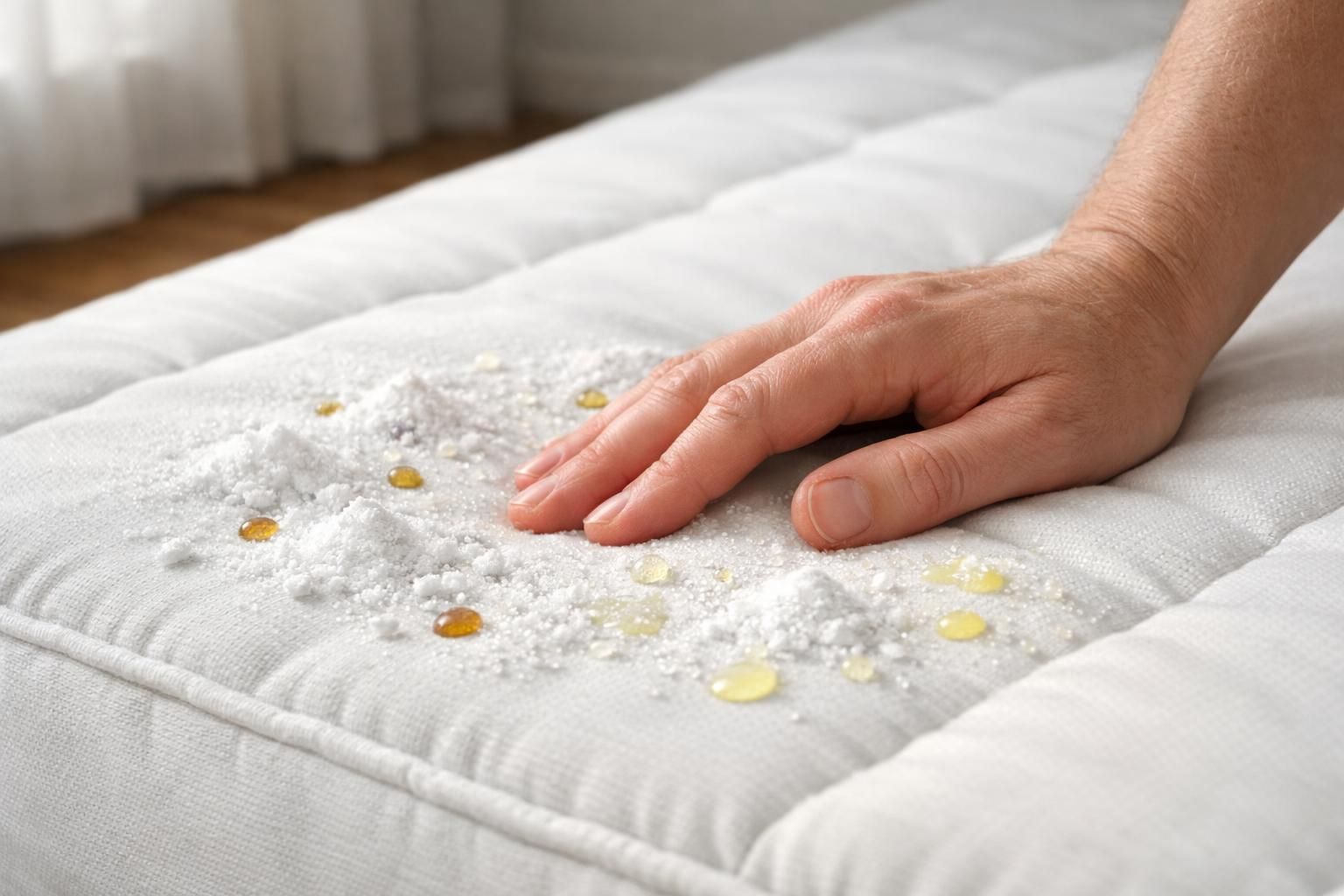
Natural remedies can help with mild sweat stains and routine smells, especially when the mattress just needs a reset between deeper cleans. The key is keeping moisture low and letting the mattress dry fully.
Baking Soda and Essential Oils
Baking soda (sodium bicarbonate) helps by absorbing moisture and odor. A light layer can sit on the mattress for 15 minutes for a quick refresh, or longer for stronger smells.
Some households like adding essential oils for scent. If pets share the home, caution matters: the ASPCA warns that concentrated essential oils can be harmful to animals, and even lavender can cause problems if a pet ingests it.
- For kid and pet homes, consider skipping oils entirely and using baking soda plus ventilation.
- If an oil is used, keep it highly diluted, avoid direct contact with pets, and ventilate the room well.
For a fabric spray, one can mix 1 cup rubbing alcohol with 1 cup filtered water, then add essential oils only if the household can use them safely. The spray should be used lightly so the mattress does not stay damp.
Lemon Juice Solution
Lemon juice can lighten some minor surface staining, but it is not a deep-clean solution for old yellow stains. It can also lighten certain fabrics, so spot-testing matters.
Mix equal parts lemon juice and water in a spray bottle, mist lightly, then blot with a clean sponge. After that, strong airflow helps, and indirect sunlight can speed drying.
Tips to Eliminate Odors from Mattresses
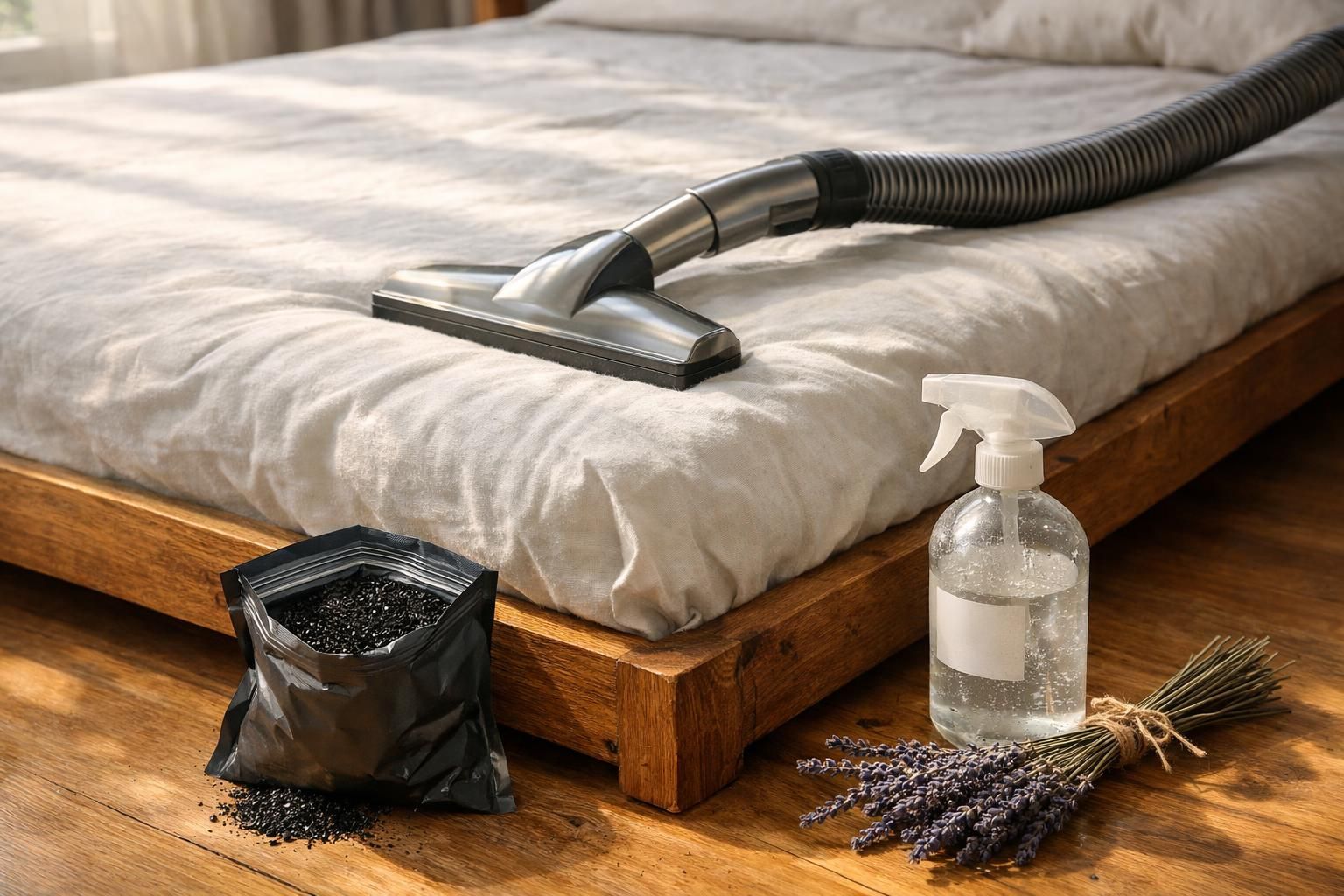
Odor removal works best as a system: absorb, lift, and dry. If the mattress smells again a day later, it usually means moisture stayed trapped in the top layers.
- Absorb: baking soda on the mattress surface, or activated charcoal near the bed.
- Lift: vacuuming mattress seams and tufting, then brushing out residue.
- Dry: fan plus dehumidifier when the room is humid, until the mattress feels completely dry.
Using Activated Charcoal
Activated charcoal helps because it has a high surface area that can adsorb odor molecules. Many homeowners place charcoal pouches near the bed or in a nearby closet to reduce stale smells in the room.
This works best as support, not as the only fix. If the mattress itself is damp, charcoal will not replace drying and cleaning.
Applying an Essential Oil Spray
A light spray can make the room smell fresher after the mattress is already clean and dry. A common mix is 1 cup rubbing alcohol, 1 cup filtered water, and up to 30 drops of essential oils.
Because rubbing alcohol is flammable, the spray should be kept away from flames and heat sources, and it should be allowed to dry fully before anyone lies down.
Preventing Sweat Stains and Odors on Mattresses with a Mattress Protector

Prevention is simpler than stain removal. When sweat and body oils never reach the mattress fabric, mattress maintenance becomes faster and the bed stays more hygienic.
A layered approach works well for families: mattress protectors, regular laundry, and better airflow after cleaning.
Using a Waterproof Mattress Protector
A waterproof mattress protector blocks sweat, spills, and body oils from soaking into the mattress. It is one of the best ways to protect mattress hygiene and extend mattress lifespan.
Warranty protection is a practical reason, too. In a Stearns & Foster warranty help article, the company notes that staining or liquid damage can void warranty coverage, even if a mattress protector is not strictly required.
- For sweat stains: choose waterproof, machine washable materials that do not trap heat.
- For allergies: consider a zippered encasement style mattress cover that seals all sides.
- For kids: keep a backup protector ready so the bed can be remade quickly after an accident.
- For heavy sweating: pair the protector with breathable bedding and, if helpful, a sweat-proof undershirt option at bedtime.
Before putting a new cover on, vacuum the mattress surface so dust and grit do not get sealed under the protector.
Washing Bedding Regularly
Regular washing keeps sweat and body oils from building up into stubborn stains. It also reduces the amount of odor that gets pressed into the mattress night after night.
- Wash bed sheets weekly, and wash protectors on their label schedule.
- Rotate and launder pillow cleaning items often, since pillow cleaning affects the whole bed’s smell.
- Inspect for fresh stains during each change, then treat quickly before they set.
Increasing Room Ventilation
Drying speed is a major factor in mattress care. A mattress that stays damp can develop a stubborn smell, even after stain removal looks successful.
The EPA’s indoor air quality guidance generally recommends keeping home relative humidity around 30% to 50%, which helps limit moisture problems and supports faster drying after mattress cleaning.
- Run a fan across the bed (not straight down into it) to speed evaporation.
- Use a dehumidifier in humid climates or during rainy weeks.
- After cleaning, leave the bed unmade until the mattress feels dry to the touch.
When to Seek Professional Cleaning Services
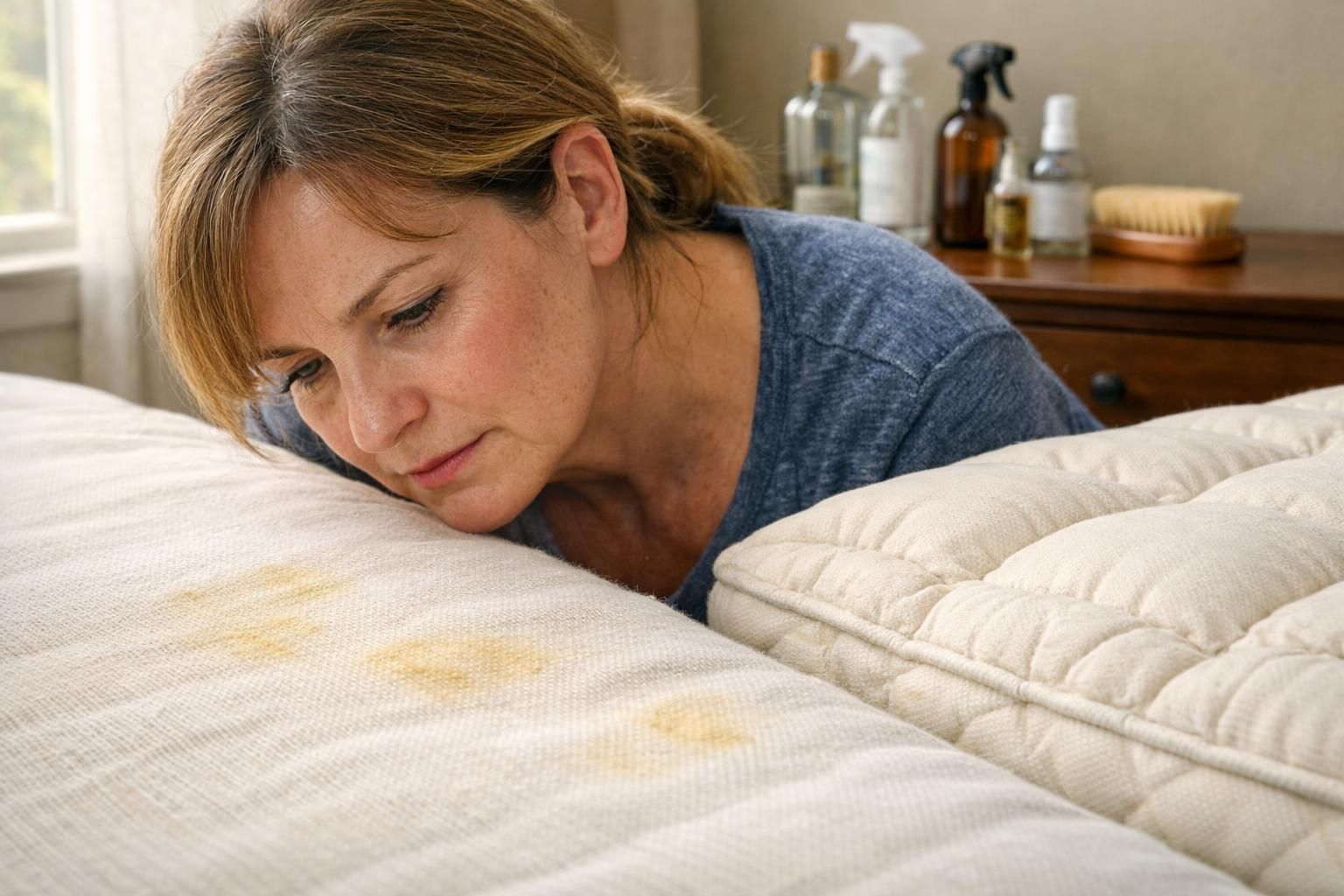
Professional help makes sense when DIY cleaning keeps failing, or when the mattress stays damp for too long after spot treatment. Pros can extract moisture more effectively, which matters for foam mattress cores.
A homeowner should also consider professional cleaning when odors persist after multiple rounds of baking soda, white vinegar, vacuuming mattress seams, and enzyme cleaning supplies.
- Deep, widespread yellow stains: discoloration across a large area often signals long-term absorption.
- Repeated accidents: fresh urine stains and dried urine stains can soak deep, and enzyme extraction is often needed.
- Health concerns: allergy symptoms, dust mites, or suspected mildew can call for a stronger, moisture-controlled approach.
- Heavy sweating: if axillary hyperhidrosis or night sweats keep returning, prevention upgrades plus professional cleaning can help break the cycle.
If the mattress is structurally sound but stained, a quality mattress topper can buy time and improve comfort. If the bed is sagging and stained, replacement usually brings better sleep hygiene than endless spot cleaning.
DIY vs. Store-Bought Cleaning Products: Which Is Better?
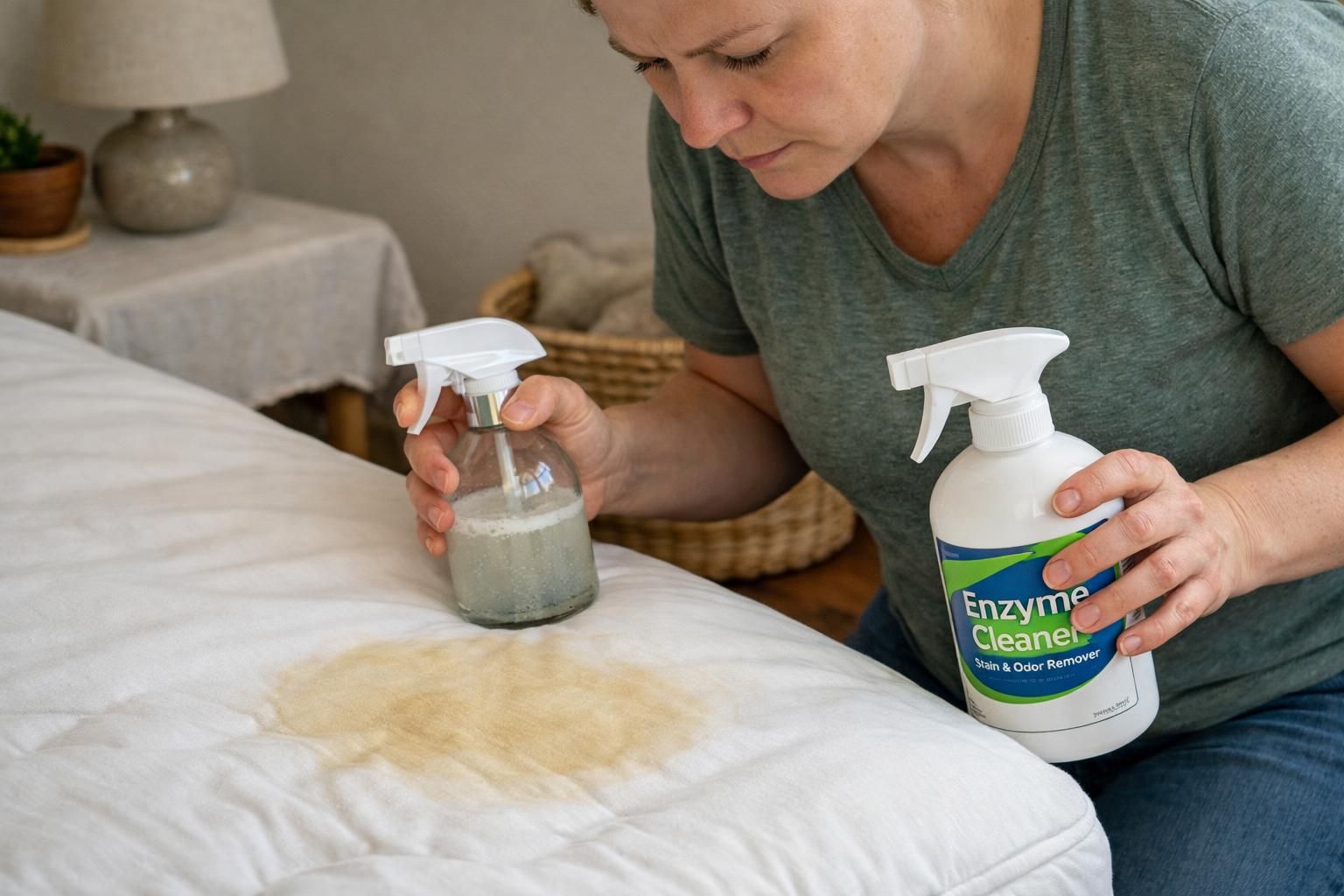
DIY methods work well for routine spots and light odors. Store products usually win on older stains, repeated accidents, and deeper odor problems where enzymes can keep working.
Aspect
DIY
Store-Bought
Best For
Common Ingredients
Hydrogen peroxide, baking soda, liquid dish soap; or vinegar, dish soap, water.
Enzyme upholstery cleaners, odor neutralizers, specialty sprays.
Routine spots and light odors.
Effect on Protein Stains
Works well on fresh sweat with peroxide mix. Needs blotting and drying.
Enzyme action targets protein stains like sweat. Often deeper action.
Deep, set-in yellow stains.
Cost
Low cost; uses household items already on hand.
Higher up-front cost per bottle; may cost more for repeated uses.
Budget-conscious homeowners and parents.
Safety and Fabric Risk
Test first on a hidden area. Peroxide can bleach some fabrics.
Follow label instructions. Test product on a small patch first.
Mattresses with delicate covers or patterns.
Ease of Use
Mixing and scrubbing required. Use a spray bottle, soft brush, towel, vacuum.
Ready to use. Tools often include a spray nozzle; some need no mixing.
Busy parents who want fast action.
Odor Control
Baking soda neutralizes smells; add a few drops of essential oils if desired. Use activated charcoal in the room for longer control.
Formulated odor neutralizers may last longer on fabric.
Rooms with persistent ammonia or sweat smells.
Environmental and Health Notes
Uses common household items. Lower chemical load if used properly.
Some contain enzymes and solvents; check labels for allergens.
Homes with children and pets where ingredient lists matter.
When to Choose
Try first for routine cleaning and recent stains. Cost-effective for regular care.
Pick for stubborn, old, or deep stains that DIY cannot remove.
Stubborn stains and deep-set odors.
Key Tips
Always test a small area first. Vacuum before treating. Dry thoroughly after cleaning.
Always test a small area first. Follow timing and rinse directions on the label.
Safe, effective stain removal for any home.
Myths vs. Facts
- Myth: Vacuuming alone refreshes the mattress. Fact: Vacuuming removes dust but does not remove sweat stains and odors.
- Myth: Using excess cleaning solution improves results. Fact: Too much moisture can cause mattress oxidation and damage the mattress fabric.
Conclusion
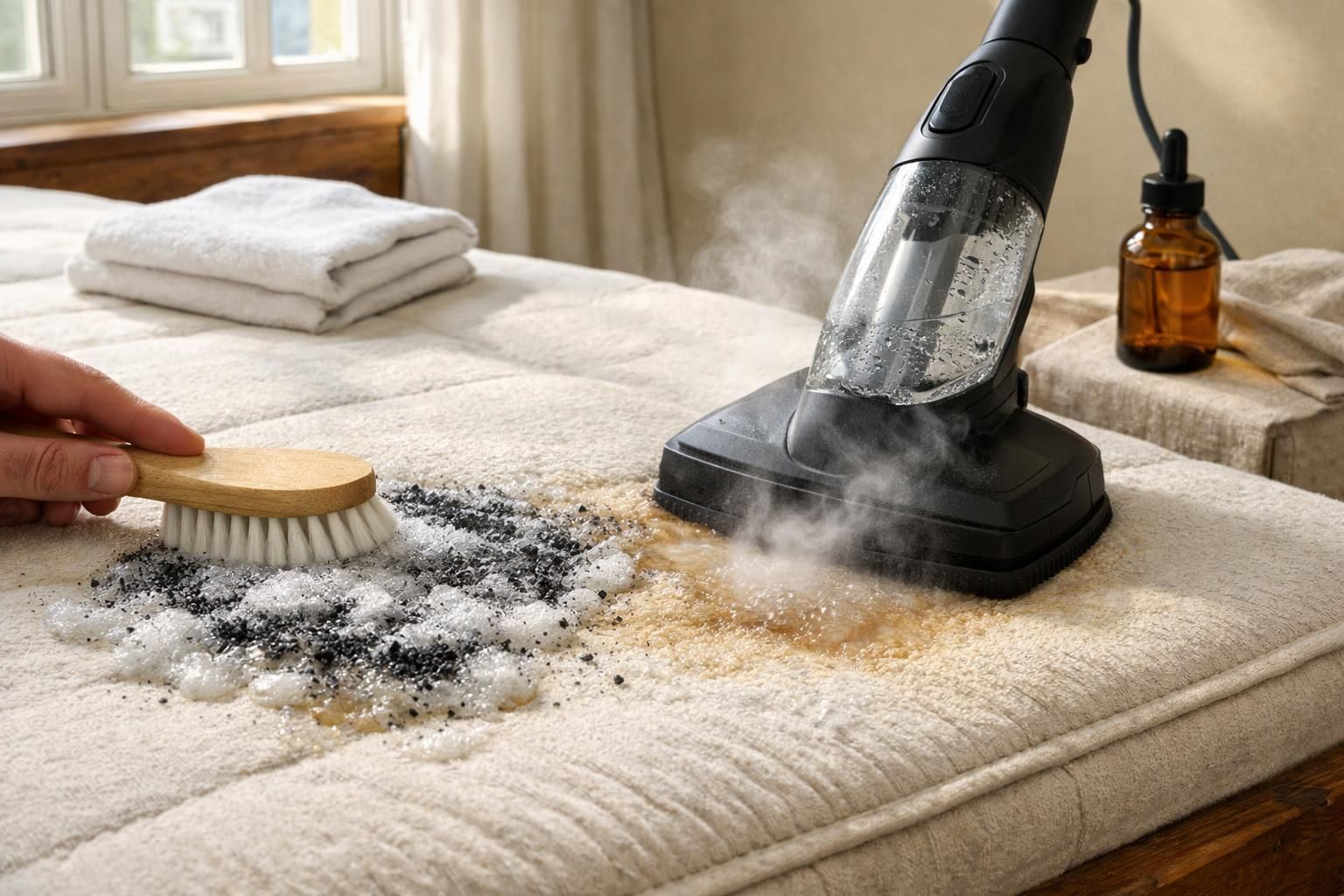
Sweat stains and odors usually come down to two things: body oils plus moisture. Once that mix sinks into the top layers, yellow stains can set and smells can linger.
A homeowner can often lift discoloration with hydrogen peroxide, baking soda, and a drop of liquid dish soap, after stripping bedding and vacuuming mattress seams. After a short dwell time, blotting and thorough drying are what protect foam and keep mildew away.
For odor control, baking soda and activated charcoal help, but airflow finishes the job. Long term, a waterproof mattress protector (or mattress cover encasement) plus weekly laundry is the simplest stain prevention plan for better sleep hygiene.
FAQs
1. What removes sweat stains from a mattress?
Blot fresh sweat with a clean cloth right away. Use a cleaning solution with baking soda, white vinegar, or a little liquid dish soap, dab the stain, then let dry and vacuum the mattress.
2. How do I kill odors and freshen a mattress?
Sprinkle baking soda, wait a few hours, then vacuum the mattress for improved mattress hygiene. Add a few drops of essential oils or a light natural deodorizer for a fresh smell.
3. Can I use hydrogen peroxide or rubbing alcohol on mattress fabric?
Test a hidden spot first. Hydrogen peroxide can bleach and speed mattress oxidation, and rubbing alcohol may damage fabric or void your mattress warranty.
4. How do I prevent stains and extend mattress lifespan?
Use a mattress protector and wash pillow cleaning items often. Wear a sweat-proof undershirt, maintain sleep hygiene, and perform regular mattress maintenance to stop stains and protect mattress lifespan.
5. Will mattress cleaning remove body oils and yellow stains?
Yes, but act fast because yellow stains come from body oils and natural oxidation. A paste of baking soda and a mild cleaning solution like washing up liquid lifts oils, then vacuuming the mattress removes residue.
6. When should I call a pro or check my warranty?
For large mattress stains, fresh urine stains, dried urine stains, or deep dust mites problems, call professional mattress cleaning services. Check your mattress warranty before using strong cleaning supplies or chemicals.
Disclosure: This content is informational and may include affiliate links. It is intended for educational purposes only. Please consult your mattress warranty and cleaning guidelines before using any cleaning supplies.