
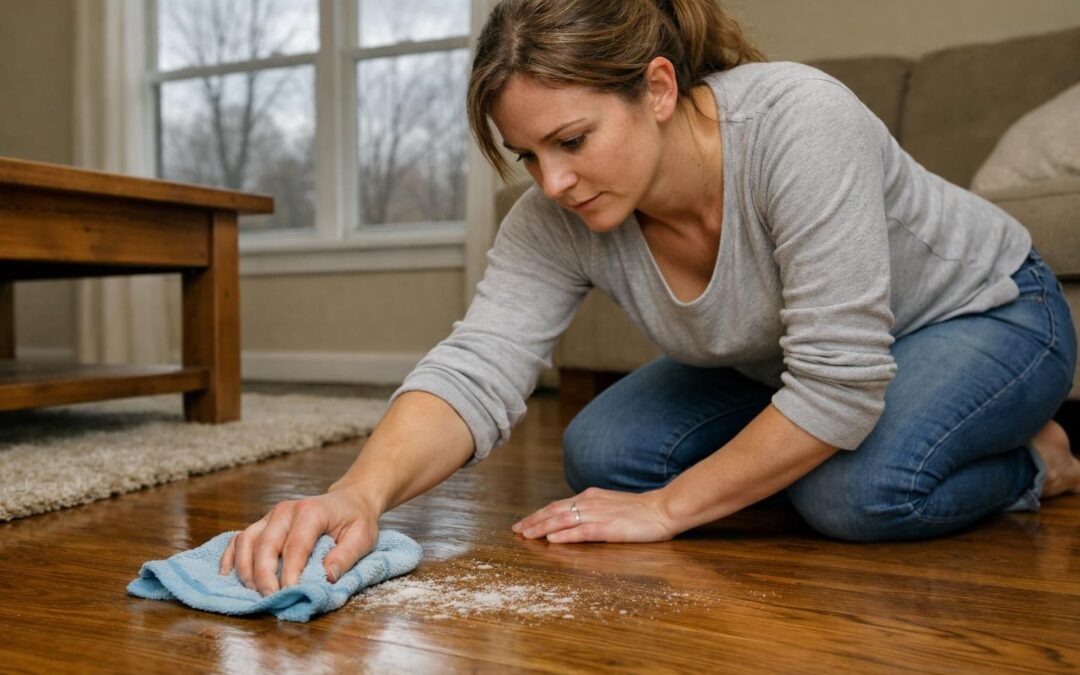
Winter is rough on hardwood floors. Snow and ice bring grit, wet boots add moisture, and rock salt scratches fast. Many families want a safe way to clean hardwood floors without causing water damage or gaps between boards.
Dry indoor air in cold months makes wood shrink. Tiny spaces open up, and debris or mold growth can collect there. A quick sweep helps, but it is not enough for healthy wood floors or strong indoor air quality.
This guide breaks down simple winter maintenance that actually works. Expect house cleaning practical tips with a microfiber mop, a vinegar and water solution for rock salt, and smart ways to protect high-traffic zones from scratches.
Want the house to look good all season? Let’s get into it.
Key Takeaways
- Keep indoor humidity at 30% to 50% in winter with a humidifier to limit gaps, shrinkage, and repair costs.
- Dust mop daily with a microfiber cloth, and use entry mats to trap rock salt, dirt, and moisture before they reach wood floors.
- Remove salt residue using one cup of white vinegar per gallon of warm water, applied with a barely damp microfiber mop.
- Skip steam mops and abrasive tools; heat and rough pads can cause warping and scratching that will not buff out.
- Wipe spills right away, then deep clean weekly with pH-balanced or hardwood-safe cleaners to protect the finish all winter.
Challenges of Cleaning Hardwood Floors in Winter
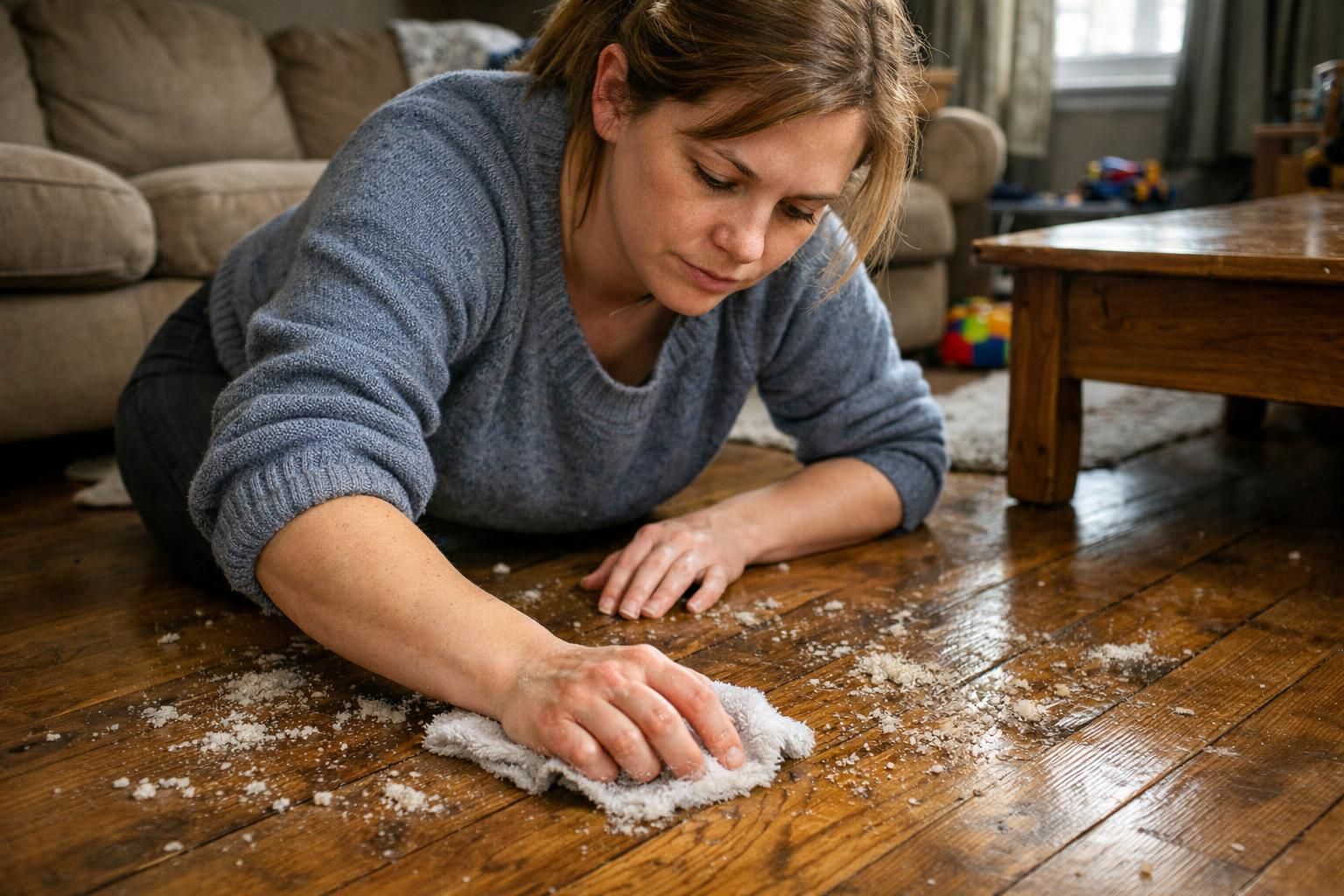
Snowstorms send in dirt, slush, and rock salt. Even the best microfiber mop struggles when children and pets sprint inside with wet boots.
Winter gapping and shrinkage

Dry air makes hardwood contract. Boards pull apart as humidity drops, especially if the difference between summer and winter humidity is more than 20%. Kids even notice toys getting stuck in those thin gaps.
Controlling moisture levels keeps boards snug. A humidifier that holds indoor humidity around 30% to 50% can prevent most seasonal gapping. Skipping this step often leads to more visible cracks by midwinter.
Those spaces collect crumbs, rock salt, and dirt. Entry rugs and regular dust mopping help keep debris out of shrinking seams. Sealing known gaps before the deep cold arrives makes later repairs easier.

Effects of rock salt and moisture
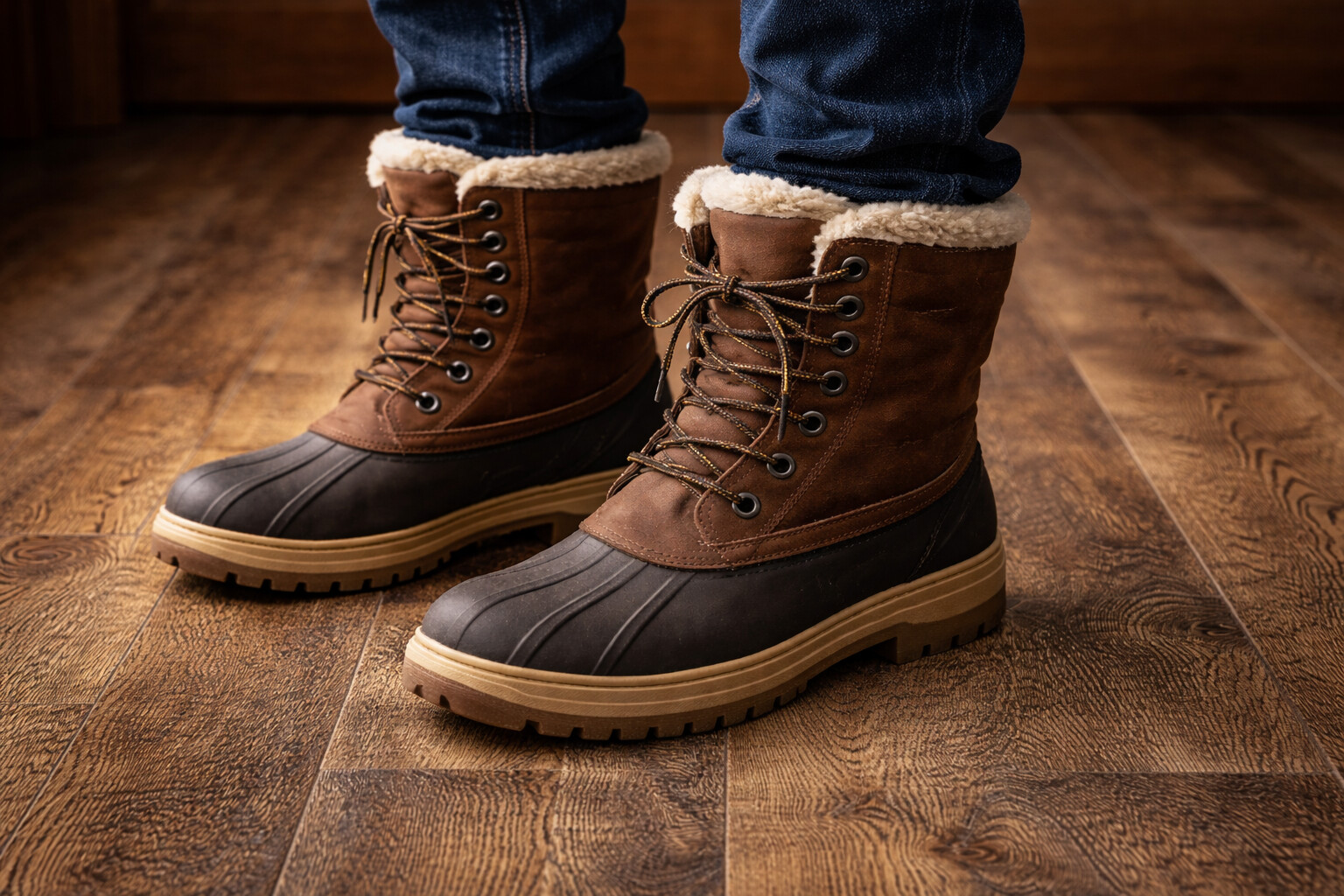
Rock salt from icy steps sticks to shoe soles and grinds into wood like sandpaper. Those tiny crystals leave white marks and wear down the finish over time.
Moisture from melted snow breaks down protective sealant. Puddles can seep into cracks between boards and cause swelling or warping. If left alone, water damage can lead to costly floor refinishing sooner than expected.
Increased dirt and debris
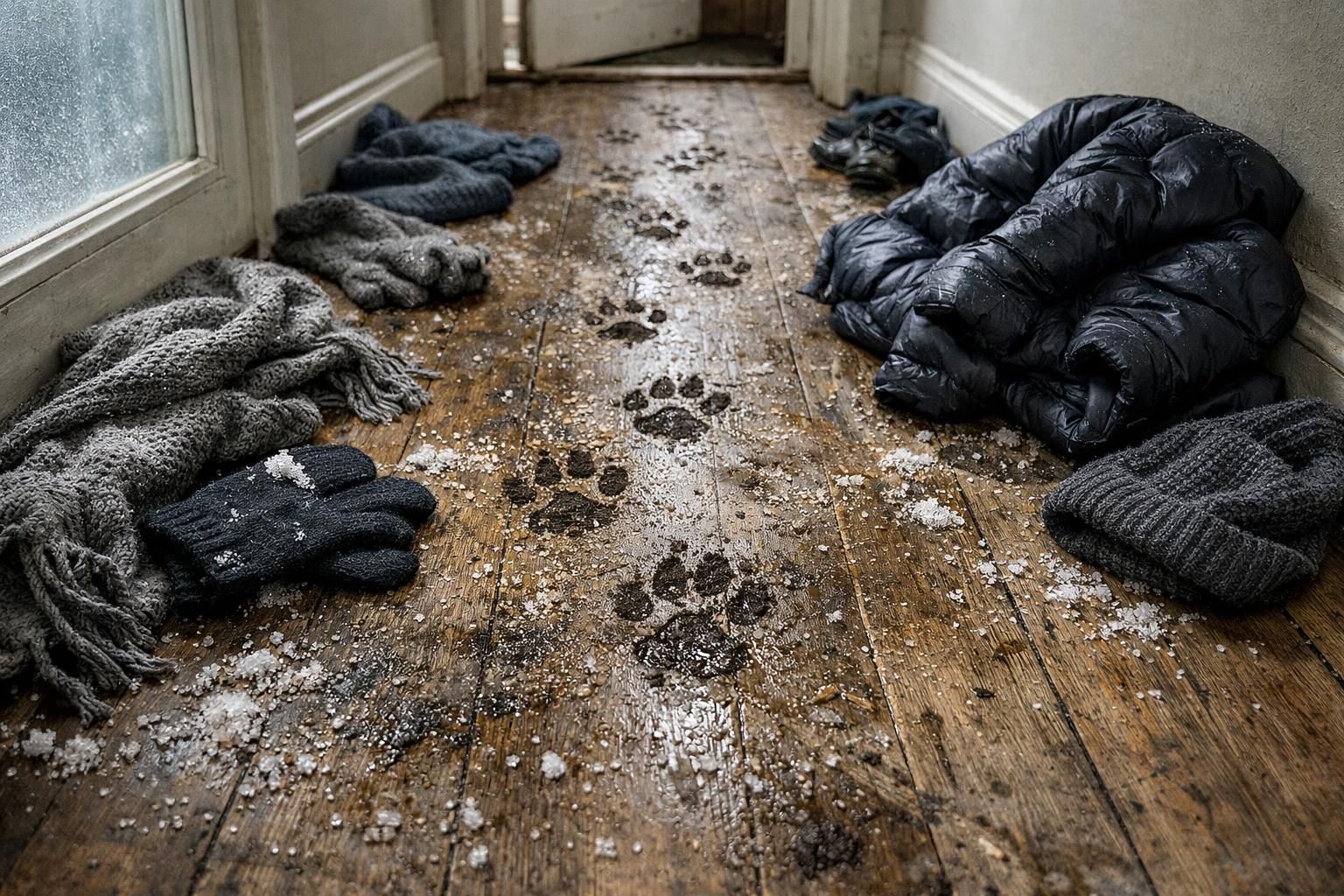
Boots bring in dirt, mud, and rock salt. Children drop snow gear near doors. Pets track in whatever sticks to their paws. Winter turns floor care into a daily routine for busy homes.
Entry mats catch a lot, but not everything. Dust and salt build up fast if ignored, and those crystals can scratch wood while moisture weakens the finish. Staying ahead with quick cleaning beats deep repair later.
Preparing Your Floors for Winter Cleaning
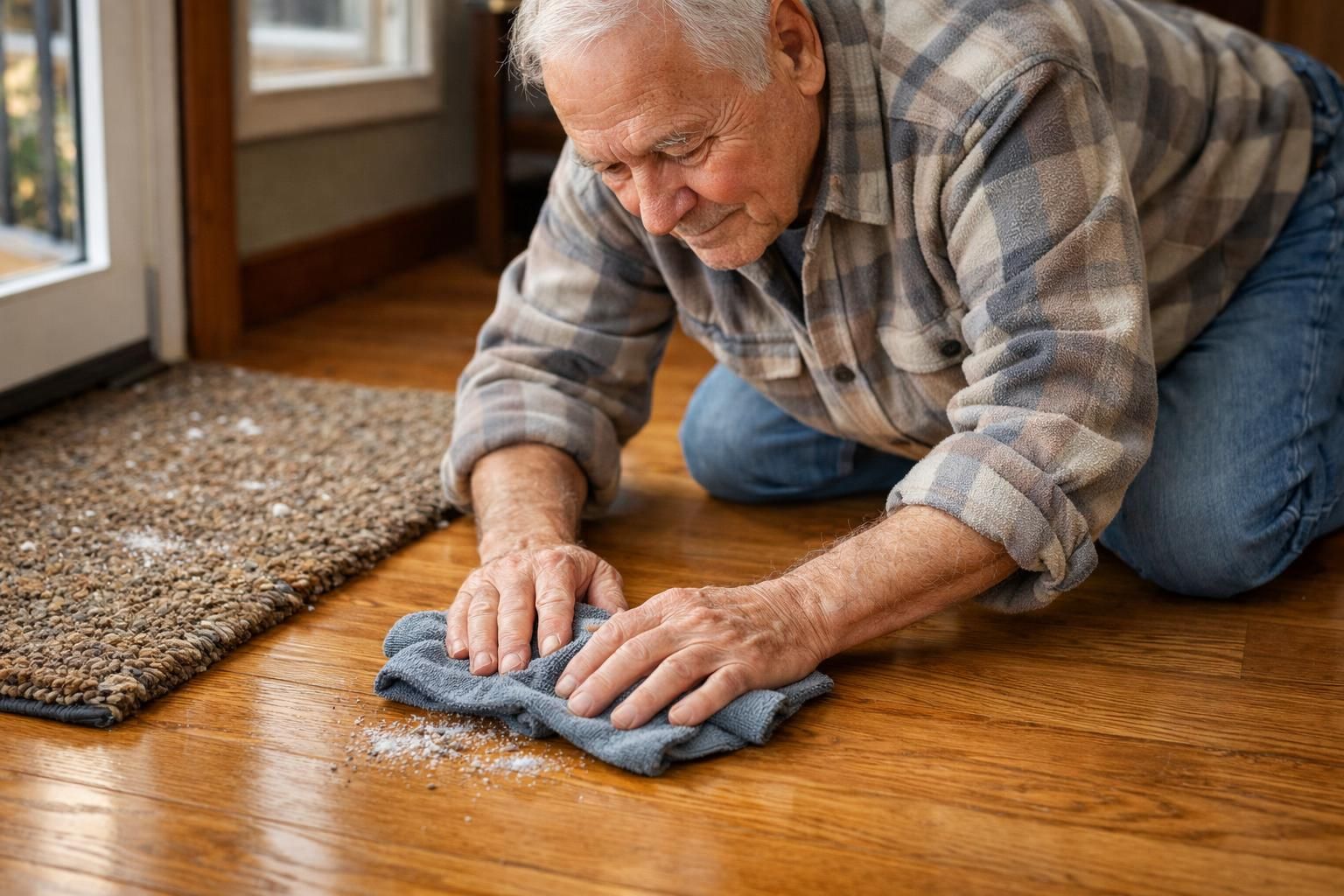
A fast sweep with a microfiber tool removes grit before it scratches. Sturdy entry mats stop rock salt and grime before they reach the living room.
Remove excess dirt and dust
Pets and children track in extra debris during winter, so daily sweeping makes sense. A microfiber mop or a vacuum with a soft floor-brush attachment picks up dust without scratching hardwood.
Weekly vacuuming also helps reduce allergies and improves indoor air when windows stay closed. Focus on entryways, where grit piles up first. Skip worn brooms that just push particles around. Microfiber tools grab fine debris that hides between planks.
Use entry mats and rugs
Place walk-off mats outside and inside every entry to catch rock salt, water, and dirt. A simple runner by the door traps grit before it reaches wood floors. High-traffic areas benefit the most from this barrier.
Choose fabric-backed rugs. Rubber or vinyl backs can discolor or trap moisture against hardwood over time. A small shoe rack by the door keeps wet boots off the planks and helps prevent puddles.
Safest Methods for Cleaning Hardwood Floors in Winter
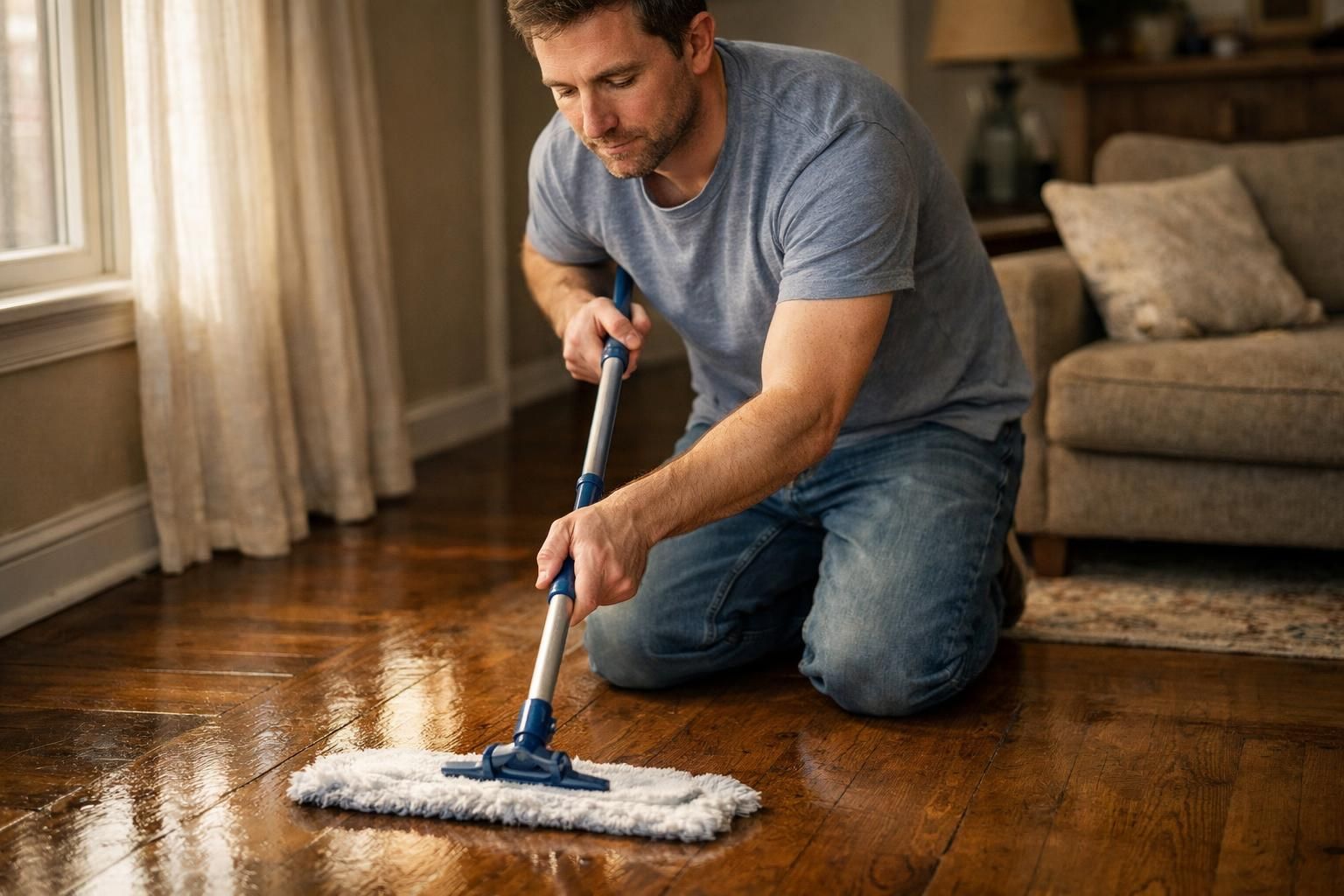
Most people grab a microfiber mop and hope warm water is safe. Here is how to keep wood floors clean without risking water damage during heavy winter maintenance.
Dust mopping daily
Daily dust mopping keeps winter grit from scratching hardwood. A microfiber mop or cloth grabs fine dust and pet hair that settles overnight. Even tiny salt grains can leave marks, so quick attention matters.
A vacuum with a soft brush attachment helps near doorways, where debris collects fastest in cold months. Consistent light cleaning also limits moisture from melting ice, so floors stay safer through the season.
Damp mopping with hardwood-safe cleaners
Damp mopping with a wood-safe cleaner keeps floors looking good, even on slushy days. Many parents like Murphy’s Oil for Wood Floors, diluted as directed, for a natural-looking shine without extra moisture.
A wet Swiffer loaded with Bona or another wood floor solution gives better control of water. Always use a well-wrung microfiber mop, then dry the surface right away to protect the finish and the seams.
Avoiding excessive water or harsh chemicals
A soaked mop is risky. Use a barely damp microfiber tool to pick up dirt and salt from outside. Standing water seeps into seams and shortens floor life.
Skip bleach, ammonia, and harsh chemicals. These strip the finish and dull the wood. Avoid steam mops too. Excess heat pushes moisture into planks and can cause warping. For a gentle option, use warm water with a small splash of vinegar; apply lightly to the mop, not straight to the floor.
How to Handle Rock Salt on Hardwood Floors
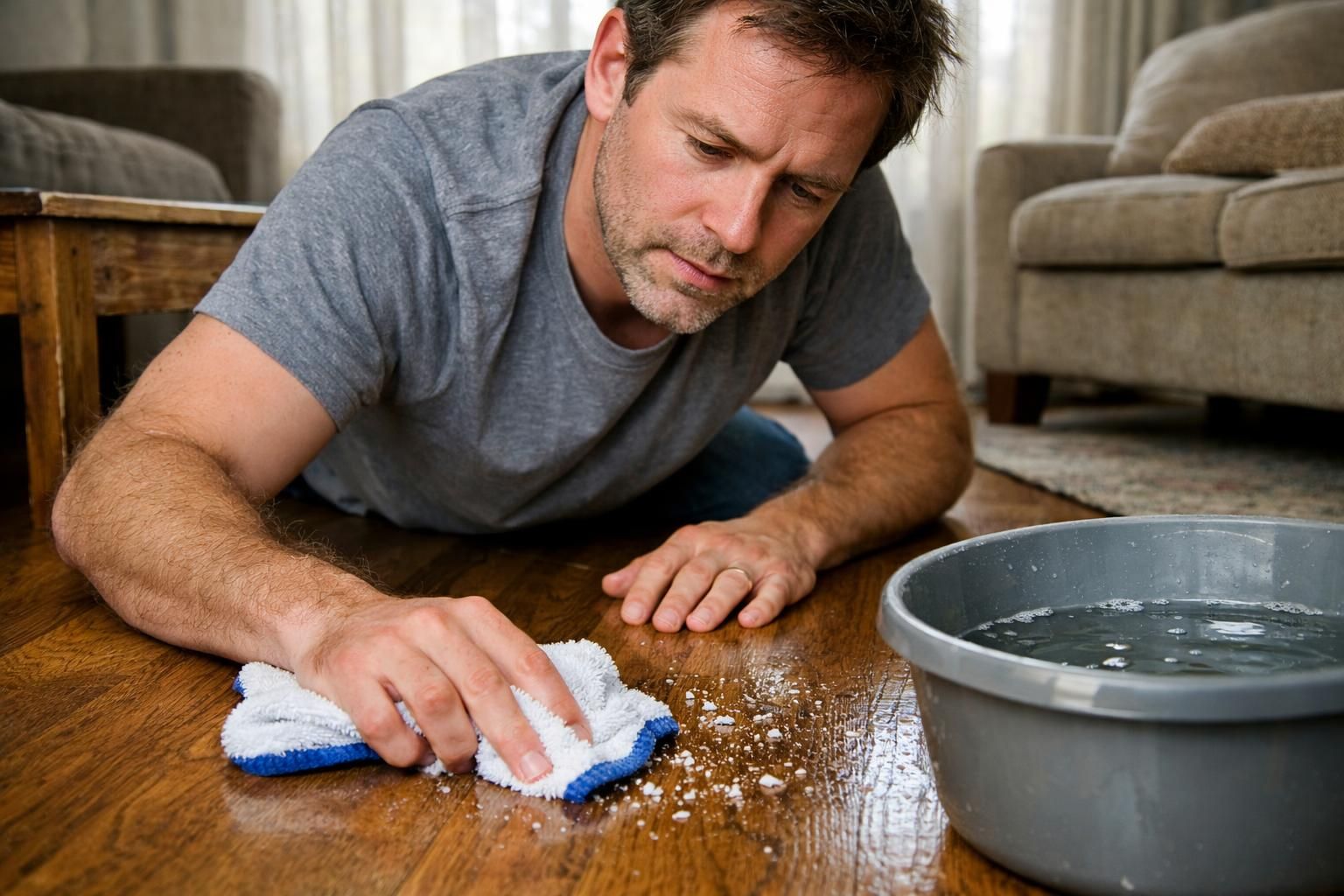
Rock salt clings like gum on a shoe; the right routine clears it without wrecking the finish.
Clean with a vinegar and water solution
Mix one cup white vinegar with one gallon warm water to make a gentle cleaner. Use a well-wrung microfiber mop or cloth to spot clean areas hit by salt.
Vinegar cuts salty residue and helps neutralize grime without harming most finishes. Keep the mop barely damp to avoid water damage, especially when wood has shrunk from dry air.
Use a hardwood floor cleaner for deeper cleaning
Bona and Murphy’s Oil both work well for deeper cleaning. These products break down tough grime from salt and boots without harsh chemicals. A Wet Swiffer with a wood floor solution controls moisture, which is key in winter.
Apply cleaner with a microfiber mop or soft cloth. Do not pour it on the floor. Focus on high-traffic spots near doors, where salt and slush pile up.
Preventing Damage to Hardwood Floors in Winter
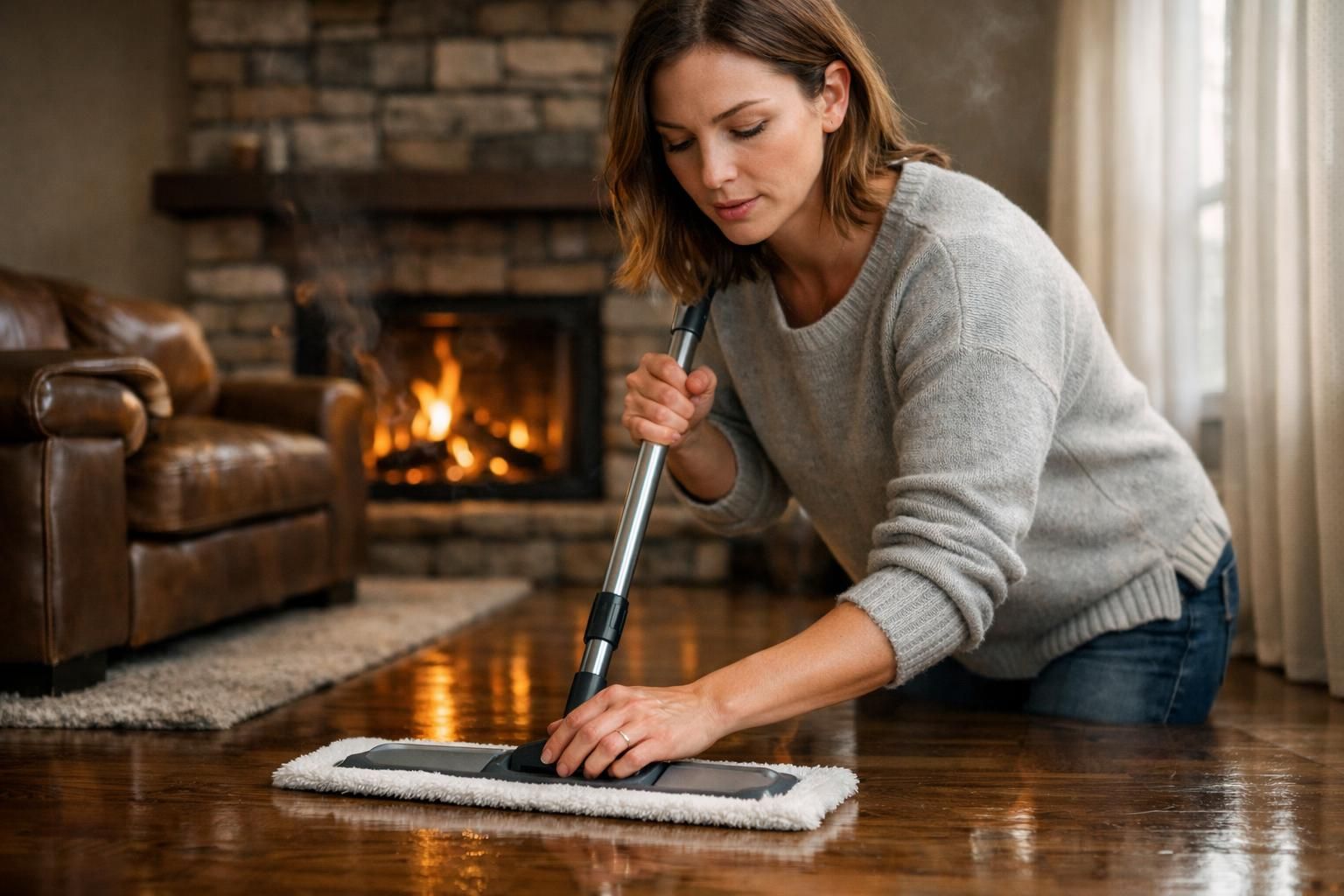
Guard wood floors like a favorite table, simple habits now prevent expensive repairs later.
Maintain indoor humidity levels (30%-50%)
Low humidity makes boards shrink and form gaps. A humidifier near busy entries helps balance moisture inside. Experts suggest keeping indoor humidity between 30% and 50%.
Use a small hygrometer to track levels so changes are easy to spot. Stable humidity protects the finish and reduces salt damage as well.
Protect high-traffic areas with rugs
After humidity is under control, protect the busiest zones. Place rugs or runners in hallways and by doors to trap dirt and moisture before they scratch wood floors.
Pick fabric-backed rugs. Rubber or vinyl backs can stain or trap moisture against the planks. Homes with kids or pets should choose washable options for fast cleanup on snowy days.
Avoid dragging furniture across floors
Dragging furniture causes scratches and dents. Even sliding a heavy chair can leave a mark. Use felt pads under table and couch legs to prevent scuffs.
Lift, do not slide, whenever possible. Wipe away grit with a microfiber cloth before moving big items. That simple move stops dirt from acting like sandpaper.
Repairing Winter Damage to Hardwood Floors
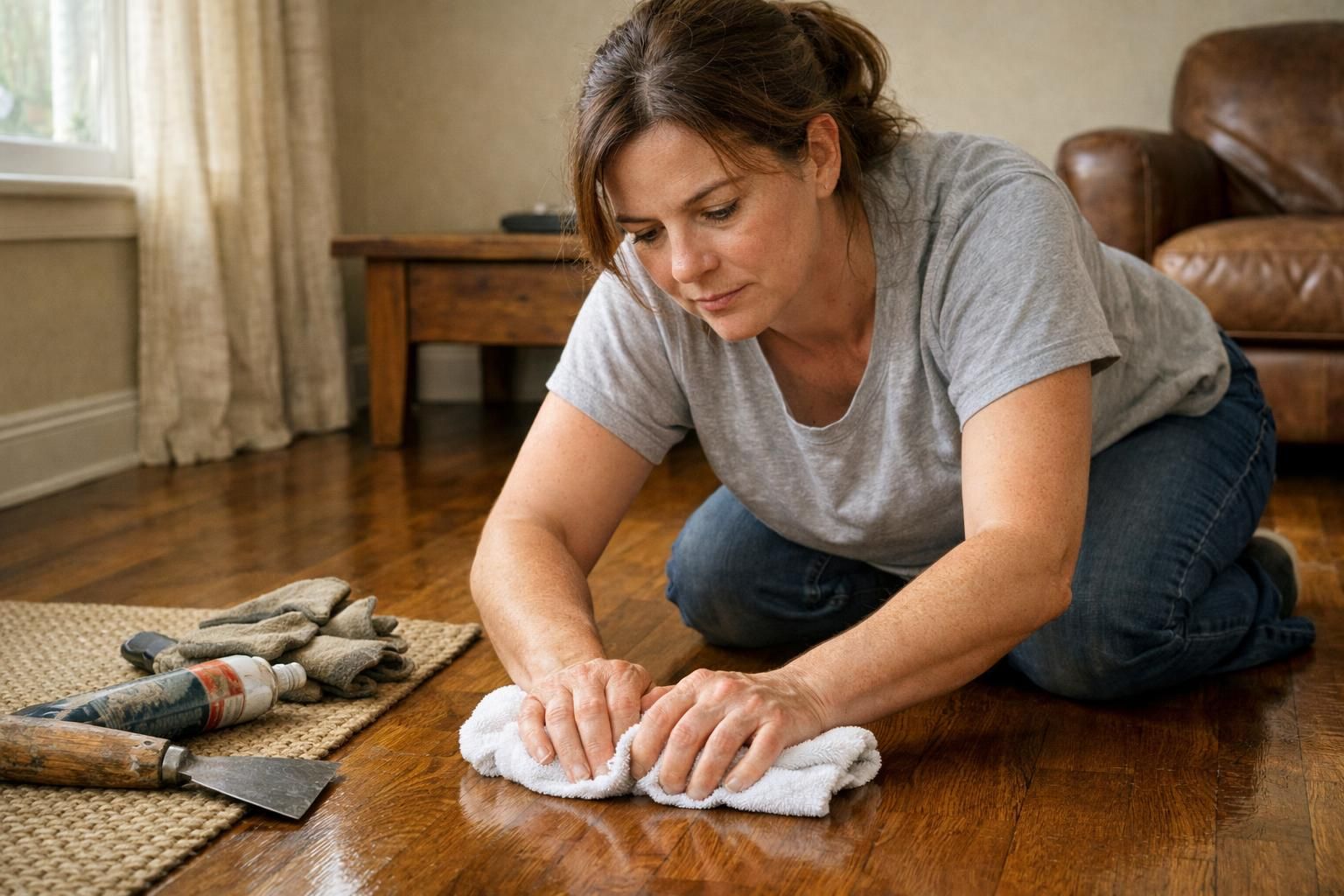
Winter can leave floors looking tired. A microfiber cloth, a floor repair kit, or a bit of furniture polish can bring back some life.
Fixing scuff marks and scratches
Light scuffs often disappear with a gentle rub from a microfiber cloth or pad. For stubborn spots and shallow scratches, use floor-safe oil or mineral oil after cleaning.
Mineral oil can swell tiny cuts and add a bit of protection against future moisture. Check high-traffic areas regularly, then treat marks early to avoid bigger repairs later.
Addressing gaps caused by dryness
Dry air pulls moisture from wood, which creates visible gaps. A humidifier that holds indoor humidity at 30% to 50% helps limited gapping. Some homes benefit from a moisture barrier under the flooring to add protection.
If cracks look severe or return every winter, call a flooring professional for advice. Quick fillers rarely last if dry air is the cause. Keeping mats in place and limiting water during cleaning also prevents more movement.
Routine Maintenance Tips for Hardwood Floors in Winter
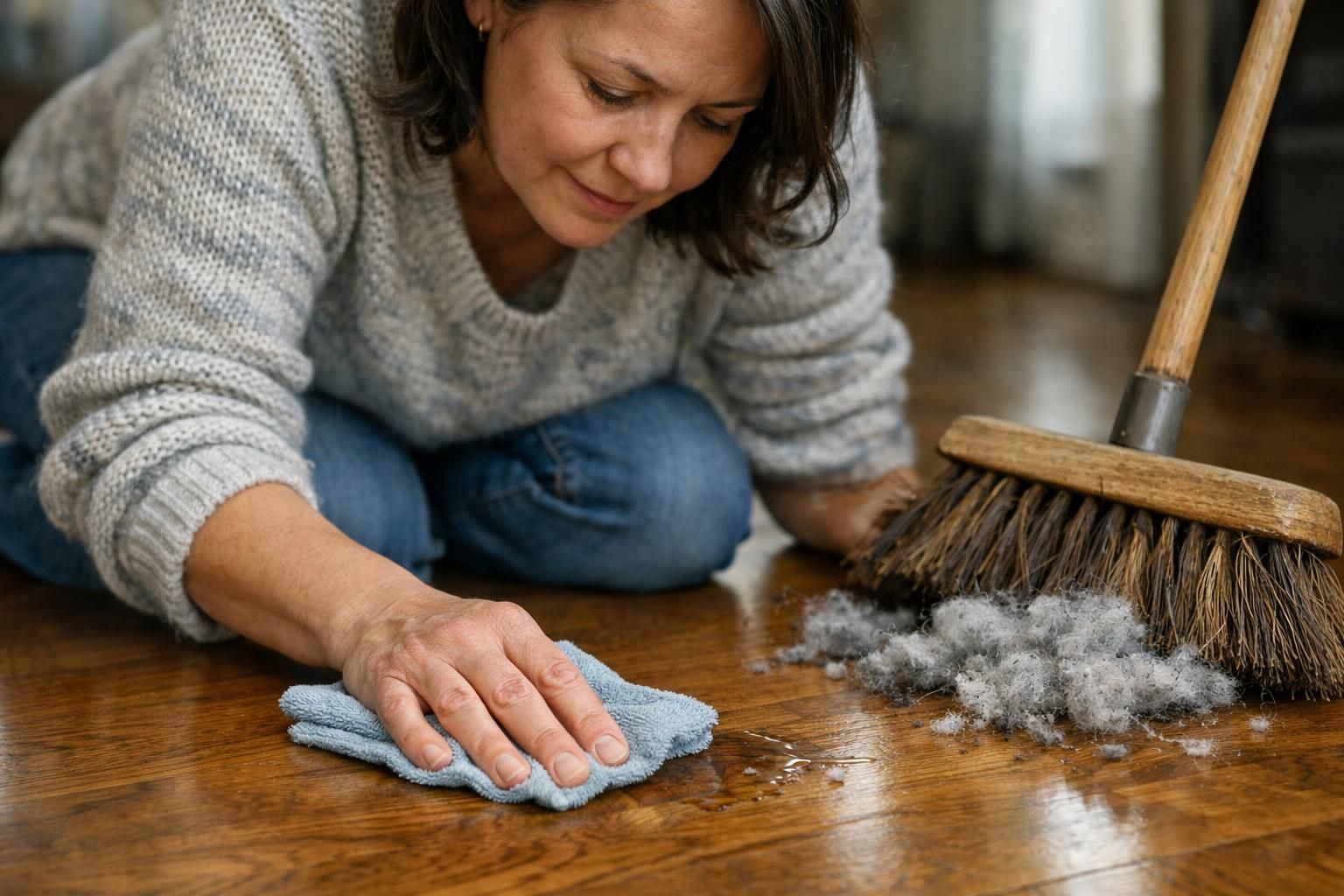
Small spills turn into big problems fast, so keep a clean microfiber cloth handy. Regular habits keep wood floors happy through the messiest months.
Wipe spills immediately
Moisture sneaks between boards and can lead to water damage or mold growth. Blot spills right away with a clean towel or dry microfiber cloth. Do not push the liquid around, lift it until the area is dry.
Avoid letting warm water or cleaner pool on the surface. Puddles find seams, then cause trouble later.
Schedule weekly deep cleaning
After quick spill duty, plan a weekly deep clean. Start with a microfiber mop or soft-bristle broom to remove dirt and salt from cracks.
Use a hardwood floor cleaner instead of harsh chemicals. Swap dirty water for fresh warm water as you go, so grime does not spread around. Avoid steam mops and rough pads. These can cause lasting damage that needs floor repair.
Common Mistakes to Avoid During Winter Cleaning
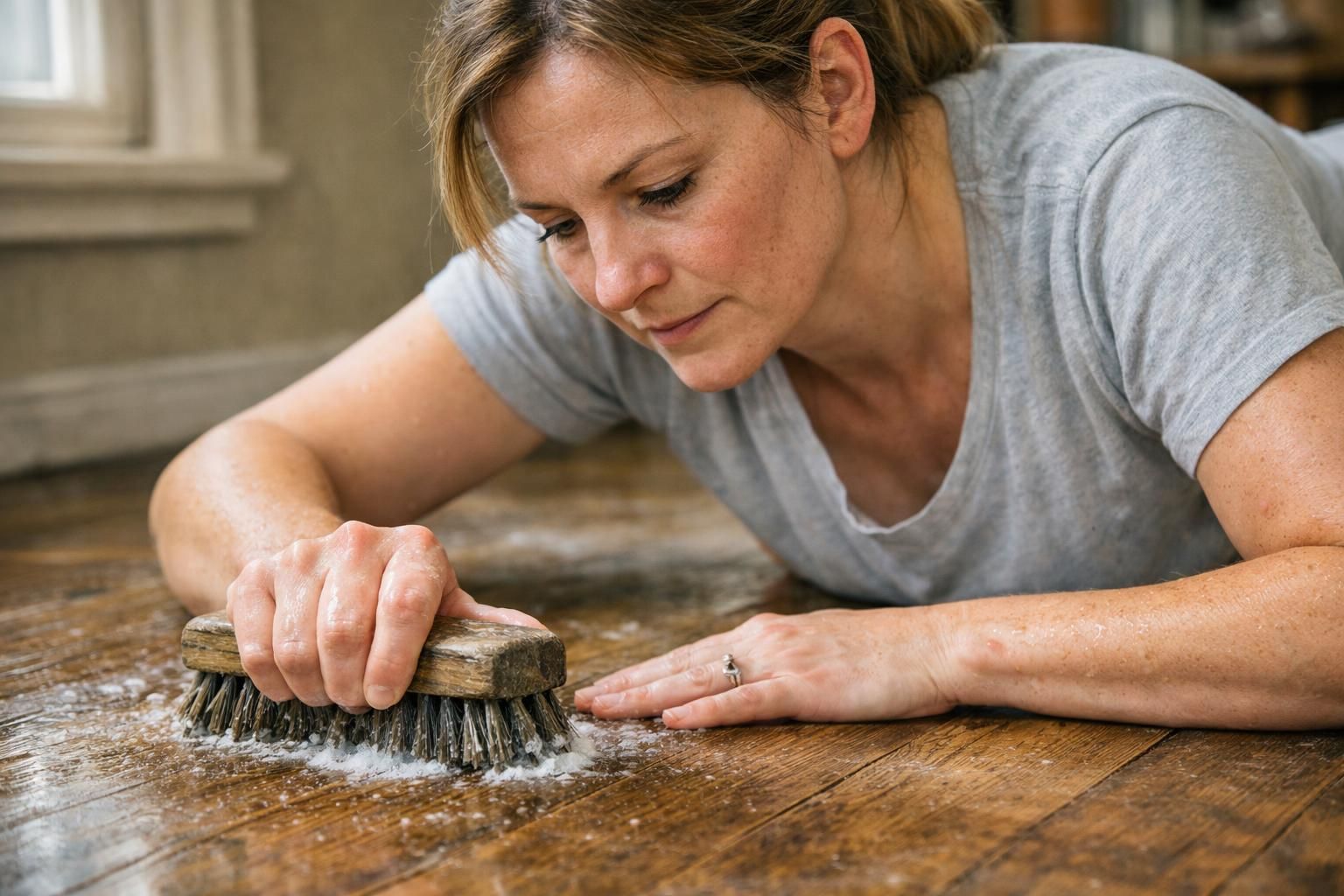
Many people reach for a steam mop or a rough scrubber in winter. That is like using a hammer for a light tap. Go gentle, and spring will bring less repair work.
Using steam mops on hardwood floors
Steam mops push hot moisture into wood. The heat and steam can slip into gaps, especially when winter gapping is at its worst. The finish may fade or peel after only a few uses.
Moisture inside the wood structure leads to swelling and uneven boards. The safer move is to skip steam entirely to avoid costly fixes later.
Applying abrasive cleaning tools
Abrasive tools like steel wool, scouring pads, or stiff brushes scratch and dull the finish fast. Choose soft-bristle brooms, microfiber mops, or vacuum floor brushes instead. These remove winter dirt without grinding the surface.
Using rough pads can break through protective layers and invite water damage. Keep garage scrubbers far from living areas. Teach helpers to use only gentle tools on shiny floors.
Conclusion
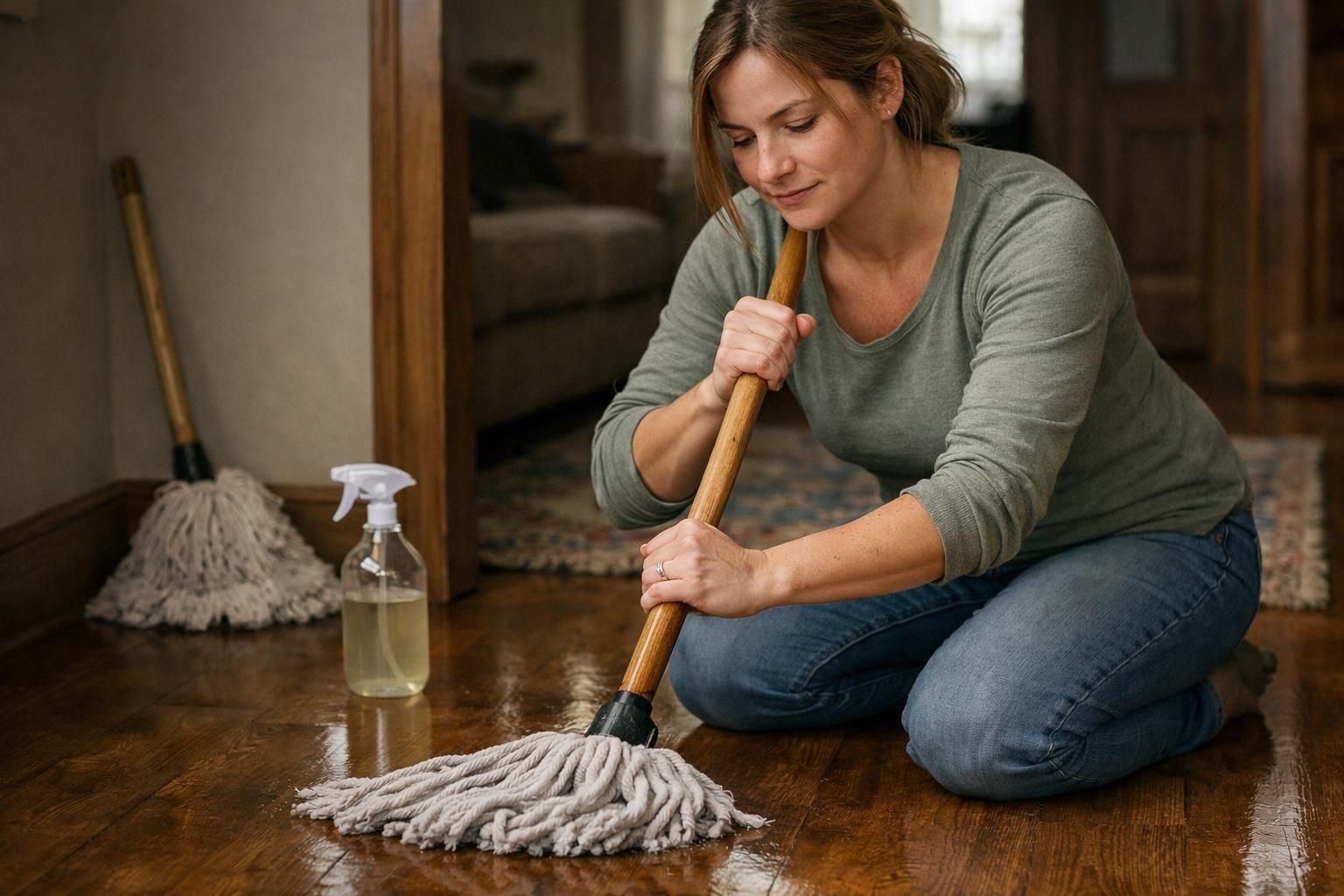
Winter is tough, but hardwood floors can still shine with the right habits. Dust mop daily to catch grit. Damp mop with hardwood-safe cleaner, and dry right away. Clear rock salt using a vinegar and water solution. Add entry rugs to stop messes at the door.
Control indoor humidity to reduce gapping and protect against water damage.
FAQs
1. How do I clean hardwood floors in winter without causing water damage?
Wipe up spills quickly and use a damp, not wet, mop for cleaning wood floors. Too much water can seep into cracks and cause lasting harm.
2. What’s the best way to remove rock salt from hardwood floors?
Sweep or vacuum first to get rid of loose grit. Then wipe with a soft cloth dipped in warm water mixed with a little vinegar; this helps break down salty residue without hurting your floor.
3. Why is winter maintenance important for wood floors?
Cold weather brings snow, slush, and road salt inside on shoes and boots. These can scratch surfaces or leave stains if ignored.
4. Can regular mopping hurt my hardwood during winter months?
Yes, using too much moisture risks warping boards or dulling finishes over time. Stick to barely damp tools when you clean so your wood stays strong through every season.