
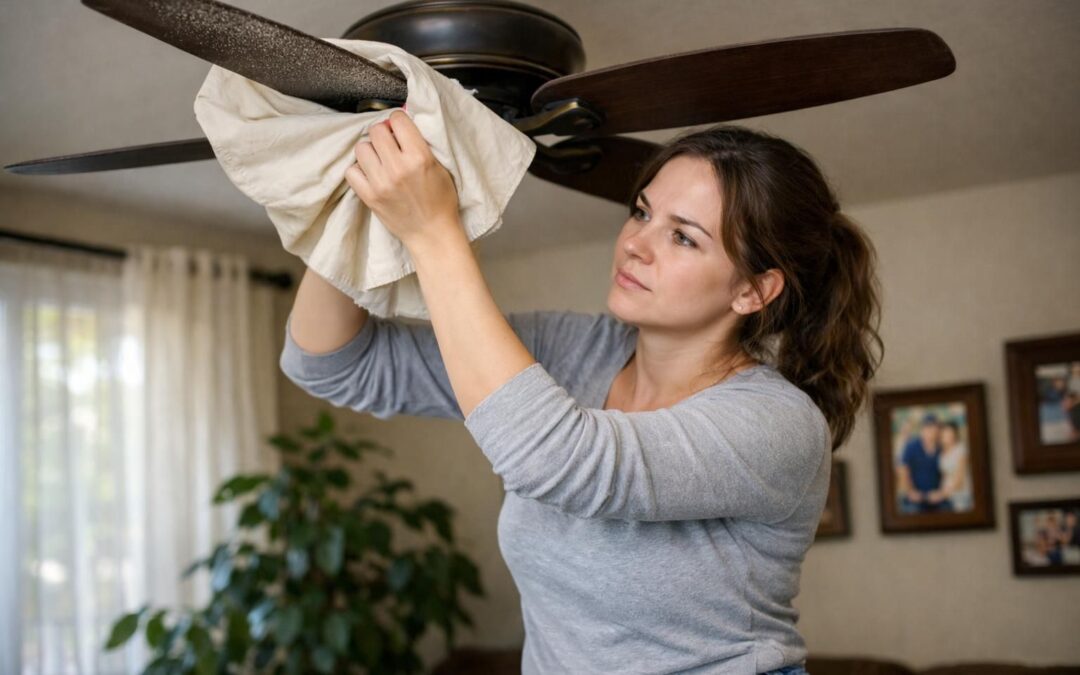
Dust sneaks up fast. One day the ceiling fan looks fine, the next it is wearing a fuzzy sweater. Many parents glance up and groan.
Ceiling fan cleaning seems simple, but the wrong move sprays dirt everywhere. Here is the good news. A basic pillowcase cleaning method traps dust before it hits the bed or floor. This guide walks through quick steps using microfiber cloths, a vinegar mix, and an extendable duster. This will help in your house cleaning routine.
Give it ten minutes. That is all most fans need.
Key Takeaways
- The pillowcase cleaning method catches dust inside the fabric, so debris stays off furniture. It is a favorite tip among home pros and busy parents.
- Tools like Heonay’s microfiber duster, model CJJ178, earn strong reviews and help reach high spots with ease.
- Mix equal parts white vinegar and water for an eco-friendly cleaner that cuts sticky grime on kitchen ceiling fan blades.
- Always switch off the fan first, use a stable step stool or ladder, and cover furniture below to prevent a mess.
- Make ceiling fan maintenance a monthly habit. Use anti-dust sprays, and check for loose screws so the fan runs safely.
Why Cleaning Ceiling Fans is Important
Beyond looks, dust can lower indoor air quality and trigger sniffles for kids and adults. When blades spin, they recirculate tiny particles across the room and onto cabinets and windows.
Regular dust removal with microfiber cloths or an extendable duster keeps air fresher and surfaces cleaner. A simple habit makes home life feel easier, especially for allergy-prone families.
Tools and Materials Needed
With the right kit, the job is quick. Grab these basics before starting.
Review the market price and list prices for these cleaning tools from reputable retailers. Check your receipt and details at checkout to confirm tax and list price information before finalizing a purchase.
Microfiber Cloths
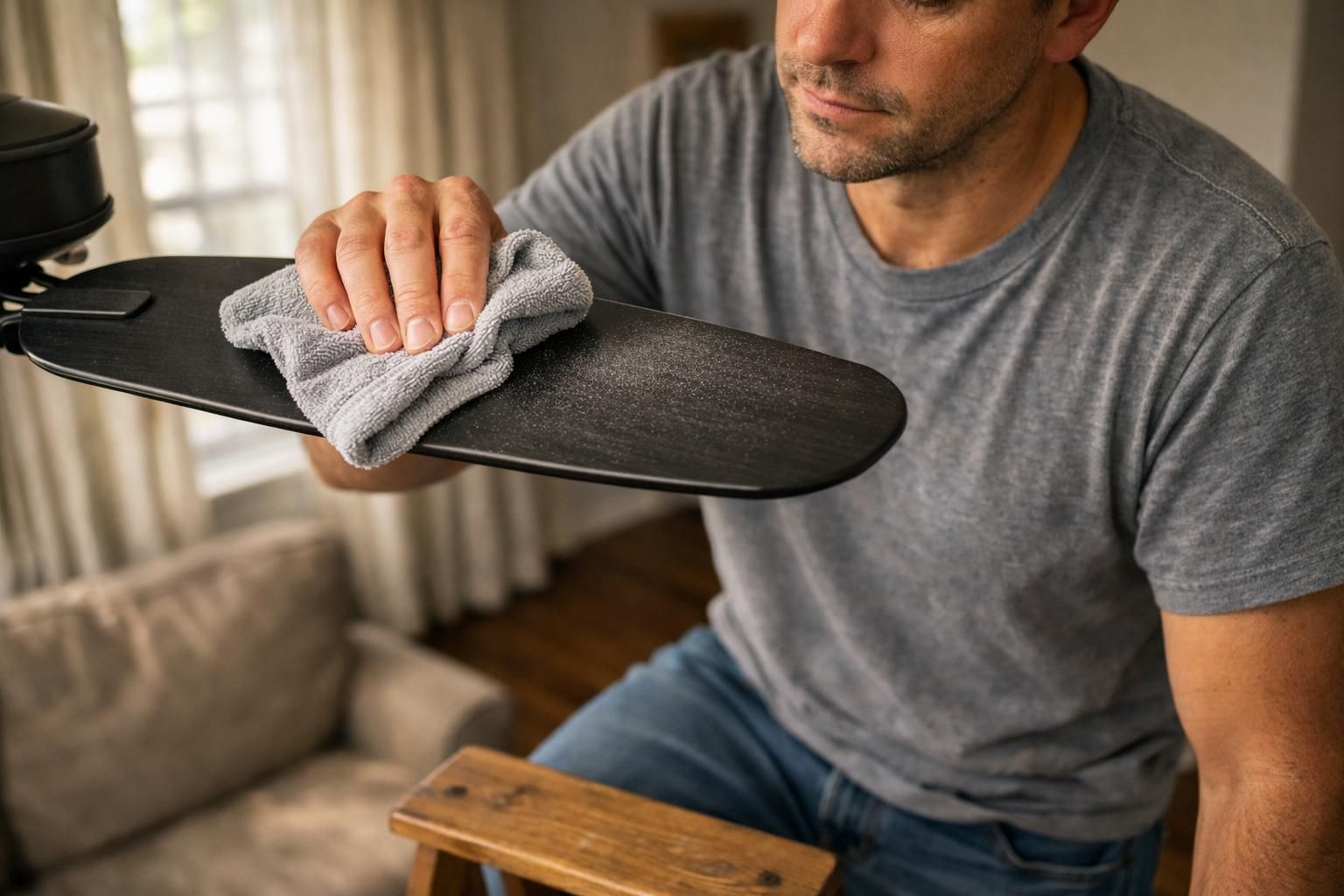
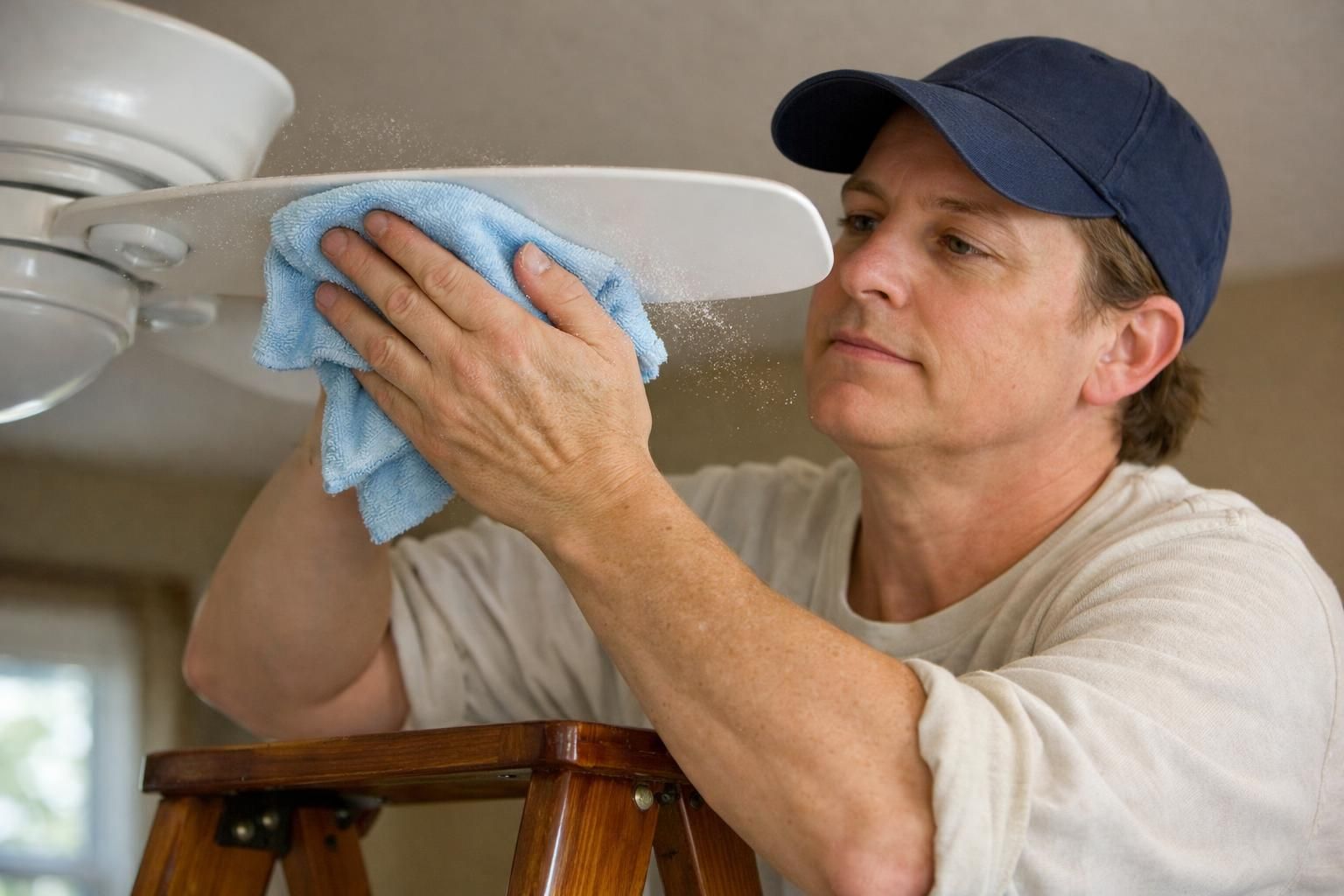
Skip paper towels. Microfiber cloths grab dust like magnets and keep it from floating around. Unlike old cotton rags, they trap fine debris so less lands back on sills or furniture.
They are gentle on finishes, so no scratches on painted blades or light covers. One slow pass often picks up most dirt, which saves time between cleanings. Rinse by hand and reuse, a win for the wallet and the trash bin.
Extendable Duster
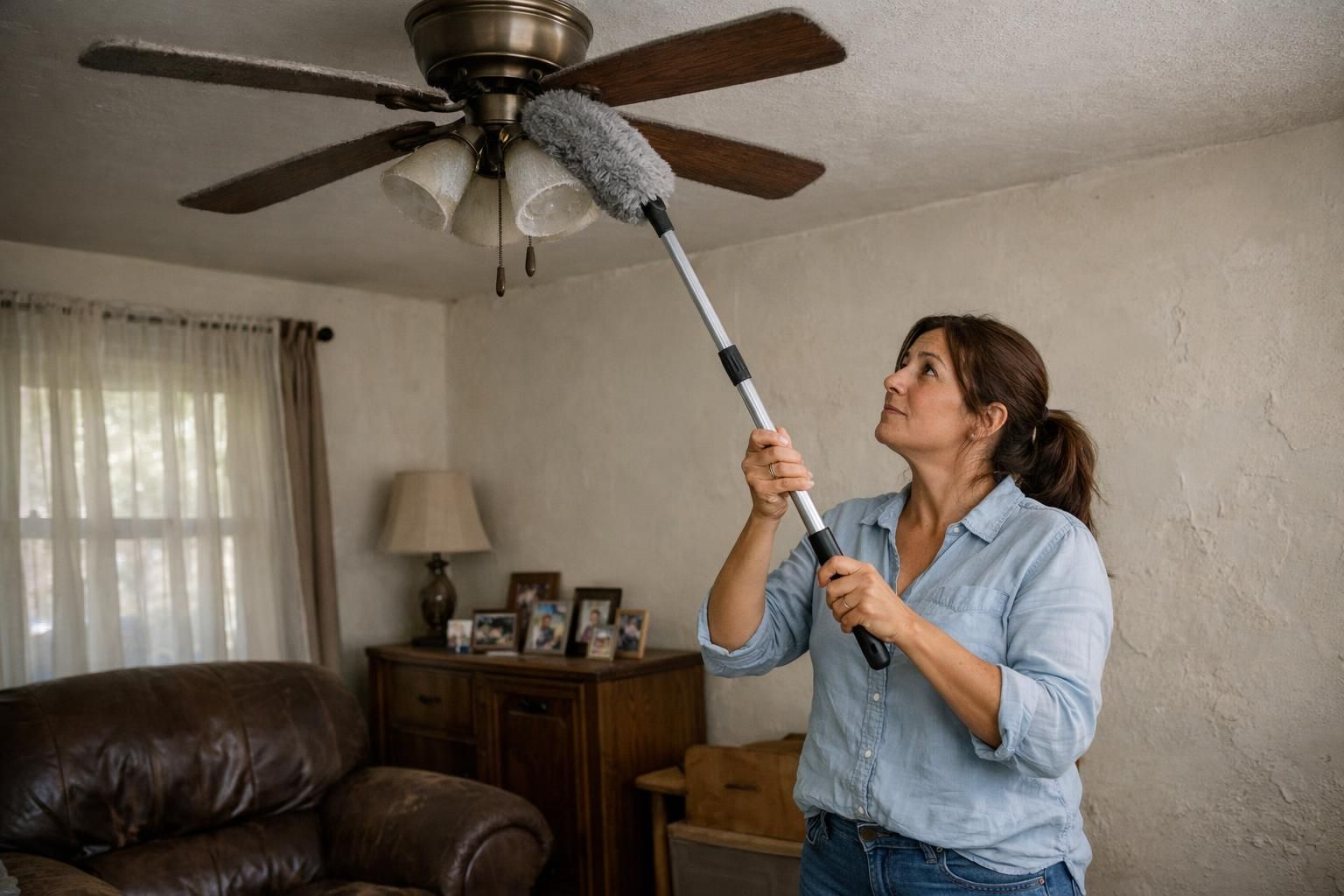
After a quick wipe, some dust hides in tricky spots. An extendable duster like the Heonay Ceiling Fan Cleaner Duster reaches high areas and odd angles. The bendable head and soft fibers pull dust from tight corners.
The pole extends from about 13 to nearly 50 inches, so many people can skip an extra step up the ladder. It is light in the hand, easy to store, and simple to wash. Since August 2023, it has collected thousands of strong reviews, which says a lot.

Large Pillowcase
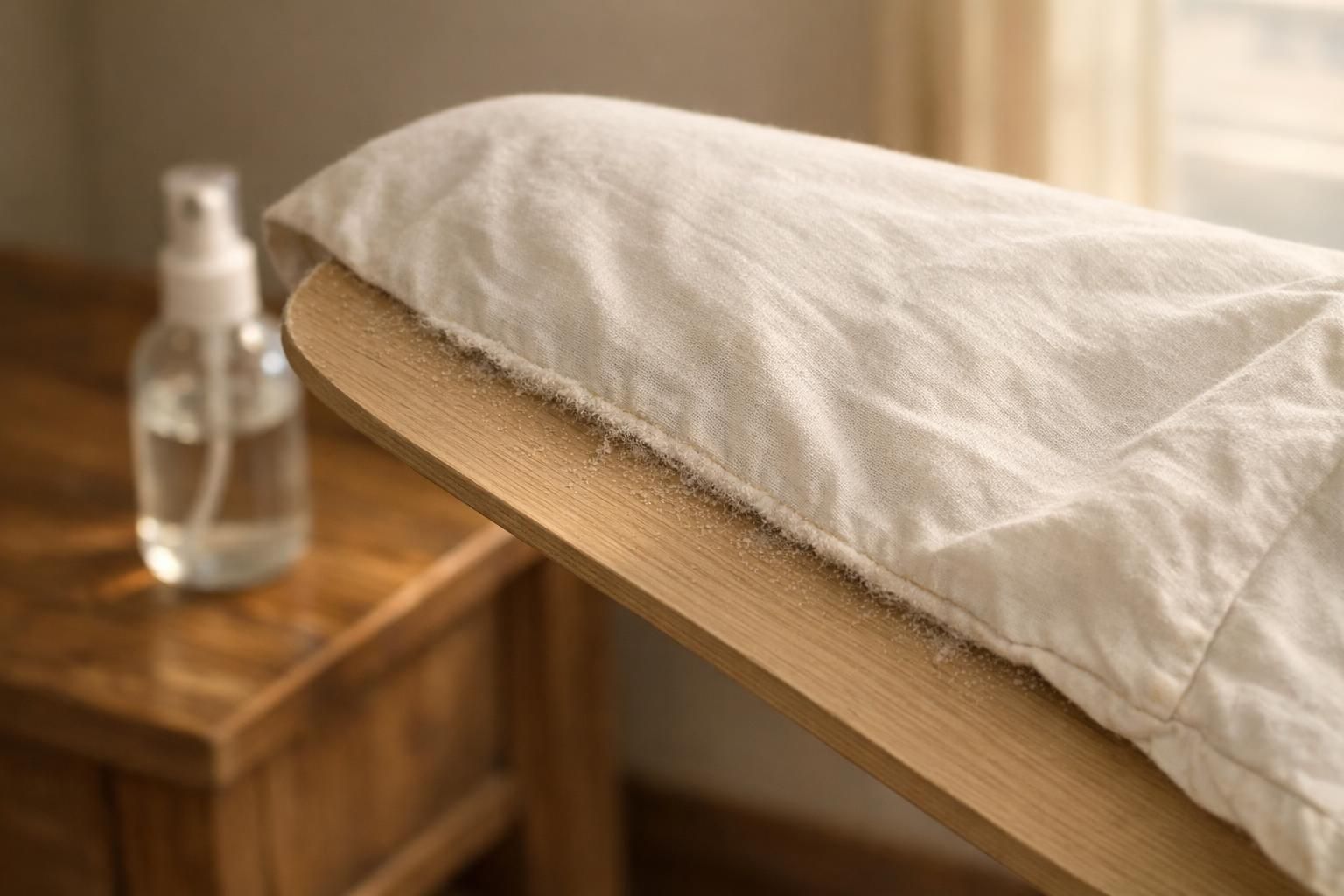
A large pillowcase makes ceiling fan cleaning neat. Slide it over each blade, then pull back to trap dust inside the fabric. Nothing rains down on bedding, hardwood, or the couch.
An old cotton pillowcase is perfect. For greasy buildup, mist the inside with a gentle cleaner or vinegar mix before wiping. Bigger fans, 52 inches and up, do best with an oversized case that covers the blade tip-to-tip.
Gentle Cleaner or Vinegar Solution
Sticky grime laughs at dry dusting. Mix a simple cleaner by combining equal parts white vinegar and water. Vinegar is a mild acid, which means it breaks down grease without harsh chemicals.
Spray the solution onto a microfiber cloth, or inside the pillowcase before sliding it over the blade. Wipe both the top and bottom of each blade until streaks disappear. In kitchens, this trick often saves an extra round of scrubbing.
Step Ladder or Stool
A stable ladder or step stool offers safe reach without standing on furniture. Pick one designed for indoor use, and set it on a flat floor.
Keep kids and pets clear while working overhead. Turn the fan off at the switch first. Stable footing beats speed every time.
Preparing to Clean Your Ceiling Fan

A little setup prevents a dust shower and saves cleanup time later.
Turn Off the Fan
Always switch the ceiling fan off before touching it. Moving blades can injure hands or a curious child.
If the wall switch fails, shut power at the breaker. Give the blades a few seconds to stop spinning completely. Safety comes first, every time.
Protect the Area Below the Fan
Spread a sheet or drop cloth under the fan. It catches dust bunnies and grit that fall while cleaning. Cover the bed or sofa if the fan hangs overhead.
Go wider than you think. Dust drifts. With the area protected, the pillowcase cleaning method works even better.
Methods to Clean Ceiling Fans

Dust can build faster than a puppy sheds. These methods keep it simple and tidy.
Using a Pillowcase to Capture Dust
Slip a large pillowcase over one ceiling fan blade at a time. Press gently on the top and bottom, then pull the case toward you so it wipes both sides at once.
Dust and fuzz collect inside the fabric, not on your floors. Use the same case to wipe the fan housing and brackets. Shake the pillowcase into a trash can, then wash it with the next load.
Wiping Blades with a Microfiber Cloth
After the pillowcase pass, polish with a clean microfiber cloth. The fine fibers grab leftover particles and leave a smooth finish on the blades.
Work from the center out to the tip to avoid bending the blade. A second cloth can shine light covers and the pull chain. Hand wash microfiber so it lasts dozens of cleanings.
Cleaning Hard-to-Reach Areas with an Extendable Duster
An extendable duster makes high spots easy, like the top of the motor housing and vents. The flexible head slides along edges and into tight corners.
Thousands of reviewers praise long, lightweight poles for safe reach. Keep feet steady on a step ladder, not on tiptoe. Rinse or hand wash the duster head after use so it is ready for next time.
Tackling kitchen fans comes next, since grease invites dust to stick.
How to Clean Kitchen Ceiling Fans
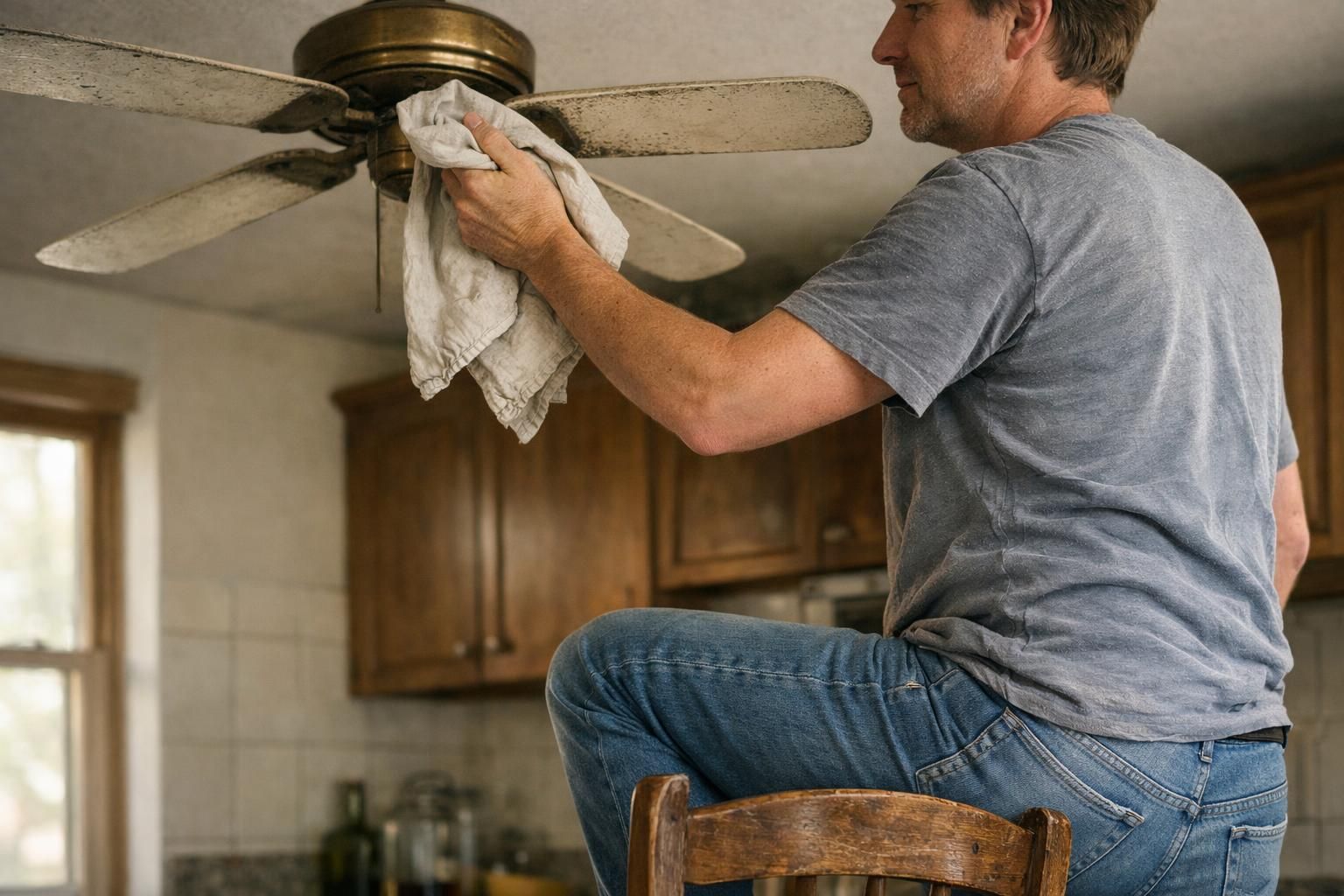
Kitchen ceilings can be sticky, so use a cleaner that cuts grease fast.
Removing Sticky Grease and Dust
Spray blades with a 50-50 mix of vinegar and water. Let it sit for five minutes so the film softens. Wipe with a microfiber cloth, paying attention to screw holes and edges.
For stubborn spots, use a soft sponge with dish soap and warm water. The pillowcase cleaning method keeps crumbs and grime from falling onto counters. An extendable duster helps around the motor cap and small gaps.
Using Degreasing Solutions
Some buildup needs a stronger degreaser. Spray the cleaner onto the blade, wait a minute or two, then wipe. The softened grime lifts with less scrubbing.
Keep a second cloth for a final pass so no residue remains. If using a duster on greasy areas, wash the head by hand afterward. Disposable gloves protect skin, and a dry towel catches drips.
Cleaning Ceiling Fan Motors and Housing
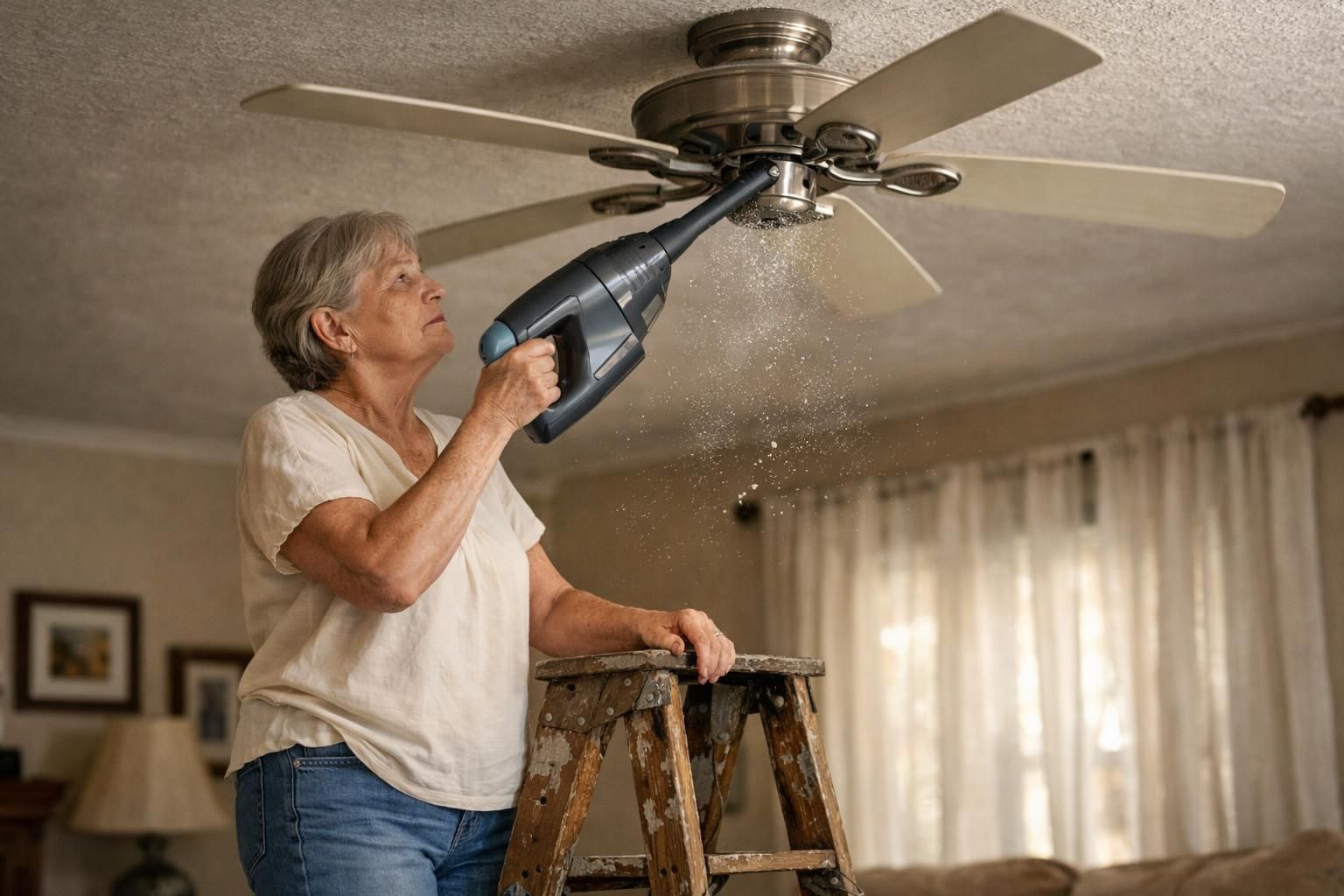
Dust near the motor reduces airflow and can strain the fan, so go gently here.
Safely Dusting Motor Covers
Use a soft microfiber cloth or an extendable duster to clean motor covers and vents. Make light strokes from the center outward to keep debris from falling into the openings.
Avoid liquid sprays around electrical parts. Slow, careful passes remove dust without loosening wires or screws.
Tips for Cleaning Vent Openings
Vent slots trap fine particles over time. A bendable duster head or a clean, dry paintbrush can sweep dust out of narrow gaps without scratching surfaces.
Work top to bottom and wipe the area below after. Regular vent cleaning helps the motor stay cool and keeps air moving well.
Maintaining Your Ceiling Fan
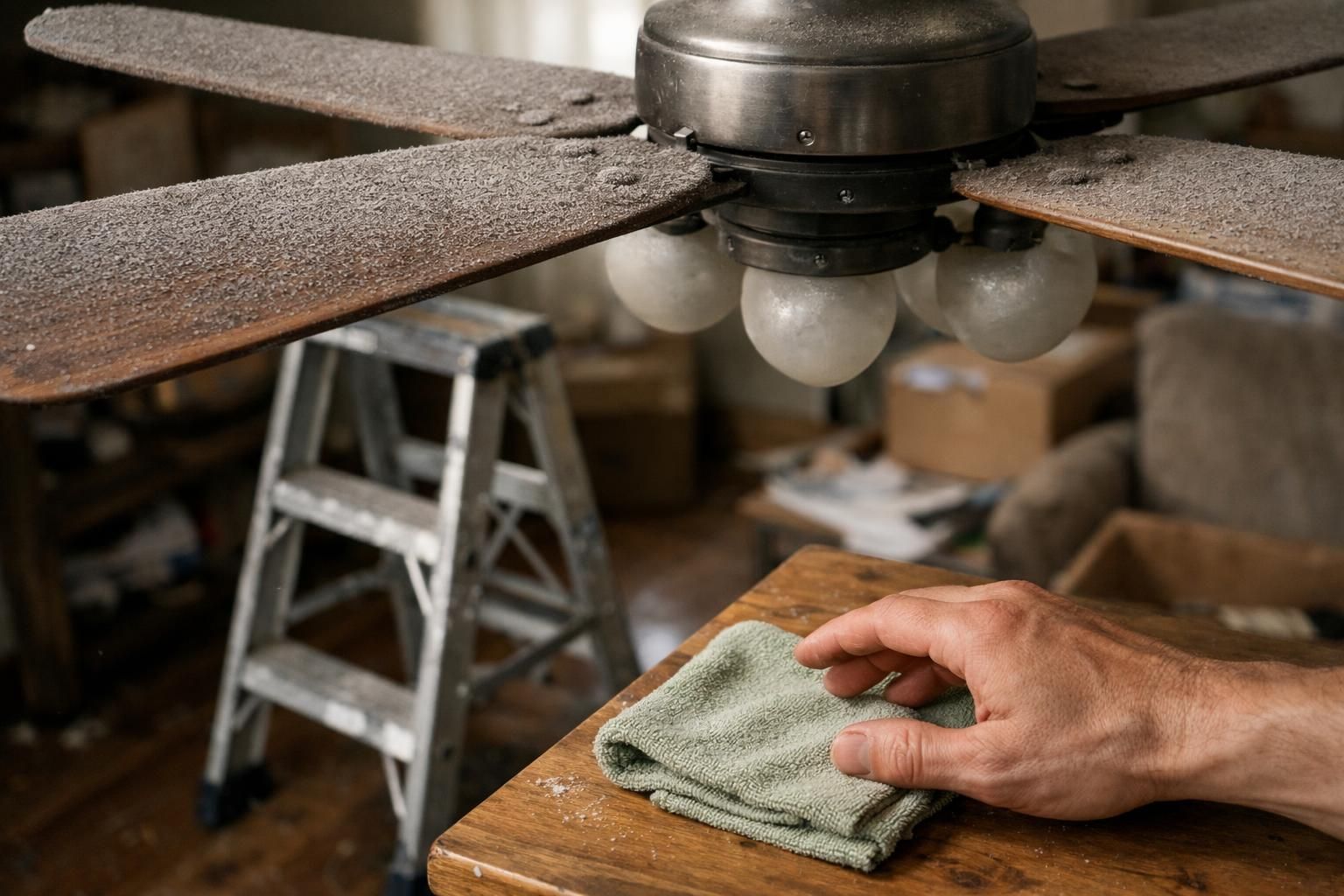
A steady routine keeps dust from piling up and the breeze feeling clean.
Regular Dusting Schedule
Plan to dust ceiling fan blades about once a month. Set a reminder on the phone or mark the calendar.
Use an extendable duster for fast upkeep, then a microfiber cloth for a quick polish. Busy kitchens may need biweekly care, especially during heavy cooking seasons.
Lubricating the Motor for Longevity
Over time, friction can cause noise. Check the owner’s manual to see if your model needs oil, many newer fans are sealed and do not. If lubrication is allowed, add a drop or two of light machine oil to the recommended points.
Place a rag under the motor to catch any drips. Never open electrical parts without guidance from the manual. If the fan still squeaks after oiling, call a licensed electrician.
Inspecting for Loose Screws or Damage
Wobbles often come from loose screws. Tighten blade arm screws and housing screws with a screwdriver. Look for cracks, bent brackets, or chipped blades.
Fix small issues now to avoid bigger repairs later. If the fan still shakes, a balancing kit or a pro can help.
Tips to Keep Ceiling Fans Dust-Free Longer
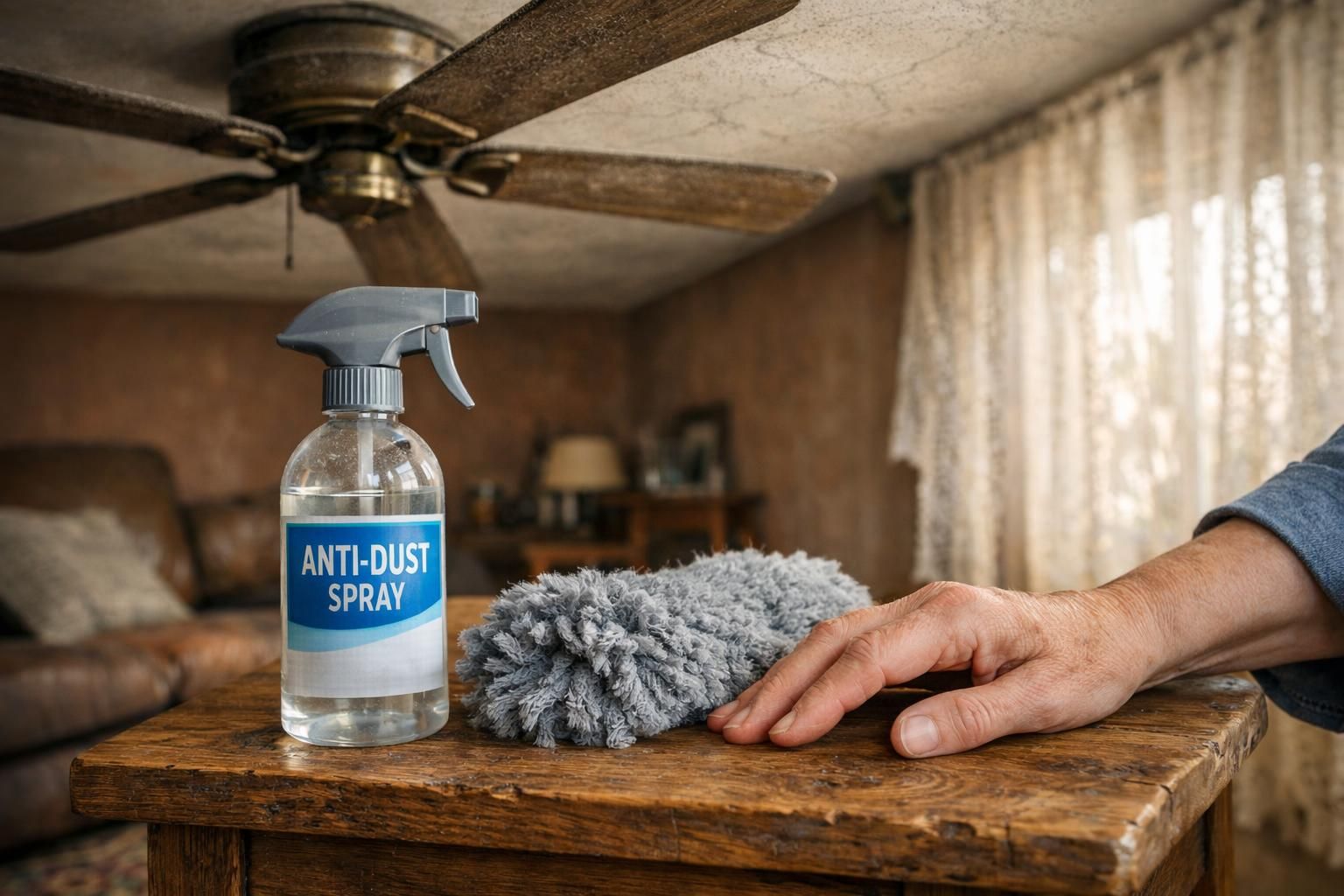
A few small habits slow buildup and make dust removal easier next time.
Use Anti-Dust Sprays
After cleaning, mist an anti-dust spray across each blade. These sprays leave a light barrier that helps repel particles and pet hair.
Apply a thin coat and wipe any drips before they dry. Treated blades usually need less frequent cleaning, which helps families with allergies breathe easier.
Adjust Room Humidity Levels
Balanced humidity keeps dust from clinging. Aim for 40 to 50 percent. A small digital gauge, called a hygrometer, shows the current level.
Use a humidifier if the air is too dry. If it is too humid, run a dehumidifier or open windows for a short time. In kitchens, turn on the range hood during cooking to reduce sticky steam.
Conclusion
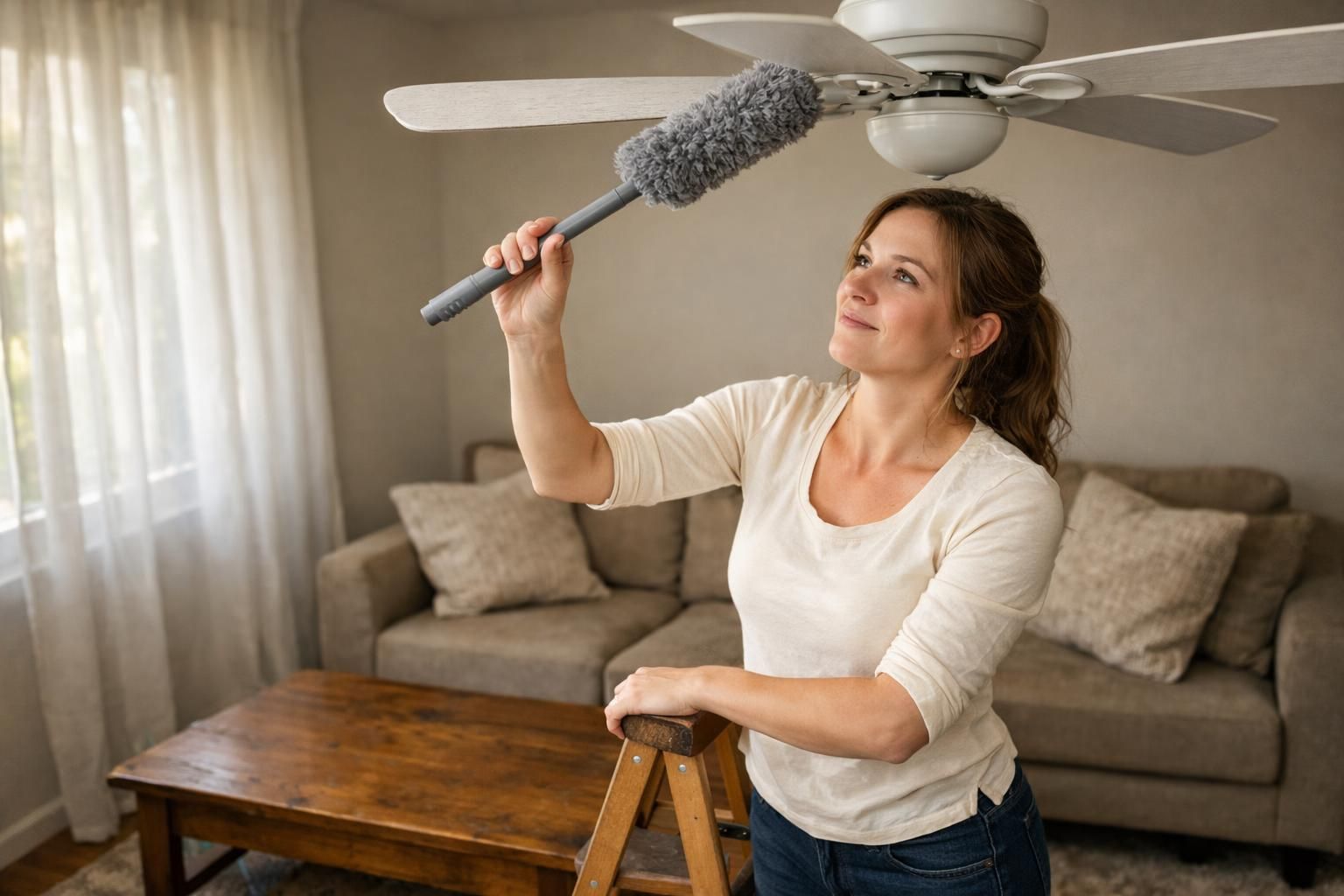
Ceiling fan cleaning does not need to be a chore. With a pillowcase, a microfiber cloth, and an extendable duster, anyone can clear dust in minutes. The pillowcase cleaning method keeps dirt off the bed, and a vinegar mix handles sticky spots.
Make it a monthly habit for easy ceiling fan maintenance and cleaner air. While you wipe, check screws and look for wear. A safe setup and a calm pace beat a rushed cleanup every time.
Ready for a fresher room? Grab the cloths, take a steady step up, and let those ceiling fan blades sparkle.
FAQs
1. How often should I clean my ceiling fan?
If you see dust bunnies clinging to the blades, it is time for a cleaning. Most people wipe down their ceiling fans every month or two. If your home collects dust quickly, check more often.
2. What supplies do I need to clean a ceiling fan safely?
Grab an old pillowcase, a sturdy step stool, and a gentle cleaner like dish soap mixed with water. A microfiber cloth helps catch stray dust particles too.
3. Can I clean my ceiling fan without making a mess on the floor?
Yes! Slip each blade inside the pillowcase and pull it back slowly; this traps most of the grime inside instead of letting it snow down onto your furniture or carpet.
4. Is there an easy way to reach high ceiling fans?
Use an extendable duster if you cannot climb up safely or ask someone steady-footed for help with tall ceilings. Never risk standing on wobbly chairs; safety comes first when reaching overhead fixtures like these.
Troubleshooting Common Cleaning Issues
If you experience dust resettling on your ceiling fan blades after cleaning, repeat the pillowcase cleaning method or use a fresh microfiber cloth for a final wipe. Confirm that the fan is completely switched off to reduce air movement during cleaning.
- If dirt remains on stubborn spots, reapply the vinegar solution on the affected blades and let it sit for an extra minute before wiping.
- If dust gathers outside the target area, extend the drop cloth to cover a larger space below the fan.
- If the fan housing still shows dust buildup, use a gentle, dry paintbrush or an extendable duster to clean delicate areas carefully.
Disclosure: Some links in this guide are affiliate links which may earn a commission at no additional cost. The recommendations are based on research and user reviews and are provided for informational purposes only.