
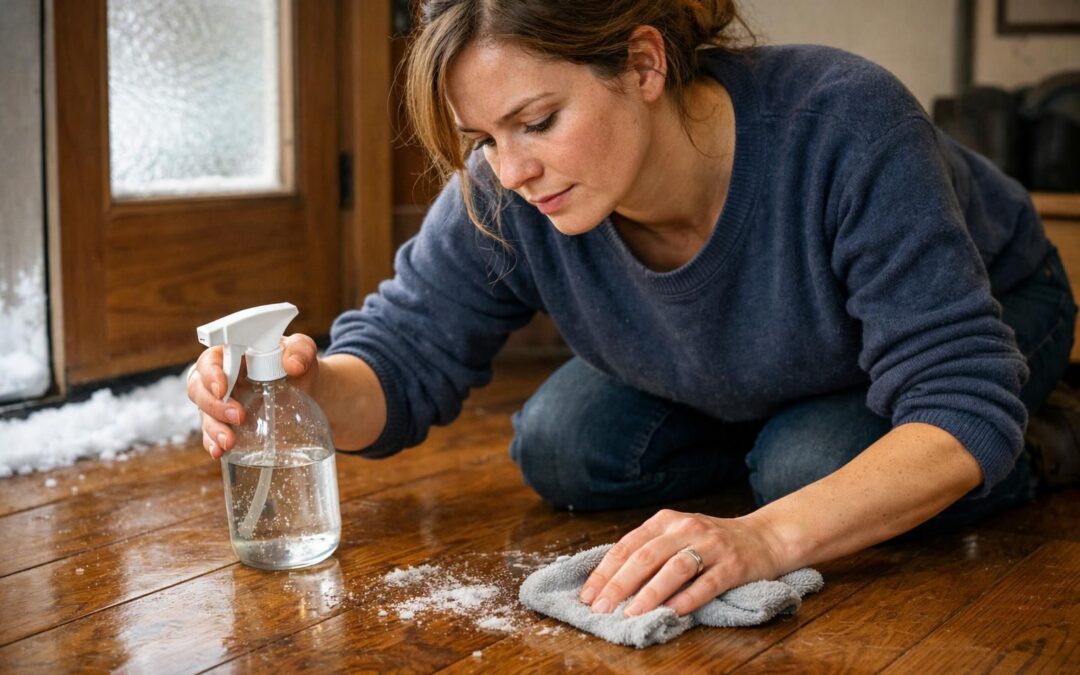
Salt stains on floors and entryway rugs can turn a cozy space into a map of white crusty rings. Road salt sticks to boots and paws, then dries inside like chalk. The good news, simple tools like white vinegar make stain removal fast and low stress during your house cleaning.
Left alone, salt residue looks awful and can scratch finishes or weaken fibers over time. It can stain shoes, break down carpet threads, and corrode some floor coatings if ignored.
Here’s the thing: anyone can fix this with a few basics, like vinegar, warm water, baking soda, and a gentle detergent. This guide lays out clear steps parents and homeowners can follow without special gear. Quick steps. Real results. Less winter hassle.
Key Takeaways
- A 1:1 mix of white vinegar and warm water breaks down salt stains on hard floors and entryway rugs.
- Regular sweeping and vacuuming remove loose crystals that scratch wood and embed in carpet fibers.
- Floor mats at doors can trap most tracked-in particles, which cuts stains and protects surfaces.
- Baking soda paste acts as a gentle scrub for stuck spots when vinegar alone is not enough.
- Prompt cleanup with non-toxic solutions prevents damage to hardwood finishes and rug fabric.
Why Are Salt Stains Common in Winter?

Winter brings slush, grit, and road salt that hitchhike indoors. Boots hit warm floors, the water evaporates, and the salt stays behind as white marks.
The Role of Road Salt in Icy Conditions
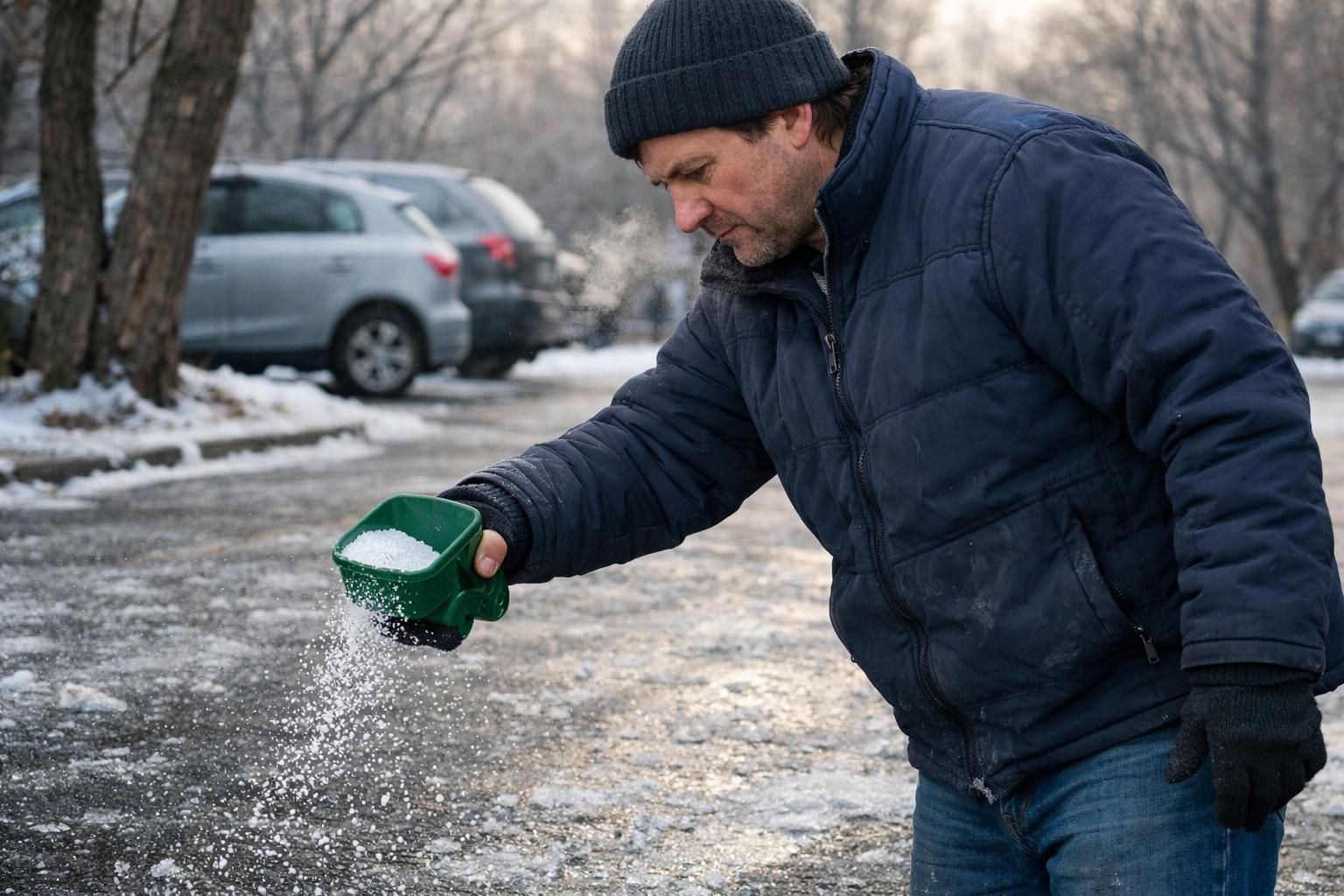
City crews spread salt on roads, sidewalks, and parking lots every winter. Salt lowers the freezing point, which helps melt ice and improves traction. As researchers explain, sodium chloride remains a common, inexpensive de-icer across North America.
Better grip reduces crashes, and even a small friction boost can cut accidents, according to one study on traction and safety. After melting, the water dries and leaves pale streaks, the mineral residue people call salt stains.
It keeps families safer outside, yet it raises the odds of stains showing up inside on floors and entryway rugs.
How Salt Tracks Indoors onto Floors and Rugs

How Salt Tracks Indoors onto Floors and Rugs
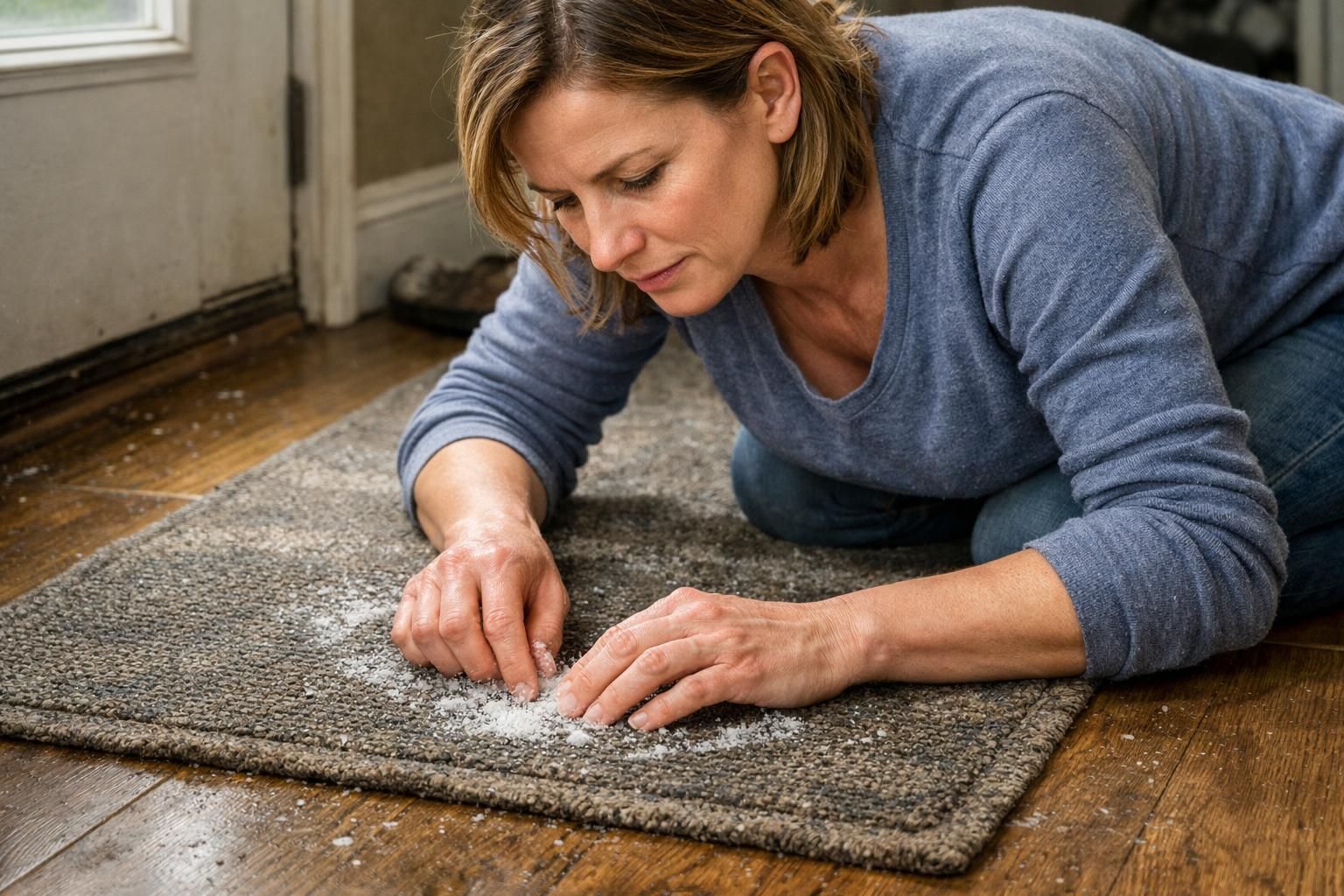
Boots and shoes grab salty slush outdoors, then drop it inside with each step. Hard surfaces like tile or vinyl show cloudy rings right away. Rugs soak up the moisture and hold crystals deep in the pile.
Most buildup happens near the door, where families kick off winter footwear. Regular vacuuming helps, but stains often stick. To lift the residue, a vinegar solution or a mild detergent usually does the trick.
Materials You’ll Need to Remove Salt Stains
No fancy tools needed. A few pantry items handle most winter stains on floors and entryway rugs.
White Vinegar
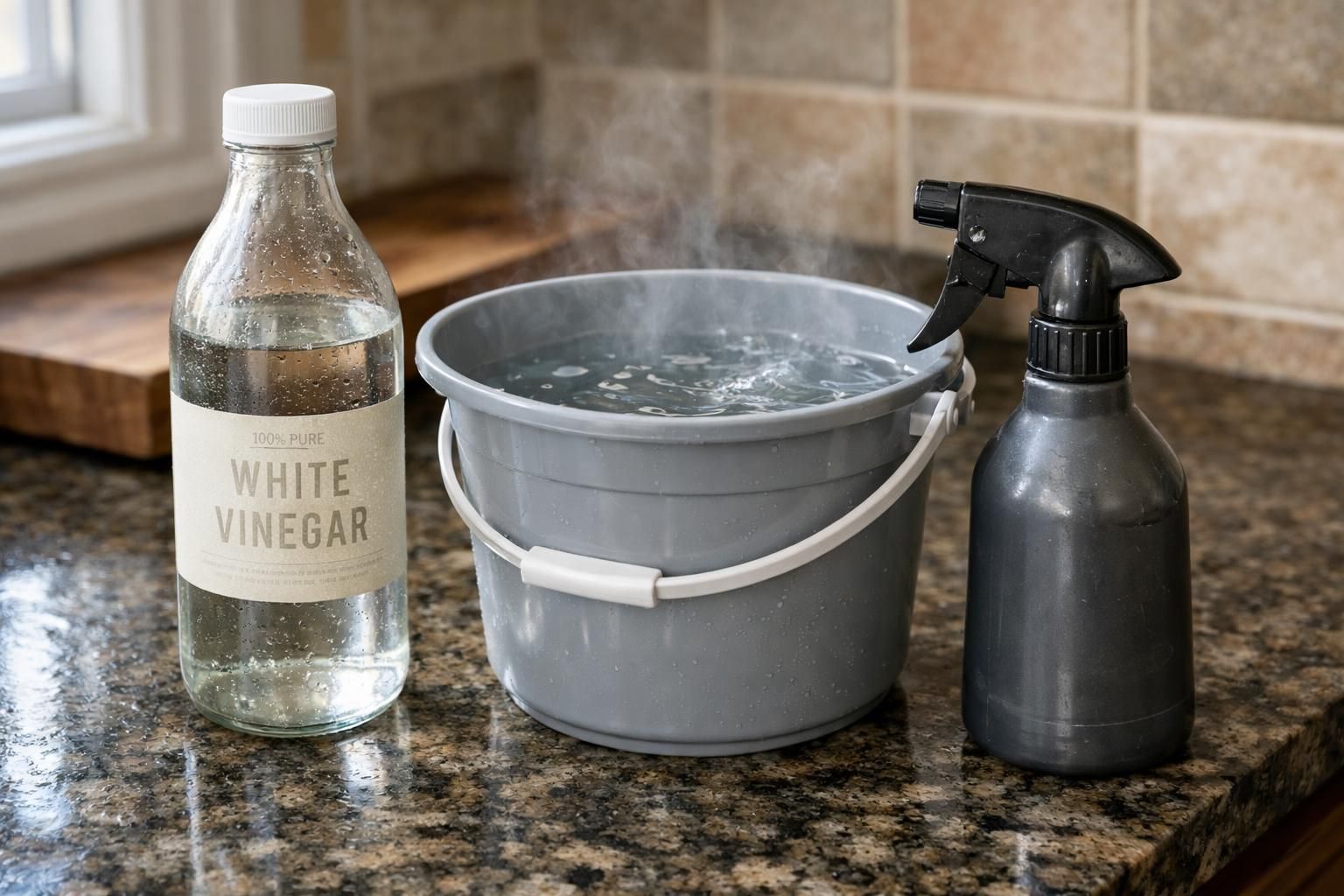
White vinegar is the go-to cleaning agent for salt stains. A 50-50 mix with warm water dissolves mineral residue on hard floors and rugs, as this simple solution shows. Many stores even sell pre-mixed options.
Vinegar neutralizes salt, lifts deposits from seams and grout, and helps protect finishes. It is non-toxic, budget friendly, and usually already in the kitchen.
Warm Water
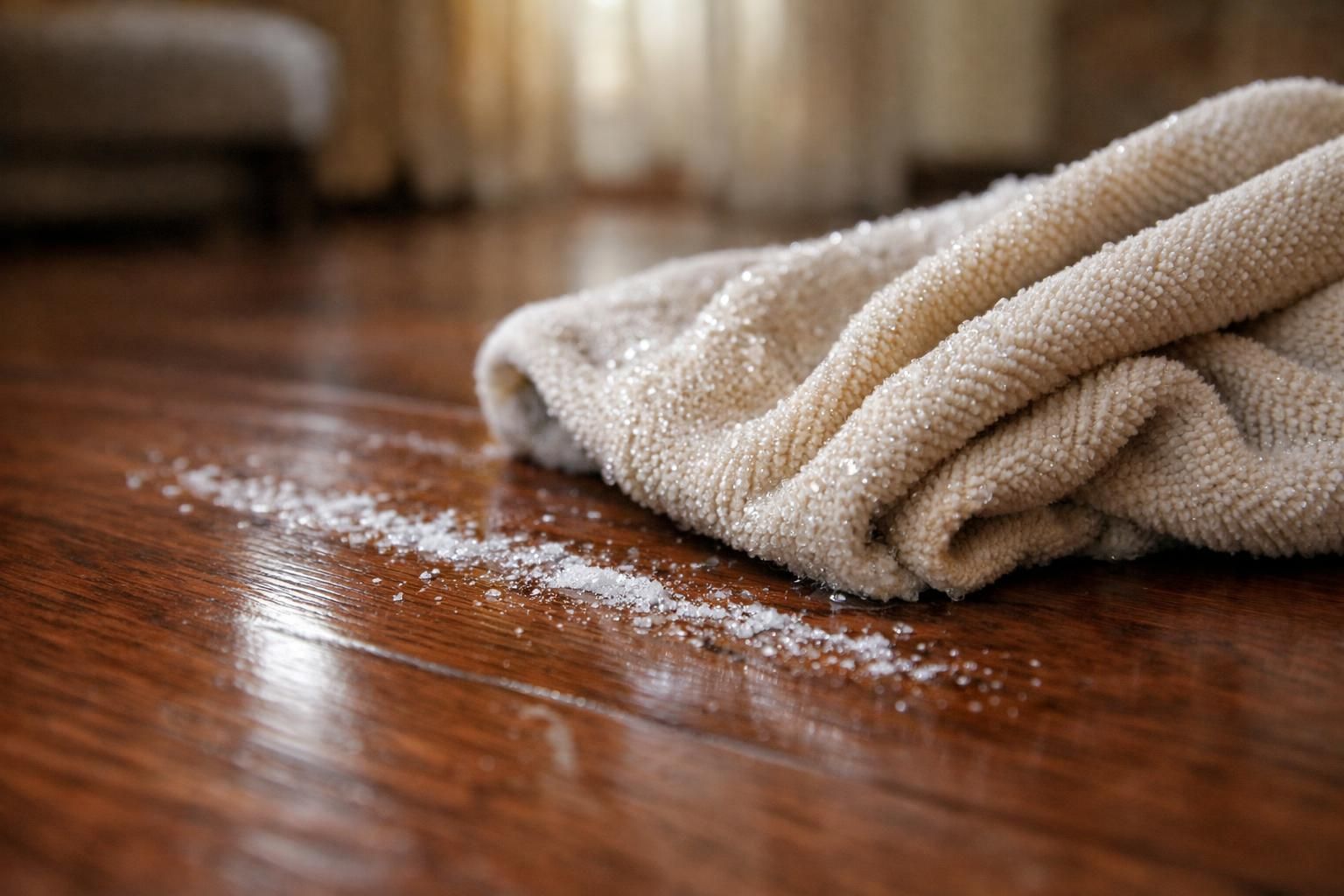
Warm water boosts cleaning power by helping dissolve crystals faster. Mix it 1:1 with white vinegar for most stains on wood look floors, laminate, or rugs. For carpets or car mats, that same ratio works well.
On durable hard surfaces, a drop of dish soap in warm water loosens grime. Use a sponge or microfiber cloth and avoid soaking real hardwood. Hot water can damage some finishes, so aim for warm, not scalding.
Soft Cloth or Sponge
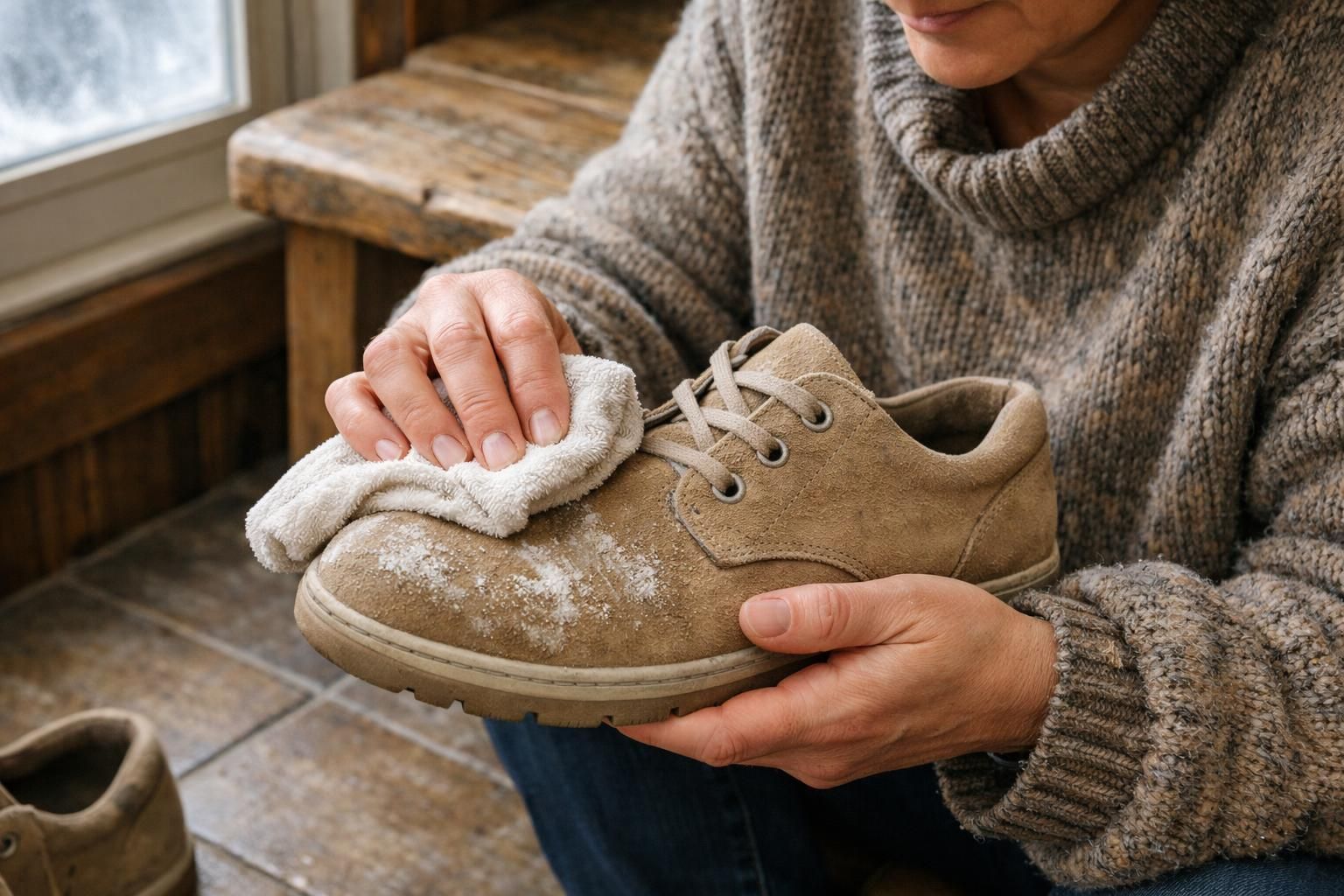
Use a soft cloth or sponge after mixing the solution. Harsh scrubbers can scratch floors and tear delicate rug fibers. A damp towel also works for wiping boots before stains set.
On suede shoes, dab instead of rubbing. Swap to a clean section of the cloth as it gets dirty. Paper towels shed lint, so stick with reusable cloths when possible.
Vacuum Cleaner
Before any wet cleaning, vacuum to remove loose salt and grit. A brush attachment lifts crystals from rugs and hard floors so they do not scratch.
For entry mats loaded with salt, a shop vacuum is handy after scraping off clumps. Vacuum again after scraping, then move to the vinegar solution. That order makes the wet cleanup much easier.
Soft Brush
A soft brush pulls residue from rug fibers without damage. An old toothbrush works well on seams, shoe treads, and tight spots. Soft bristles reduce fraying on carpets and runners.
For suede, a specialty suede brush or eraser helps lift white marks. Skip water on suede. If the stain will not budge, a professional dry cleaner can help.
Wet/Shop Vacuum
A wet vacuum removes dirty liquid from rugs and hard surfaces after cleaning. Most household vacuums are not made for liquids and can break if used on wet messes.
Use the wet vac to pull out salty water from entry mats and carpets. This limits moisture that can harm floors or cause odors. Afterward, let the area air dry fully to prevent mildew.
Steps to Remove Salt Stains from Hard Floors
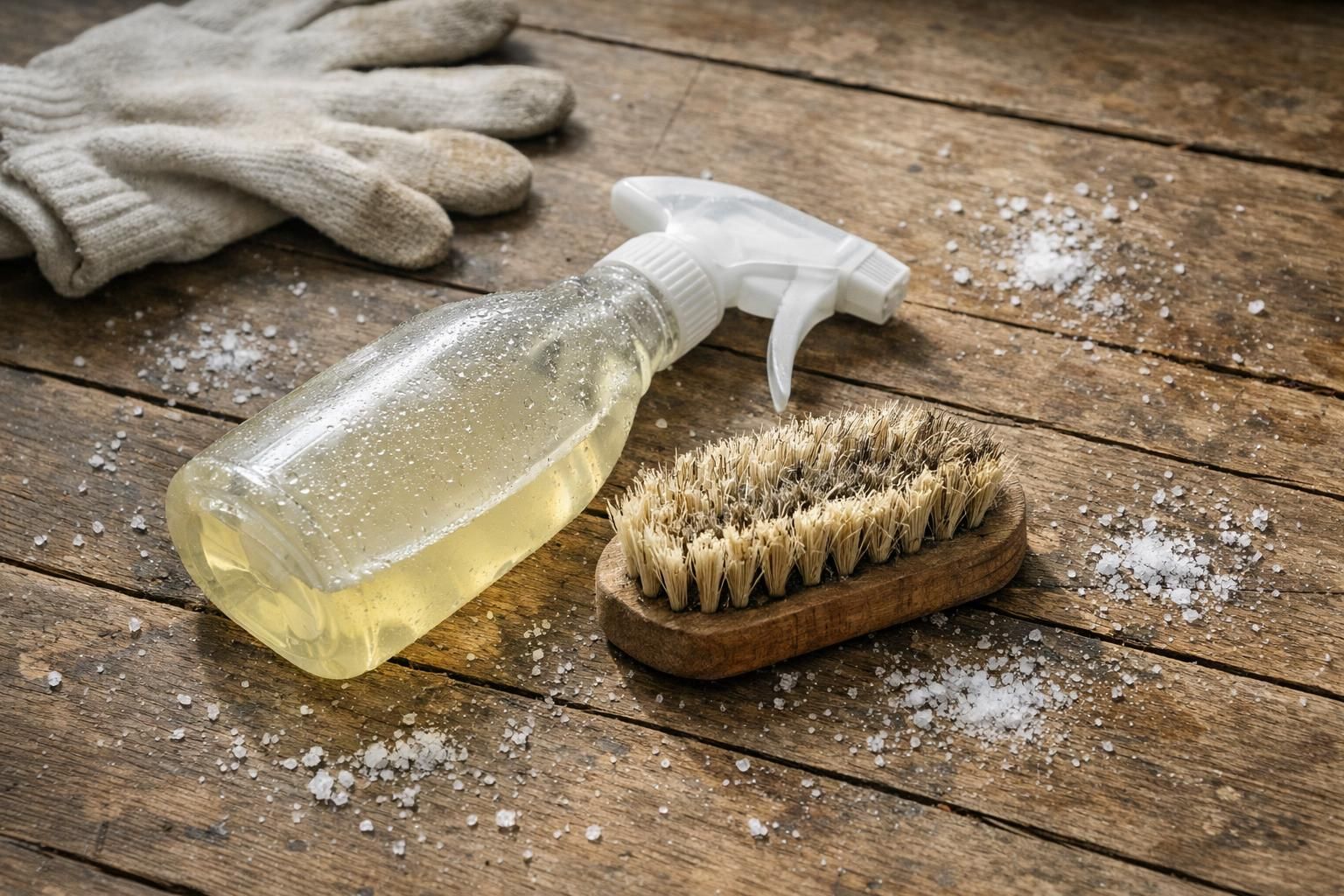
Salt sticks like gum under a desk, but vinegar and warm water break it down fast. Here is the simple plan for wood look, tile, vinyl, and stone look floors.
Sweep or Vacuum Loose Salt Crystals
Loose crystals act like sandpaper and can scratch. Sweep or vacuum with a brush head to remove grit before adding liquid.
Pick up larger chunks with gloves or a paper towel. Dry removal keeps salt from spreading and makes the next step more effective.
Apply a Vinegar and Water Solution
Mix equal parts white vinegar and warm water. Apply with a spray bottle, cloth, or soft brush. For larger areas, mist for even coverage and let it sit for up to one minute.
Press and dab at first to avoid smearing. On natural stone like marble or limestone, skip vinegar because it can etch the surface. Use a stone-safe cleaner instead.
Gently Scrub the Area
Use a soft sponge or brush to loosen the stain after soaking. Gentle scrubbing lifts residue without harming most finishes. On concrete, a stiffer brush is fine.
Keep working until the cloudy lines fade. Avoid abrasive pads on real wood, as they can scratch or dull the coating.
Rinse with Clean Water and Dry
Rinse with clean water to remove leftover vinegar, salt, and mild detergent. Wipe with a fresh cloth or mop to prevent streaks.
Dry right away with a towel or run a fan for airflow. Quick drying helps stop new marks and protects wood and grout. For safety, floors can be slippery while wet.
Steps to Remove Salt Stains from Entryway Rugs
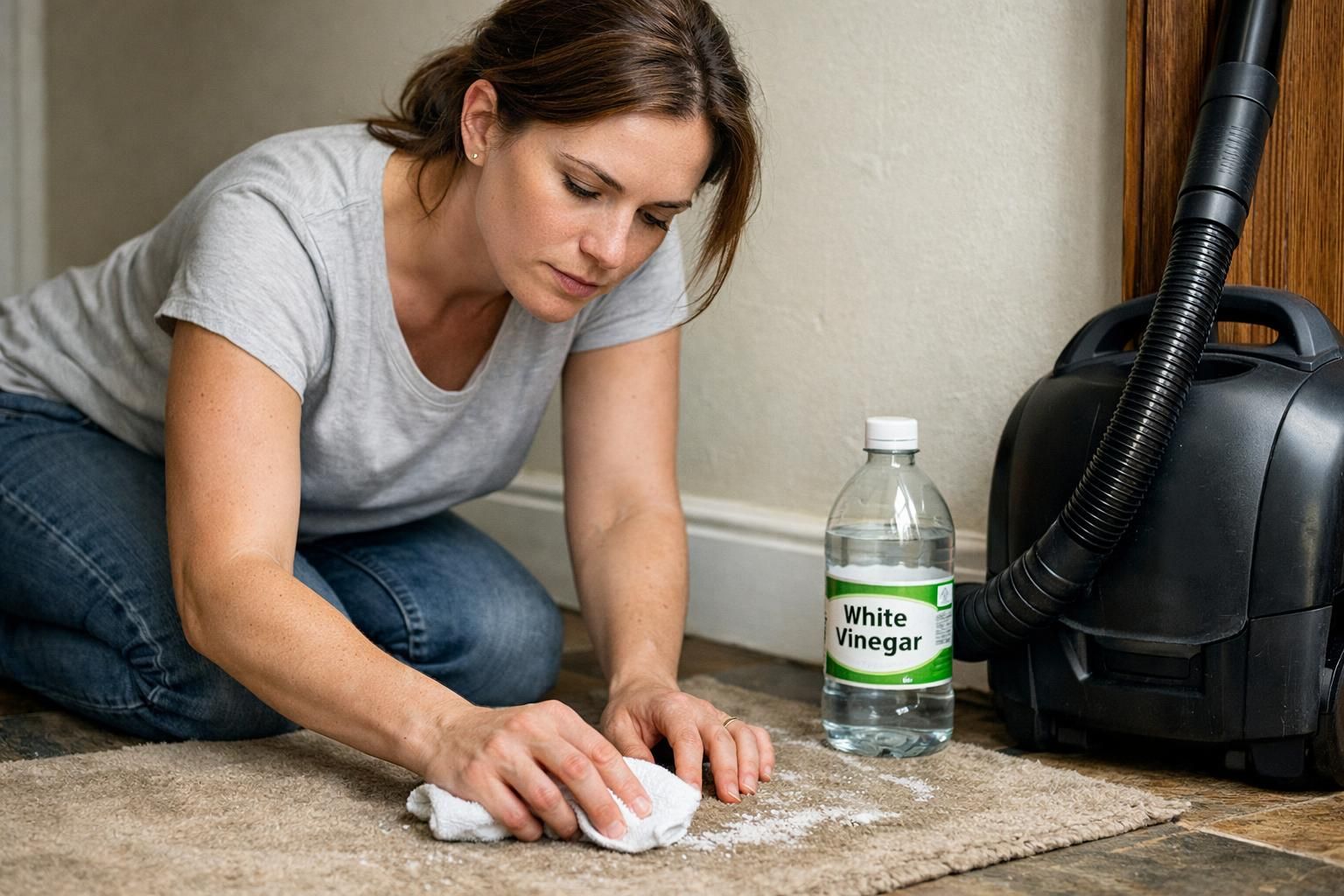
Entryway rugs take the worst of winter traffic. The process is simple, and it works on car mats too.
Vacuum the Rug to Remove Loose Debris
Vacuum first to collect grit and crystals before they grind deeper into the pile. Use a crevice tool for corners and edges.
If there is heavy buildup, scrape off crusty spots, then vacuum again. This sets up the stain removal step for better results.
Use a Vinegar Solution to Treat Stains
Mix a 1:1 vinegar solution and spray it directly on the stains. Let it soak for about five minutes to dissolve the salt.
For thick residue, reapply and wait another minute. Vinegar helps restore carpet fibers so rugs look fresher.
Blot with a Clean Towel
Blot the damp area with a clean towel to lift liquid and loosened salt. Pat, do not rub, which can push crystals deeper.
Switch towels or use a dry section as it gets soaked. Keep blotting until transfer slows and the stain lightens.
Rinse and Allow to Air Dry
Lightly mist with clean water, then blot again to remove any leftover solution. If the care label allows, small rugs can go in washing machines.
Lay the rug flat to air dry with good airflow. Avoid direct heat on delicate fibers. A wet vacuum can speed drying and prevent musty smells.
Tips for Stubborn Salt Stains
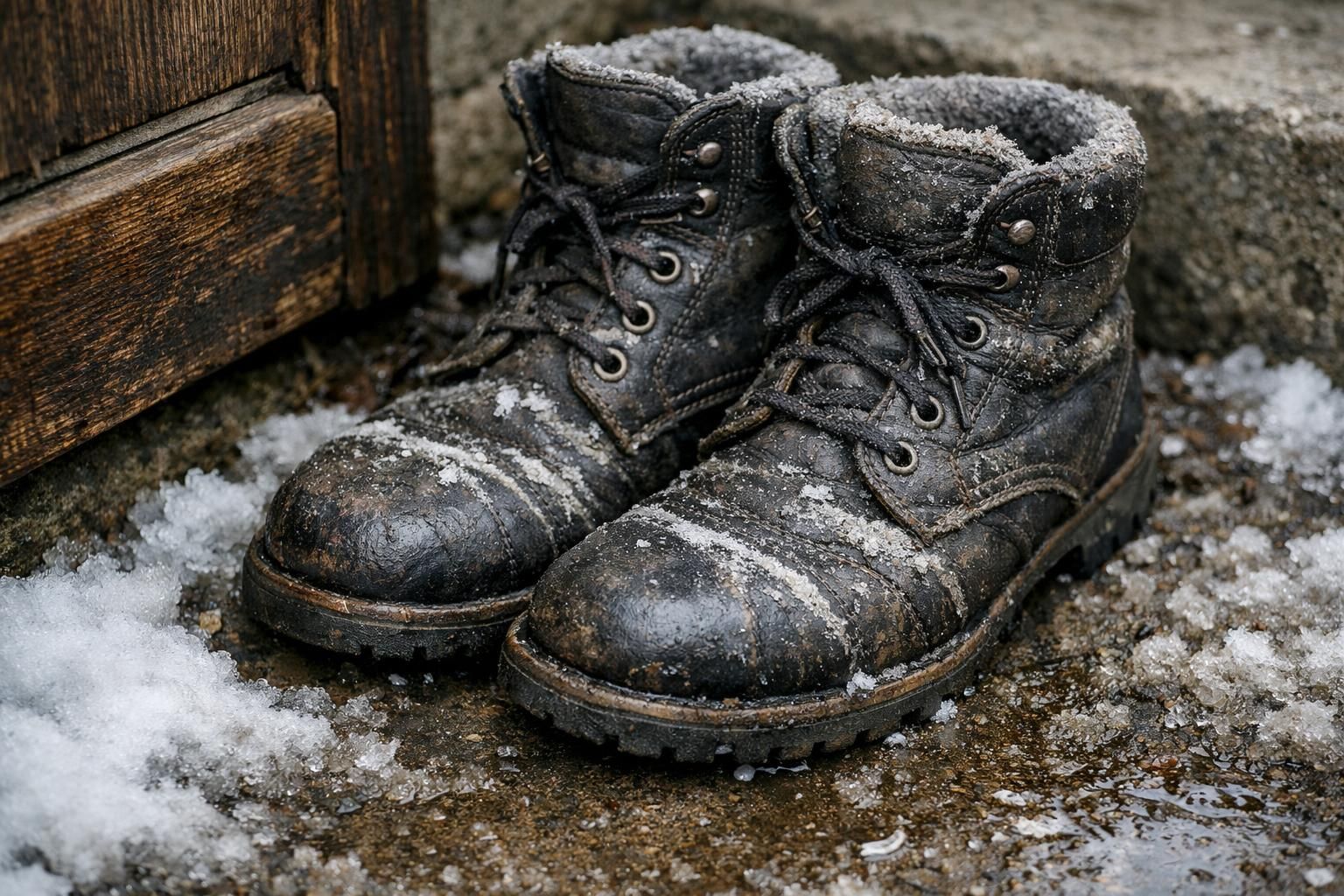
Some stains hang on like they paid rent. These fixes add a little extra muscle.
Use Dish Soap for Durable Surfaces
Dish soap helps on tough, sealed surfaces like tile or sealed concrete. Add a small squirt to warm water, then scrub with a soft brush or sponge.
Wipe up the dirty water so floors do not get slick or warped. If vinegar struggles, dish soap often loosens what is left.
Try a Baking Soda and Water Paste
Mix baking soda with warm water to form a thick paste. Spread it on the spot and wait five minutes.
Gently scrub in circles with a soft brush, then wipe clean and rinse. Test in a hidden area first. Baking soda adds light scrubbing power and helps with odors.
Preventing Future Salt Stains
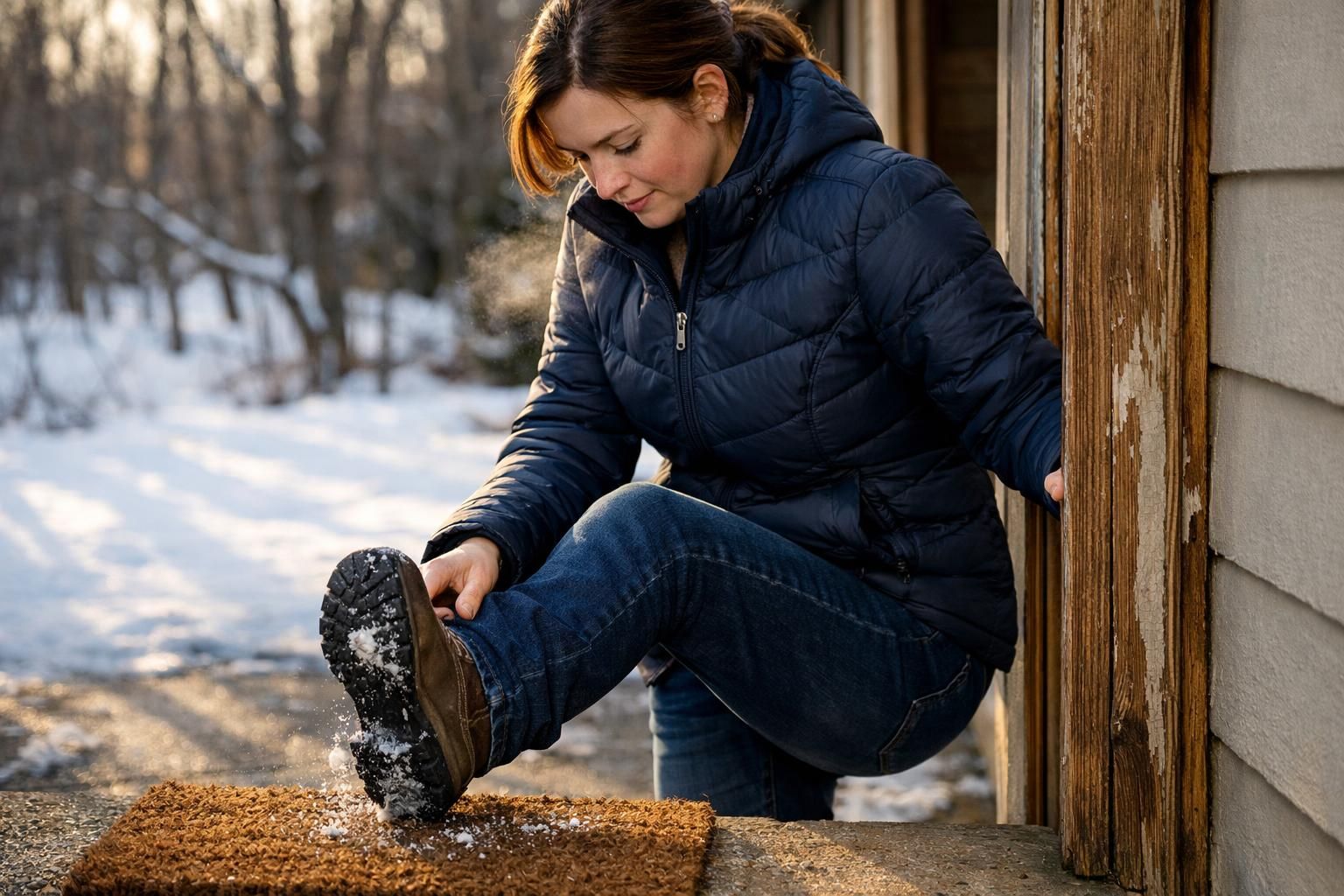
Stopping salt at the door beats cleaning it later. A few habits go a long way during winter.
Place Floor Mats at Entry Points
Use mats outside and inside to trap salt, snow, and grit. Shake or vacuum them often so they keep working.
Households with good mats see far fewer floor stains. A well-placed mat can catch most tracked-in particles. During big storms, set out an old towel as a short-term landing zone for wet boots.
Shake Off Shoes or Boots Before Entering
Give footwear a firm shake outside to knock off slush and crystals. A stiff doormat adds extra scraping power.
Teach kids to stomp and wipe on the mat. Taking shoes off near the entry keeps floors and rugs cleaner and reduces salt residue inside.
Regularly Clean Floors and Rugs During Winter
Even with mats, some salt sneaks in. Vacuum rugs often and sweep hard floors so crystals do not grind in.
In busy homes, brush rugs daily and wipe floors weekly with warm water and a gentle detergent. Quick cleanups prevent white rings and protect finishes.
Conclusion
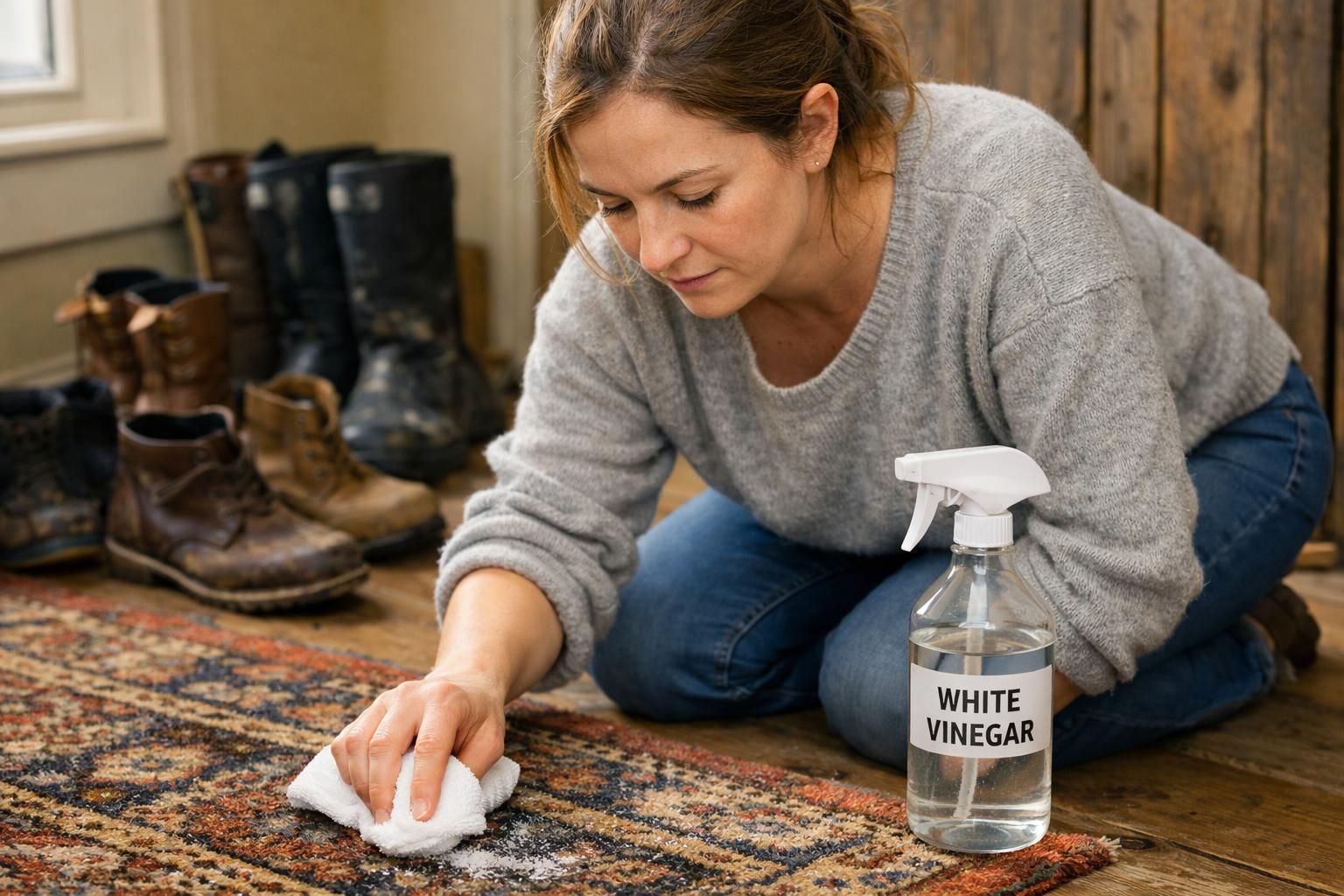
Winter salt can be tough, but it is beatable. White vinegar, warm water, and simple tools remove salt stains without harsh chemicals. Add dish soap or baking soda for stubborn stains, and use mats to cut down the mess.
Stay ahead with quick vacuuming and fast spot cleanups. A few small habits keep floors and entryway rugs looking good until spring. For long-term maintenance, regularly inspect surfaces and test cleaning solutions on a small area, especially on natural stone and delicate fabrics.
FAQs
1. What is the best way to remove salt stains from floors in winter?
Mix white vinegar with warm water for a simple vinegar solution. Mop the floor using this mix to break down salt residue. Rinse with clean water and dry right away.
2. How do I get rid of stubborn stains on entryway rugs?
First, vacuum up loose salt crystals. Next, blot the stain with a gentle detergent or mild dish soap mixed in warm water. For tough spots, use more white vinegar but test it first on a small area for fabric care.
3. Can I use regular laundry soap instead of special cleaners?
Yes, you can try mild detergent or gentle dish soap if you don’t have specialty products handy; just avoid harsh chemicals that might damage fibers or corrode surfaces.
4. What should I do if my suede shoes pick up salty marks near the door?
Brush off dried salt gently then dab a cloth dipped in diluted white vinegar over the spot; let them air dry fully before wearing again so you protect your shoes’ finish.
5. When should I call professional dry cleaners for help with removing salt stains?
If home methods fail and stubborn stains linger on delicate fabrics or expensive rugs, contact dry cleaners who know how to handle tricky winter cleaning tips without risking damage to your belongings.
Additional Cleaning Tips and Maintenance
Guidelines for Shoes & Boots (Leather/Suede)
- Brush off loose salt with a soft brush, such as an old toothbrush for crevices.
- Mix equal parts white vinegar and water to create a vinegar solution.
- Dab stain areas using a clean cloth dampened with the solution.
- Wipe the area clean with a fresh, damp cloth.
- Allow the item to air dry away from direct heat, then apply a leather conditioner for fabric care.
- For suede shoes, use a suede brush or eraser gently, or consult a professional for dry cleaning.
Methods for Carpets & Car Mats
- Vacuum thoroughly to remove loose salt crystals.
- Spray a 50/50 mixture of white vinegar and warm water using a spray bottle.
- Allow the solution to sit for a few minutes to dissolve the salt residue.
- Blot with a clean towel or use a wet/shop vac to extract the moisture.
- Lightly mist with water, blot again, and let it air dry completely using open windows or a fan.
Caring for Clothing Affected by Salt
- Pre-treat the stained area by rinsing with cold water or brushing off dried salt crystals.
- Apply a cloth dampened with the vinegar solution over the stain and let it soak.
- Launder the garment with a regular mild detergent following fabric care instructions.
Additional Tips & Tricks
- For durable surfaces, a mild dish soap mixed with water can also work effectively as an all-purpose cleaner.
- Commercial salt stain removers are available for stubborn stains.
- Avoid using a household vacuum on wet, salty carpets; use a shop vac to prevent damage.
For long-term floor care, regularly vacuum and inspect surfaces. Test cleaning solutions on a small, hidden area before full application, especially on natural stone and delicate fabrics. Consistent winter cleaning tips help reduce salt residue buildup over time.