Spilling candle wax on carpets, fabrics, or furniture can turn a quiet night into cleanup duty. One wobble, and wax hardens into a stubborn spot on a favorite rug or couch.
Many people try to fix it fast, then make it worse. Fresh spills are easier, so blot with a dry cloth right away. Waiting even an hour lets the wax grip fibers tight.
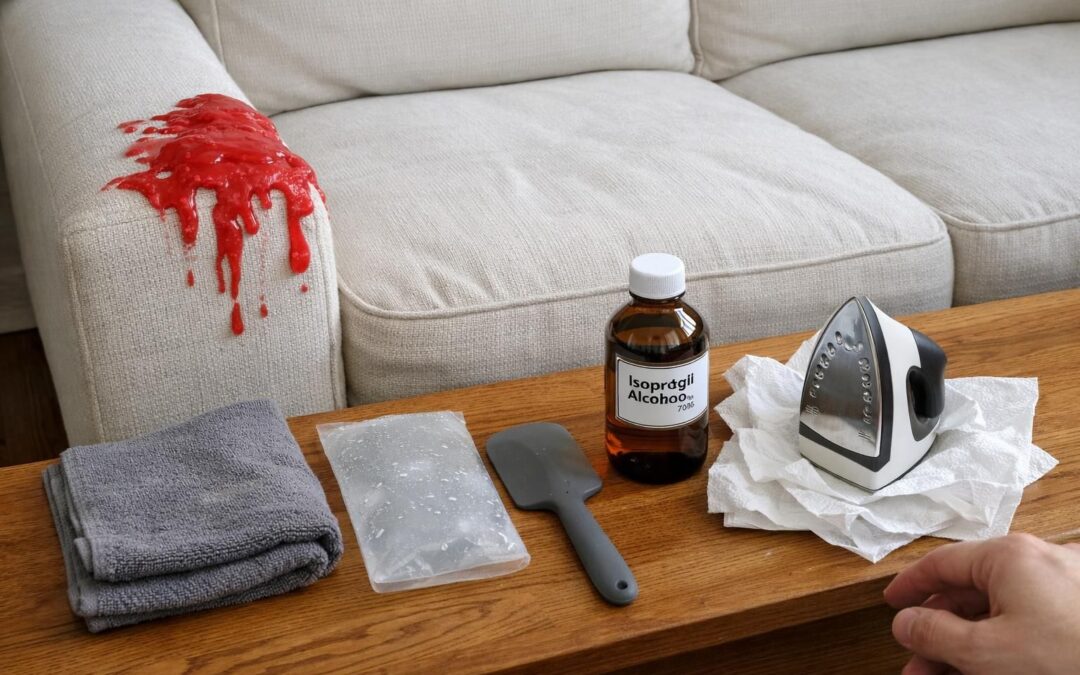
This guide shares clear steps for safe wax removal at home. Common tools like ice packs, a rubber spatula, isopropyl alcohol, or an iron with paper towels handle most messes without drama.
The ideas here keep cleanup simple for busy parents and careful homeowners. Curious which method works best for each surface? Keep reading.
Key Takeaways
- Harden wax with ice for one to two minutes, then scrape gently with a plastic tool to protect carpet fibers and wood finishes.
- Use paper towels and a warm iron, never steam, to absorb melted wax from carpets and fabrics. Swap towels as they fill.
- Remove leftover residue with isopropyl alcohol or furniture-safe cleaners. Always test in a hidden spot first, as noted by the American Cleaning Institute in 2024.
- Avoid harsh chemicals like bleach or ammonia on delicate surfaces. Mild dish soap or diluted white vinegar is safer for most materials.
- Quick action in the first hour improves results and reduces permanent stains, according to cleaning pros such as Merry Maids.
Overview: This section details the common methods that use cold, heat, and scraping techniques to remove candle wax effectively. Read the steps below to apply the best method for various surfaces.
General Methods for Removing Candle Wax

Wax on carpet, sofas, or clothes can kill the cozy mood fast. Luckily, simple tricks with heat or cold make cleanup safer and quicker.
Harden and scrape the wax

Hardened wax is easier to lift without spreading. A little patience prevents damage to fibers and finishes.
- Place an ice cube, cold pack, or bag of frozen peas on the wax for 60 to 120 seconds. The cold makes it brittle and less sticky.
- Grab a credit card, wooden stick, or plastic paint scraper. These chip off hardened wax without scratching most surfaces.
- Scrape gently. Slow, light strokes protect carpet fibers and prevent gouges in wood.
- Wipe loose crumbs with a dry microfiber cloth before they grind into weave or seams.
- For thin smears, dab isopropyl alcohol on a soft cloth. Test in a hidden area first to avoid fading.
- On stone, tile, or wood, let the wax cool fully before scraping. Rushing can cause scratches.
- Large chunks break apart after freezing, which makes chipping easier and cleaner.
- Avoid metal blades. They scratch finishes and turn a minor mess into a bigger problem.
- For fresh spills, blot gently instead of rubbing so hot wax does not spread into fibers or grooves.
Quick action and simple tools turn a sticky problem into a quick fix.
Use heat to melt and absorb the wax

Heat loosens wax so paper can pull it away. It works on carpets, fabrics, and even some wood finishes.
- Place a clean paper bag or several white paper towels over the cooled wax to prevent color transfer.
- Set the iron to a suitable level for the fabric. Do not use steam. Press and lift until wax melts and soaks into the paper.
- Swap paper as it absorbs wax to avoid smearing residue back onto the surface.
- For glass or mirrors, warm the wax with a hair dryer for 30 to 60 seconds, then wipe with a microfiber cloth.
- On clothing or upholstery, place an old towel on top before ironing. It draws up melted wax and shields fibers.
- Use lower heat on hardwood furniture. Warm just enough to soften wax without harming the finish.
- Let used paper cool before tossing it, since warm wax can stick to other surfaces.
- Treat any greasy marks with a carpet-safe stain remover or isopropyl alcohol as needed.
- Act fast after spills. Heat works best before wax settles deep into textured surfaces.
These moves pull out the wax and protect the surface at the same time.

Freeze and chip away brittle wax
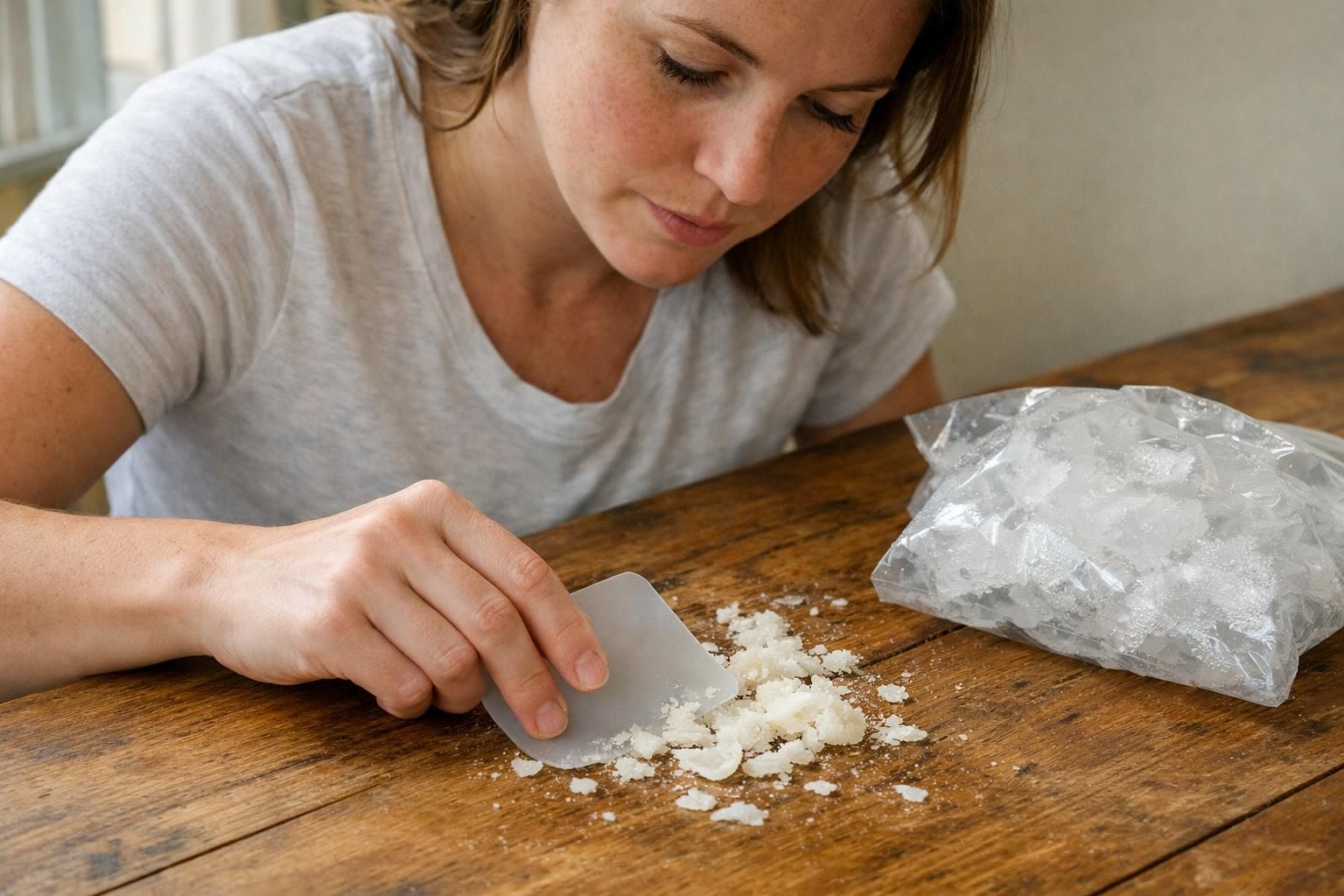
Cold turns wax into crumbs. That means less smearing and faster cleanup.
- Fill a plastic bag with ice and set it on the wax for 5 to 10 minutes. The bag keeps moisture off the surface.
- No bag handy? Use an ice cube, but work quickly to avoid drips.
- Press gently. Too much pressure can push wax deeper into fibers or seams.
- Once frozen, chip away with a plastic scraper or a dull table knife. Skip sharp metal blades to avoid scratches.
- Wipe all bits with a microfiber cloth so flakes do not scratch or spread.
- On wood or porcelain, two minutes of icing often does the trick, and frozen wax lifts in clean pieces.
- For thick spills on carpet, freezing turns sticky blobs into clumps that lift out by hand.
- On ceramic or tile, a quick freeze makes shiny blobs easy to pop off with little effort.
- Dry the area with a soft towel after removal to prevent water marks or damp carpet.
Freezing works especially well for big drips in high-traffic areas, and it is gentle on most fabrics.
Clean residue with appropriate solutions

Even after scraping, a faint oily mark may remain. The right cleaner removes the last traces and restores the finish.
- Dab isopropyl alcohol on a cotton ball and blot residue on carpet or upholstery. It loosens waxy film without soaking the area.
- Mix equal parts white distilled vinegar and water to wipe wood after wax removal. This clears oily marks while staying gentle.
- Spray streak-free glass cleaner on mirrors and glass once wax is gone. Wipe for a clear shine.
- Use mild dish soap in warm water on stone, then wipe and buff dry with a microfiber towel.
- Pre-treat colored stains on fabric with a carpet-safe remover. Blot until the color lifts.
- Always spot test first to avoid surprise damage or fading.
- Choose furniture-safe cleaners for delicate finishes and follow label directions closely.
- Buff the cleaned spot with a clean cotton cloth for a lint-free finish.
Overview: This section focuses on techniques specific to carpets, including applying ice, scraping, and using heat to absorb the wax. Follow the steps for best results.
Removing Candle Wax from Carpets

Wax on a rug can look like a disaster. With ice, a plastic scraper, and isopropyl alcohol, most spills come out clean.
Apply ice to harden the wax

Cold helps wax release from carpet fibers. It also prevents smearing during the next step.
- Place an ice cube or ice pack on the spill and let the cold work.
- Wrap the ice in a plastic bag to keep water off the carpet.
- Leave it for several minutes. Less than five is often not enough.
- As it hardens, the wax loses grip and lifts in bigger pieces.
- Use it on area rugs and wall-to-wall carpet with the same good results.
- Lift hardened wax with a plastic spatula or credit card, not a sharp knife.
- This step keeps soft wax from sinking deeper into fibers.
- No chemicals or heat needed yet, so it is kid and pet friendly.
- Start with cold before trying heat or liquid cleaners later.
- Even mid-party mishaps can be handled fast with this simple move.
Scrape off large chunks
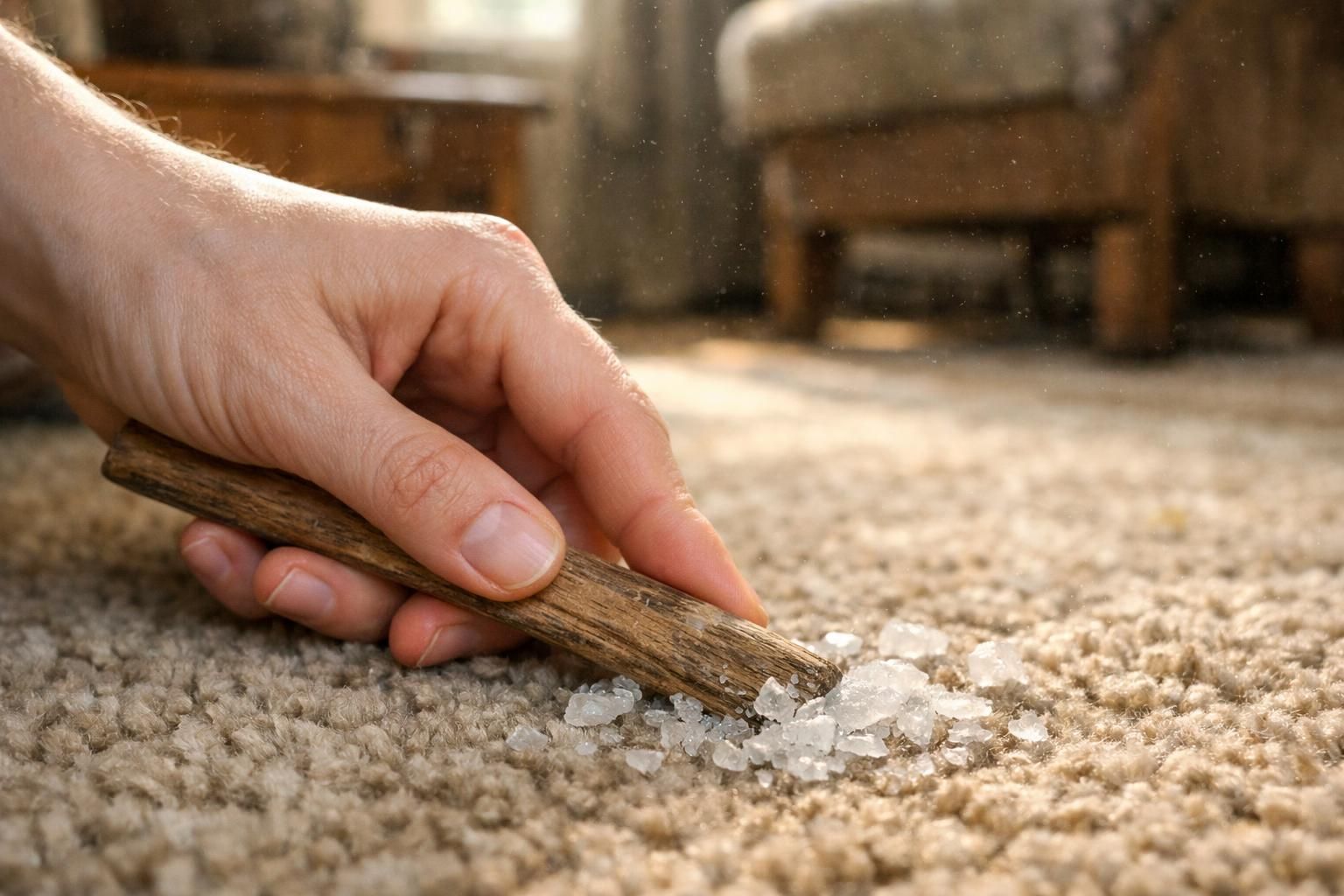
Once the wax is brittle, large pieces come up clean. Work gently to protect the pile.
- Use a wooden stick, credit card, or dull knife to lift big globs.
- Scrape with the direction of the carpet pile, not against it.
- Clear loose chunks before the next step for better results.
- Freezing with ice in a zip-top bag makes chunks release faster.
- Collect every piece as you go and throw them away.
- Avoid sharp blades that snag backing or pull threads.
- Vacuum afterward to pick up tiny flakes before adding heat or cleaner.
Use an iron and paper towels to absorb remaining wax
With the big pieces gone, heat pulls the last wax from deep in the fibers.
- Place several layers of paper towels or a clean brown bag over the spot.
- Set the iron to medium for synthetics or high for wool blends. Check the carpet care label first.
- Press for five to ten seconds at a time. Short bursts prevent scorching.
- Melted wax will transfer into the paper as you lift and press.
- Rotate in fresh paper as areas become saturated.
- Do not put anything under the carpet during this step. Treat only from above.
- Watch closely to avoid heat marks near edges and seams.
- Repeat until there is no more wax transfer on a fresh towel.
- Let the area cool, then lift any tiny bits with tweezers or a plastic card.
Clean with carpet-safe stain remover
Sometimes a faint ring remains after the iron step. A carpet-safe cleaner clears that last trace.
- Apply a trusted carpet-safe stain remover to the mark. Follow label directions.
- Let it sit a few minutes so it can loosen oils and dye.
- Blot with a clean cloth to lift out residue. Do not rub.
- Use gentle, non-abrasive cleaners to protect delicate fibers and colors.
- Let the area dry fully before judging results.
- Repeat if needed. Stubborn spots sometimes need a second pass.
- Avoid over-wetting. Too much water can lead to odor or mildew.
- Vacuum the dry spot to fluff fibers and even out the pile.
Overview: This section explains methods to remove candle wax from fabrics using freezing, ironing, and mild stain removers. Use these steps based on the fabric type.
Removing Candle Wax from Fabrics
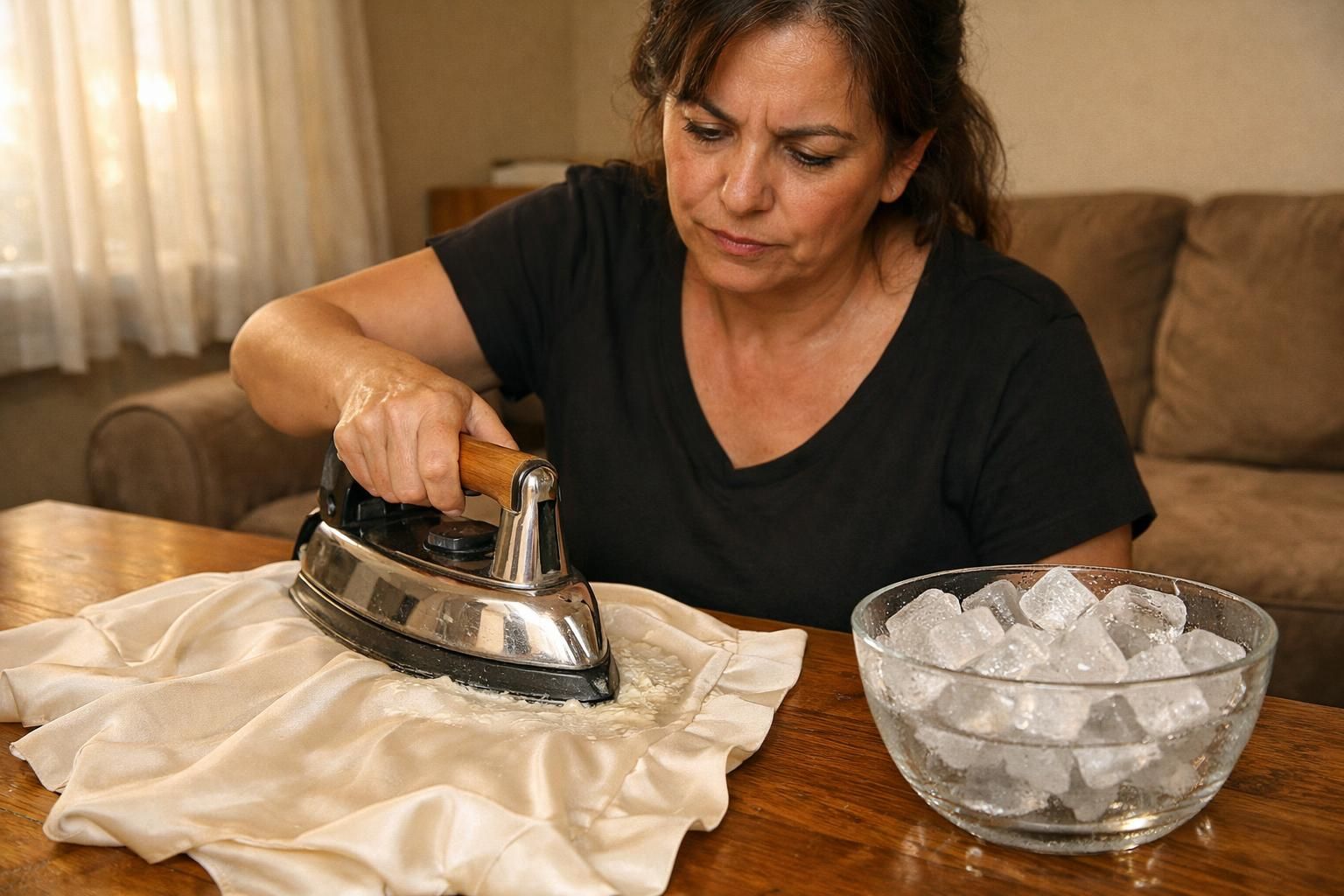
Wax on clothing, sheets, or upholstery is annoying, but fixable. Ice and an iron do most of the work.
Freeze the wax and scrape off excess
Freezing stops the spread and makes lifting easier. It also protects threads from tearing.
- Place an ice cube or small ice pack on the wax to harden it.
- Leave it at least five minutes. Stubborn spots may need a bit longer.
- Once solid, use a plastic scraper or card edge to lift off chunks without snagging fibers.
- Avoid sharp blades that can cut or pull threads.
- Hardened wax often peels off in one piece instead of smearing.
- Throw away the scraps so they do not get pressed back into the fabric.
- This method works for shirts, napkins, and couch cushions after parties or movie nights.
- Fast freezing limits spreading and keeps stains from setting deep.
Use an iron and paper towels to lift the wax
Heat pulls wax up into paper, not deeper into the cloth. It is quick and effective.
- Set the iron to low or medium, based on the fabric. Cotton can handle more heat than synthetics.
- Place a brown bag or several paper towels over the wax.
- Slip another towel under the fabric if you can, to catch any drips.
- Move the iron in short passes over the top. Let warmth, not pressure, do the work.
- Lift and swap towels as they absorb melted wax.
- Continue until no more wax transfers to fresh paper.
- Let used towels cool before tossing to avoid burns.
- Set tools within reach before starting for faster swaps.
Treat residue with stain remover or mild soap
Colored candles can leave dye or oil behind. A targeted cleaner removes that halo.
- Blot the spot with a dry towel to remove loose oils.
- Apply a fabric-safe stain remover to the area. Use extra on bold colors or scented wax.
- Let it sit for five minutes, or follow the label timing.
- Rub gently with fingers or a soft cloth. A soft toothbrush can help small areas.
- Blot with a clean towel and check for color transfer.
- Rinse with cool water for clothes, drapes, or slipcovers, then blot dry.
- Air dry instead of using a dryer, since heat can set hidden stains.
- Check again in daylight. Some bright waxes need a second round.
- Always test cleaners on a hidden corner first, especially for silk or velvet.
- No stain remover handy? Use mild dish soap. It works well for many fabrics.
Wash and air dry to check for remaining stains
Washing and air drying gives a clearer look at what is left. Heat from a dryer can lock in a stain, so wait.
- Wash the item on the cycle and temperature from the care label.
- Skip the dryer. Air dry on a line or lay flat to keep fibers safe.
- Inspect after drying. Hidden wax traces sometimes show up only when fully dry.
- If needed, repeat the cleaner step and wash again.
- Do not iron or machine dry until every trace is gone.
- Rinse out soap fully to prevent dullness over time.
- Fresh air also clears lingering cleaner or candle scents.
- Check seams, cuffs, collars, and folds. Wax loves to hide there.
Next up: How to clean candle wax from furniture without scratching the finish.
Overview: This section presents techniques for cleaning wax from furniture. Use cold methods, gentle scraping, and controlled heat to protect surfaces.
Removing Candle Wax from Furniture
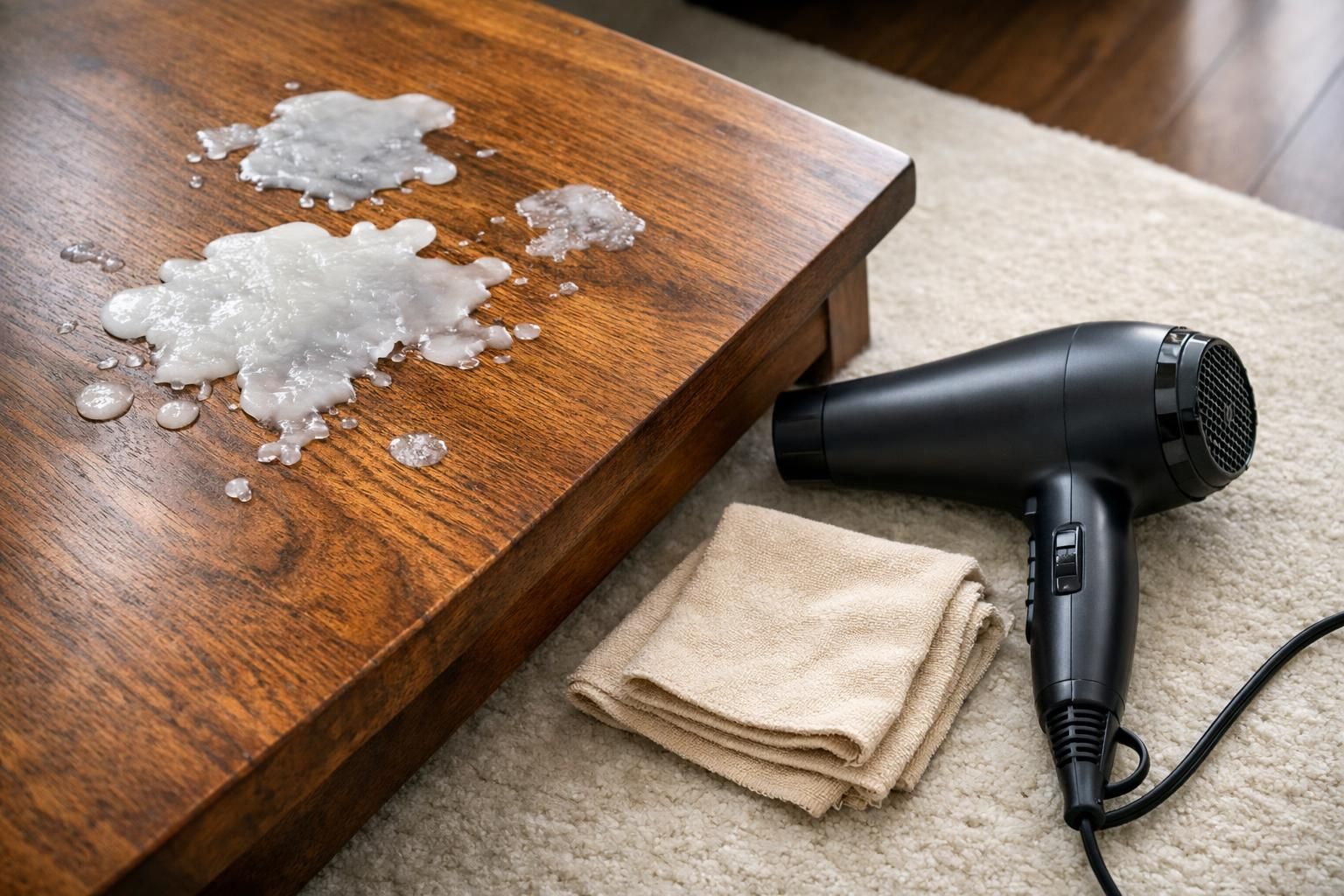
Wax drips on a coffee table can make anyone cringe. A little cold, light scraping, and gentle heat usually save the finish.
Harden wax with ice packs
Cooling keeps wax from smearing and protects wood grain. It also helps thick drips pop off cleanly.
- Place an ice pack or a plastic bag of ice on the wax for one to two minutes.
- Once firm, lift with a plastic scraper or an old credit card.
- This trick works well for heavy drips that resist wiping.
- Cold limits color bleed on unfinished wood and protects pricey finishes.
- Wipe small flakes with a soft cloth as soon as chunks come off.
- Ice stops sticky residue from sinking into cracks and joints.
- Most finished and unfinished pieces tolerate this step without harm.
With the wax hardened, scraping gets easier and safer for the surface.
Gently scrape using a plastic tool
Use the right tool and a light touch. The goal is to lift wax, not the finish.
- Choose a plastic paint scraper, credit card, or plastic putty knife to avoid scratches.
- Scrape as soon as wax turns firm but not rock hard. Large pieces often lift in one pass.
- Work with the wood grain to shield the finish.
- Collect loosened chunks so they do not smear onto clean spots.
- Avoid metal blades. They can gouge leather or scar wood.
- Take it slow on antiques to protect value and beauty.
- Check corners and grooves where wax collects.
- Finish scraping before using any liquid cleaner.
Use a hairdryer to soften and wipe the wax
A hairdryer softens stubborn bits without harsh chemicals. It is friendly to painted and sealed wood when used with care.
- Set a standard hairdryer to low or medium heat to protect the finish.
- Hold it about four inches above the wax and warm until it softens. Do not linger in one spot.
- Blot melted wax with paper towels or a microfiber cloth as soon as it loosens.
- Move the dryer side to side over grooves and textured spots.
- Replace paper towels once they are saturated to avoid smears.
- Continue warming and blotting until residue is gone.
- Skip harsh solvents here, since warm air is often enough.
- Let papers cool before tossing. Cooled wax can stiffen towels.
- This method keeps kids and pets safer by avoiding strong fumes.
- For tiny bits in carvings, repeat in short passes until clean.
Clean residue with rubbing alcohol or furniture-safe cleaners
After lifting the wax, a quick polish removes the last oily shadow. Choose a cleaner based on the finish.
- Test any cleaner or alcohol on a hidden section first to check for fading or damage.
- Use rubbing alcohol only on finishes that tolerate it. When unsure, skip it.
- Rub gently with a soft cloth in small circles to lift residue.
- Pick furniture-safe cleaners for specialty finishes to avoid dulling the surface.
- Wipe away extra liquid so moisture does not seep into joints.
- On wood, use equal parts white distilled vinegar and water when alcohol is not advised. It cleans without stealing shine.
- Buff with a clean cloth until the surface looks even again.
- If residue clings, try #0000 steel wool with cream polish. Rub with the grain and stop at the first sign of wear.
- Avoid products without clear labels for your specific material.
- Clearing all residue prevents oily smudges and keeps surfaces safe for kids and pets.
Quick Reminder: Always test cleaning solutions on a hidden spot. Use proper tools and mild solutions to safeguard delicate surfaces.
Additional Tips for Safe Wax Removal
Test cleaning solutions on a small area first
Dab a small amount of cleaner on a hidden spot, like under a chair cushion or behind a dresser. Wait 10 to 15 minutes, then blot with a white cloth.
Check for fading, rough texture, or marks before moving on. For fine wool rugs or vintage chairs, this step can prevent expensive damage.
In 2024, the American Cleaning Institute still advises patch testing every new product first. Different blends react in different ways, even with common cleaners or isopropyl alcohol.
Trendy hacks can backfire without this tiny test.
Avoid harsh chemicals on delicate surfaces
Bleach and ammonia have power, but they can damage wool rugs, velvet, and many finishes. Some polishes also cloud wood.
Gentle options, like white vinegar diluted with water or mild dish soap, remove residue with less risk. Microfiber towels beat abrasive pads for most jobs.
Treat delicate items like heirlooms. Going gentle helps them last.
Use tools that won’t damage the material
Plastic scrapers, credit cards, and old gift cards remove wax without tearing threads or scratching wood. Metal blades scratch fast.
Buff with a soft cotton or microfiber towel to pick up tiny bits. Use light pressure and let the tool do the work.
For tough stains on sofas or rugs, patience beats force. Use kid and pet safe products in shared spaces, and follow care guides from the manufacturer.
Conclusion
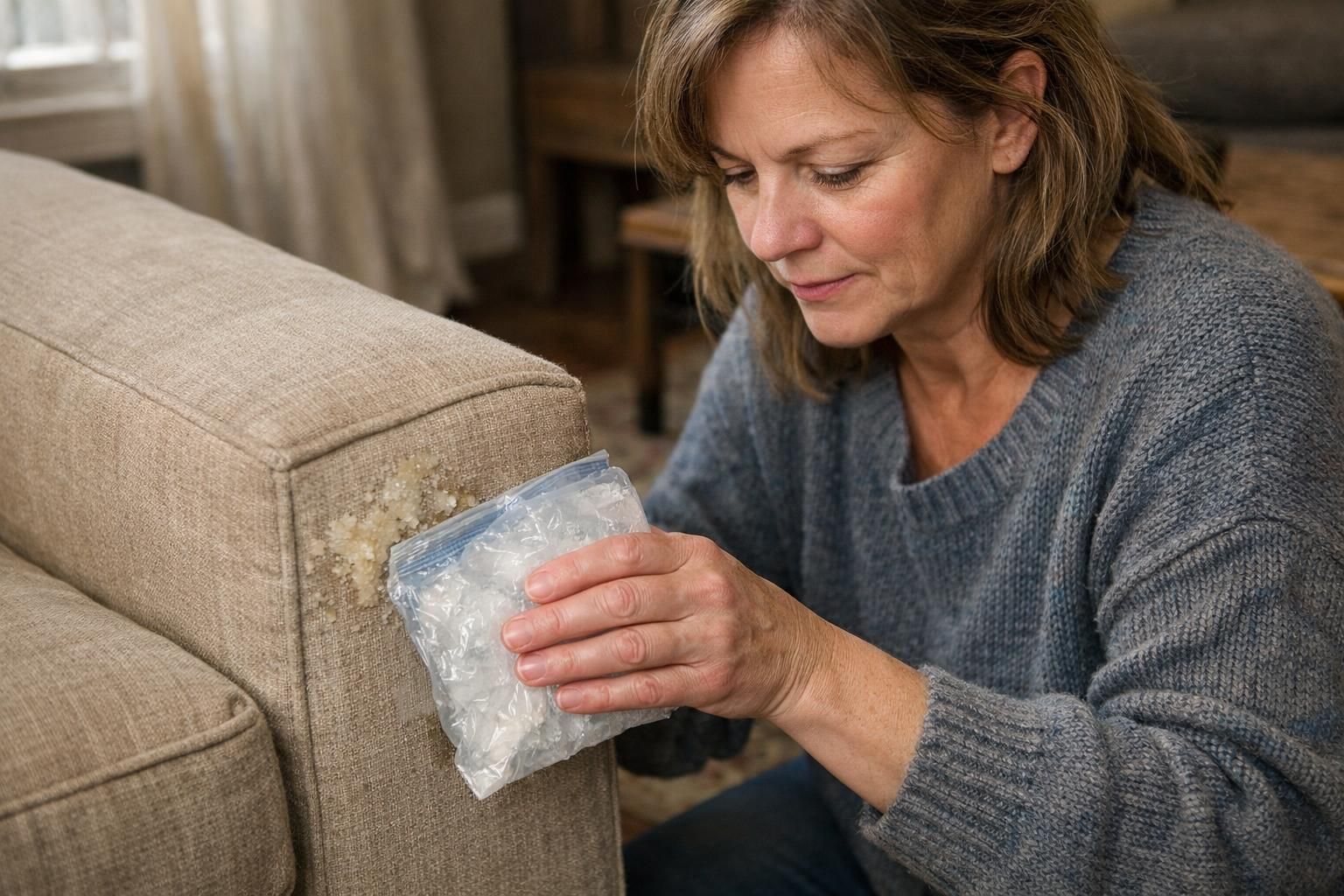
Wax spills happen, but they do not have to linger. With ice, paper towels, a hairdryer, or a simple rubber spatula, wax removal is within reach for most homes. A bit of isopropyl alcohol helps with the last residue.
Act fast for the best chance at a perfect result. Test every new cleaner in a hidden spot, work in a ventilated area, and keep heat tools away from kids. If the item is delicate or pricey, call a pro like My Cleaning Angel for help.
With careful steps and a steady hand, carpets, fabrics, and furniture can look fresh again after any candle wax surprise.
FAQs
1. How do I get candle wax out of my carpet without making it worse?
First, let the wax harden. Scrape off as much as you can with a dull knife or credit card. Place a paper towel over the spot and press gently with a warm iron; this draws up the wax like magic. Blot, don’t rub, to avoid spreading color.
2. Can I remove candle wax from fabric upholstery at home?
Yes, you can tackle it yourself if you act fast. Freeze the wax using an ice pack wrapped in cloth so it doesn’t soak your sofa. Once brittle, chip away what you can by hand or with a spoon’s edge. Lay brown paper over any leftover stain and use low heat from an iron to lift more residue.
3. What should I avoid when cleaning candle drips off furniture?
Skip harsh chemicals that might strip finishes or set stains deeper into fibers. Don’t scrub wildly; that only pushes melted paraffin further in and frays delicate threads or wood grain.
4. Is there a trick for getting colored candle stains out after removing the wax?
Try dabbing rubbing alcohol on lingering dye marks left behind on carpets or fabrics once all solid bits are gone; test first in an unseen area just to be safe! Sometimes old-fashioned patience works best repeat gentle blotting until no trace remains and your surface looks good as new again.
Additional Insights
To remove candle wax, first let it harden, then gently scrape off the bulk with a plastic tool; for remaining bits, use heat (hairdryer, warm iron with paper towel) to melt and absorb it or ice to make it brittle and pop off, and clean the residue with soap/water or rubbing alcohol, depending on the surface, avoiding harsh chemicals on delicate finishes.
Hard Surfaces (Wood, Tile, Glass)
- Harden & Scrape: Let wax cool completely. Use a plastic scraper, credit card, or butter knife to gently chip away large pieces.
- Heat Method: Cover wax with paper towels or a paper bag, then briefly apply a warm iron (low setting) to melt wax into the paper, or use a hairdryer to soften and wipe with a cloth.
- Ice Method: Place a bag of ice on the wax for 5-10 mins to make it brittle, then scrape.
- Residue: Clean with isopropyl alcohol, vinegar/water mix, or mild soap and water.
Fabrics & Carpet
- Freeze First (Carpet): Apply ice in a bag to harden wax, then break and vacuum loose pieces.
- Iron & Paper Method (Fabric): Place paper towels or a paper bag above and below the wax spot. Iron over the top paper; the wax will transfer. Repeat with clean paper until gone.
- Residue: Treat with stain remover or mild soap, then wash as usual (air dry to check for remaining stains).
Candle Jars (Reuse)
- Boiling Water: Poke holes in the wax with a chopstick, pour in hot water (not boiling in the jar), let it cool, and scoop out the wax that floats to the top.
- Freezer: Freeze for a few hours until brittle, then pop out the wax with a butter knife.