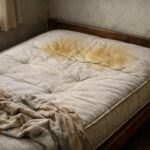
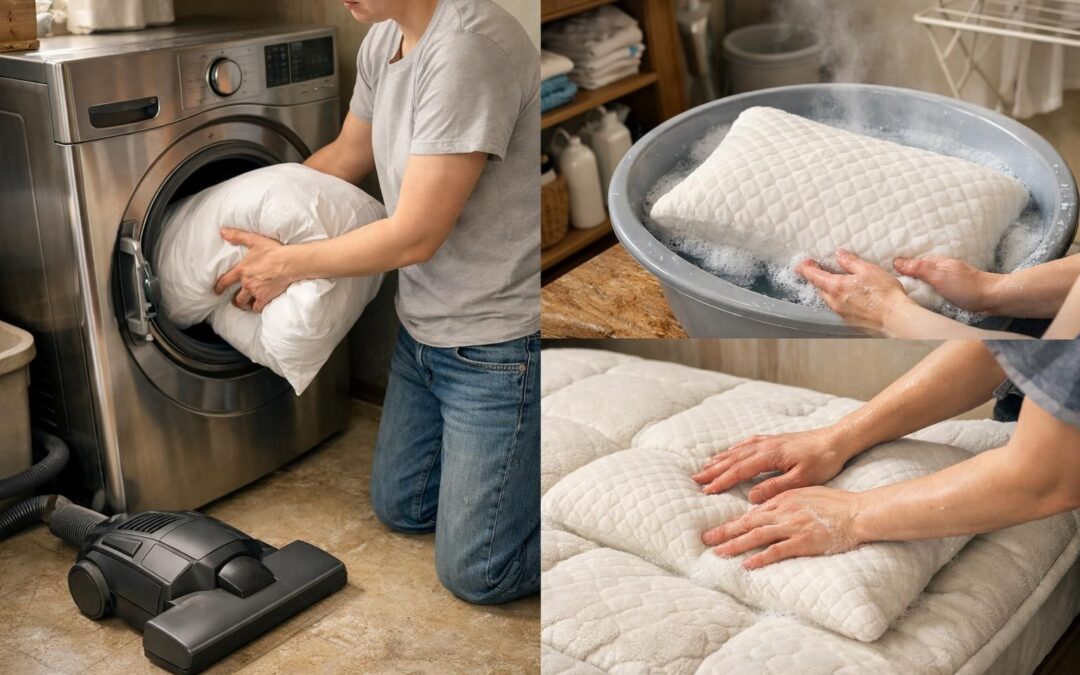
Has a homeowner ever pulled off a pillowcase and wondered why the bed still smells a little off, even after the washing machine finishes its job? The surprise is usually what sits underneath, especially older inserts and foam that cannot be tossed in like regular laundry, such as memory foam pillows.
Dust mites, body oil, sweat, and dead skin cells build up fast, and the result is often yellowing and that musty, stale bedroom smell.
This guide walks through pillow cleaning, comforter care, and mattress topper upkeep with simple, at-home steps using mild detergent, stain remover, and the right drying approach. Homeowners will also see quick checks that prevent common damage, like clumping, shrinking, and trapped moisture.
Key Takeaways
- Pillows: Many experts suggest washing pillows every 3 to 6 months, and more often if kids, pets, allergies, or night sweats are part of the household routine.
- Foam and latex: Do not machine wash most memory foam pillows or latex pillows; spot-clean the foam and machine wash only the removable covers if the care tag allows it.
- Comforters: With a top sheet or duvet cover, many households can wash the comforter 1 to 2 times per year; without a cover, cleaning more often helps keep body oils from setting into the fill.
- Mattress toppers: Vacuum weekly for best control of dust and crumbs, then spot-clean quickly and air-dry fully; foam should dry flat to protect shape and reduce mold risk.
- Drying matters: Use low heat or air-fluff, and add dryer balls (or clean tennis balls for drying) to reduce clumps in down pillows and comforters, then keep drying until the thickest areas feel fully dry.
How to Properly Clean Pillows in a Washing Machine (and When Not To)
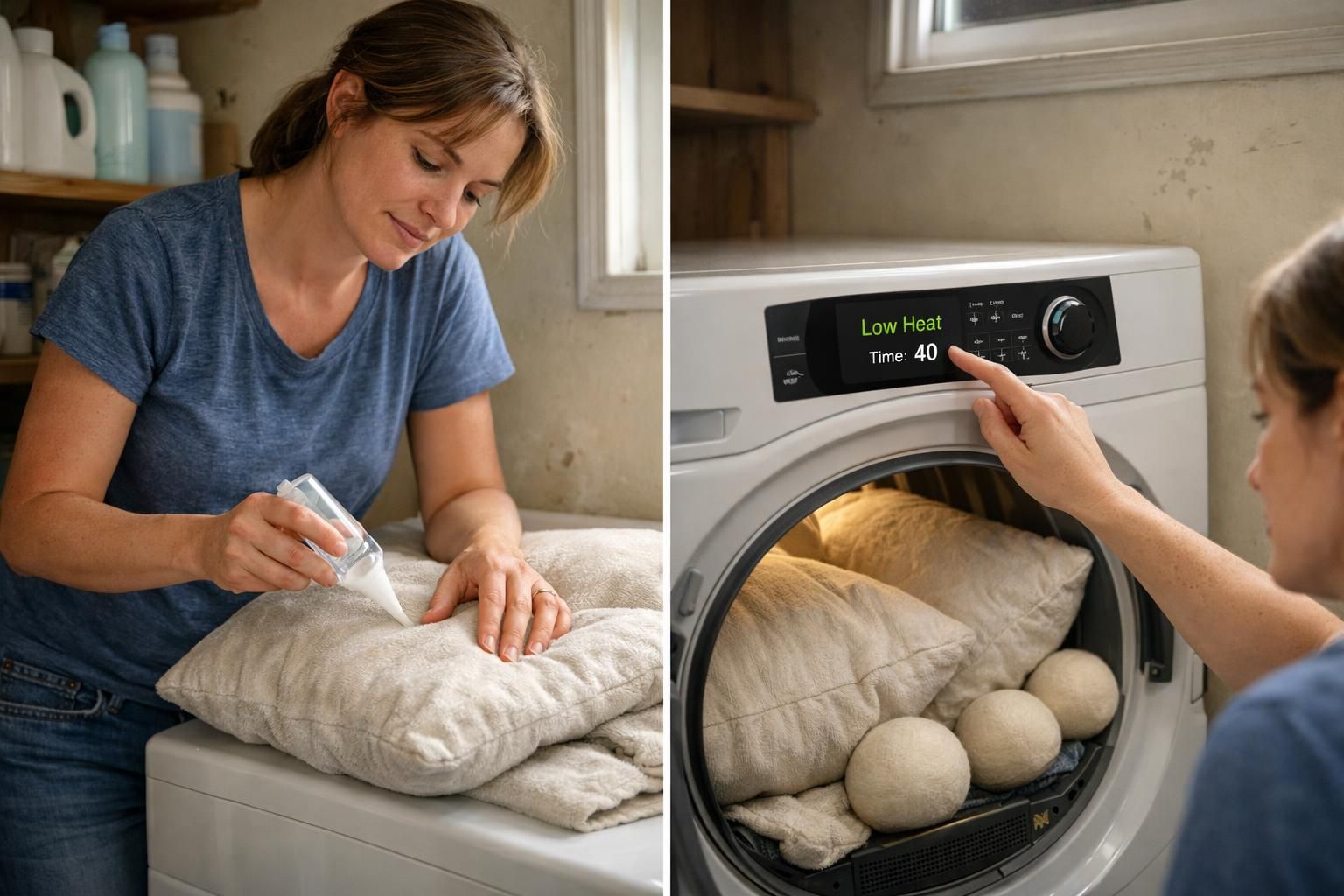
A clean-looking pillowcase can hide a pillow that is loaded with sweat, oil, and allergens. The good news is that many pillow materials are machine washable, and the bad news is that the wrong method can ruin the fill in one afternoon.cHomeowners can start with a quick material check, then choose either machine washing pillows on a gentle cycle or hand washing pillows for foam and latex.
- Machine washable pillows: Many down pillows, feather pillows, and polyester fill pillows.
- Often not washable as a whole: Many memory foam pillows and latex pillows.
- Best wash setup: A front-loading washing machine or a top loader without a center agitator, plus an extra rinse.
Watch a quick pillow-washing demo
Check the Care Label
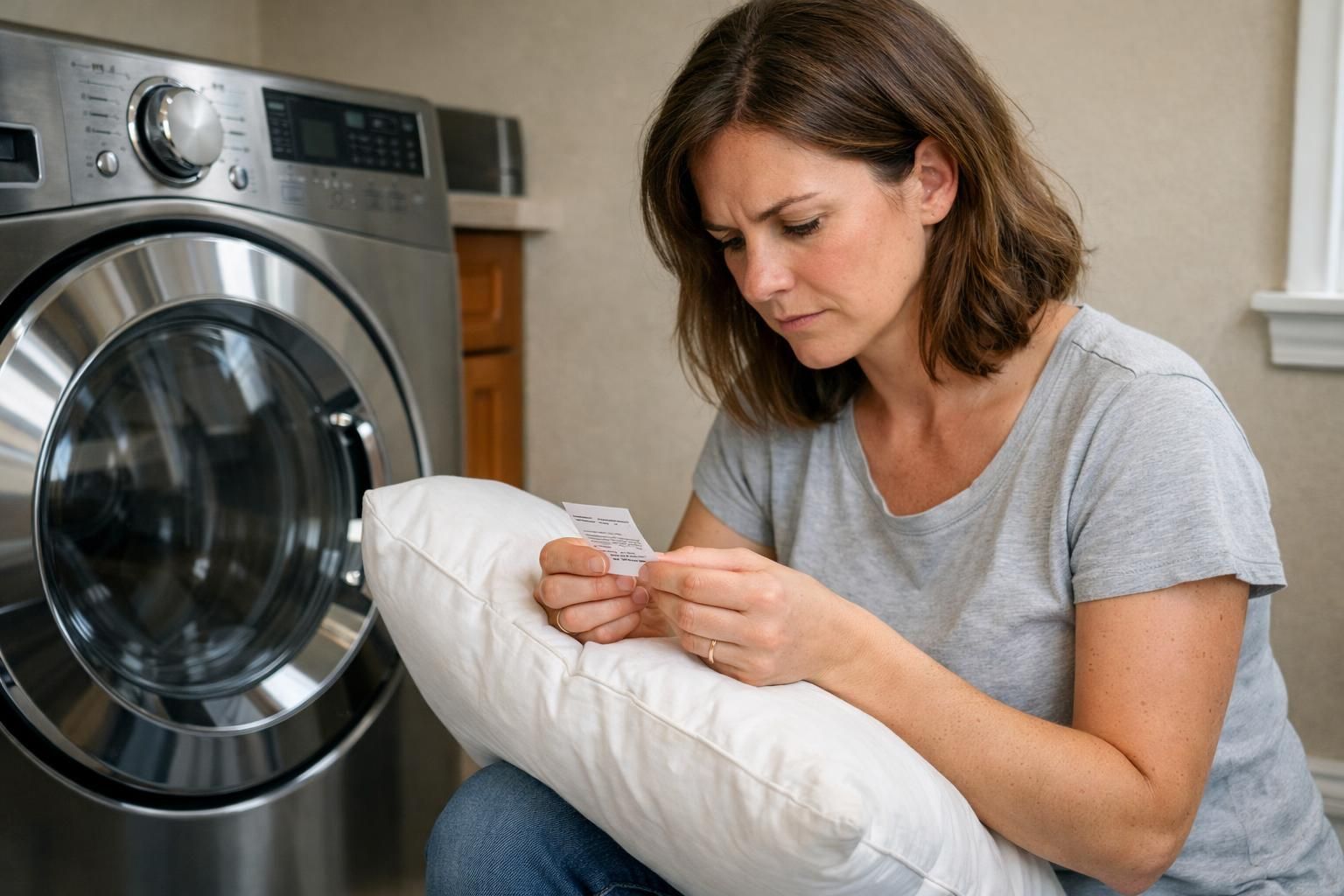
A homeowner should check the care tag before cleaning any pillow. That small label decides everything, including whether the pillow is machine washable, hand-wash only, or needs dry cleaning.
Many foam and latex pillows list do not machine wash, because soaking and agitation can tear the structure. Feather and down pillows often allow machine washing in cold or warm water with mild detergent, but the label still wins.
Some brands tie warranty coverage to following washing instructions, so this check can also protect a purchase.
| Care tag message | What it usually means at home |
|---|---|
| Machine wash | Use gentle cycle (or delicate cycle), mild detergent, and an extra rinse. |
| Hand wash only | Spot-clean, rinse carefully, and dry flat, avoid soaking foam. |
| Dry clean only / dry cleaned | Skip the washing machine and take it to dry cleaners to avoid damage. |
A homeowner should read the care tag. For decorative or smaller inserts, a balanced load still matters, and many households find that washing two pillows together helps the washer stay steady, especially with bulkier machine washable pillows.
Pre-Treat Stains
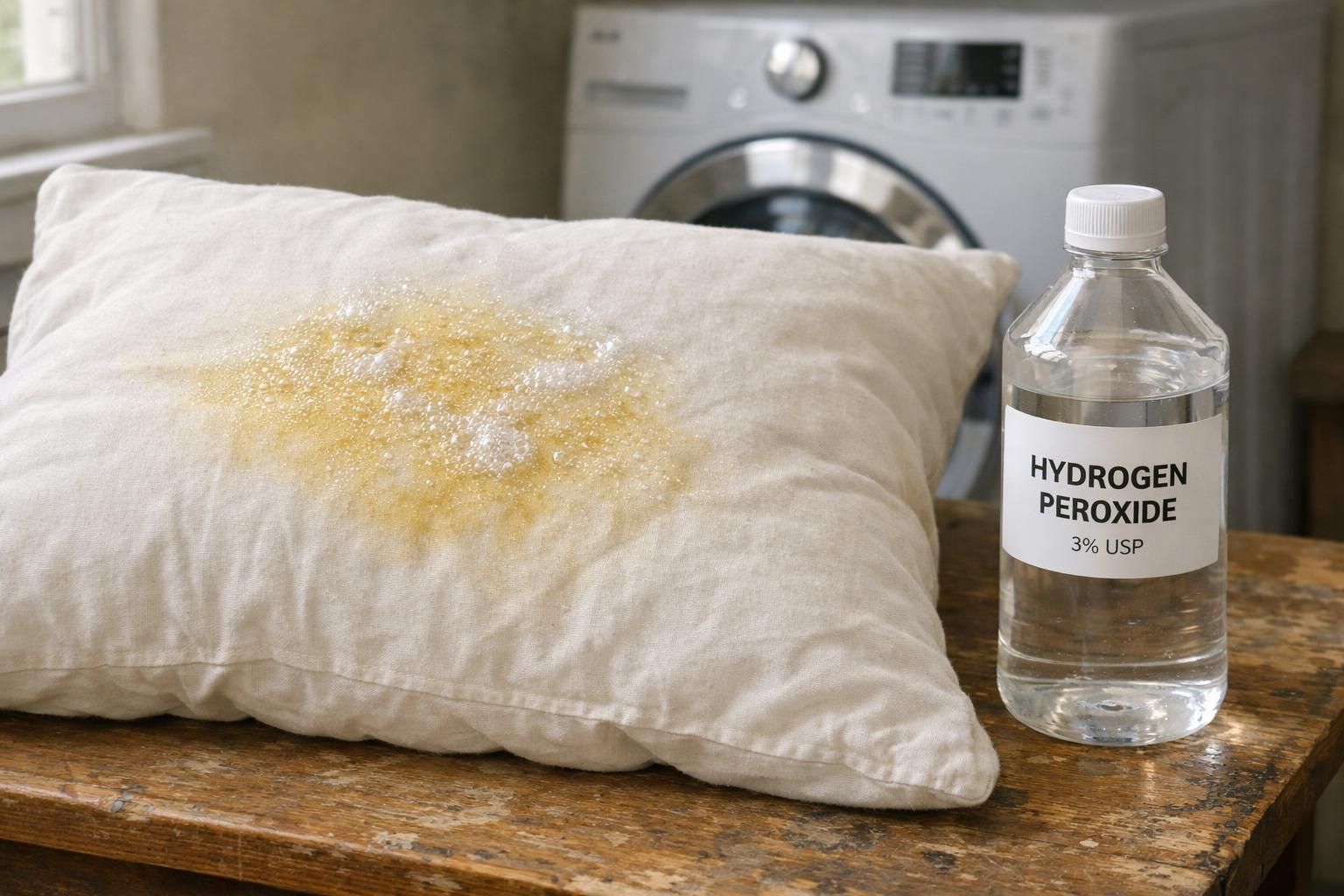
Yellowing usually comes from sweat and body oils, and it gets harder to lift once heat sets it. A fast pre-treatment is the difference between bright again and permanent shadow.
For most white, machine washable pillows, homeowners can blot the area, then pre-treat with a stain remover or a simple mix of mild dish soap and water. For stubborn sweat spots, hydrogen peroxide can help on white fabrics, but it can lighten some dyed materials, so a small hidden test spot is smart.
- Oil and makeup: A drop of dish soap, gentle rubbing with a clean cloth, then blot.
- Sweat stains: A stain remover labeled for protein or body soils, then wait before washing.
- Kid messes: Blot first, then treat; rubbing can spread the stain deeper into the fill.
If a homeowner plans to wash right away, letting the pre-treatment sit about 15 to 30 minutes often improves stain removal without soaking the whole pillow.

Machine Wash vs. Hand Wash
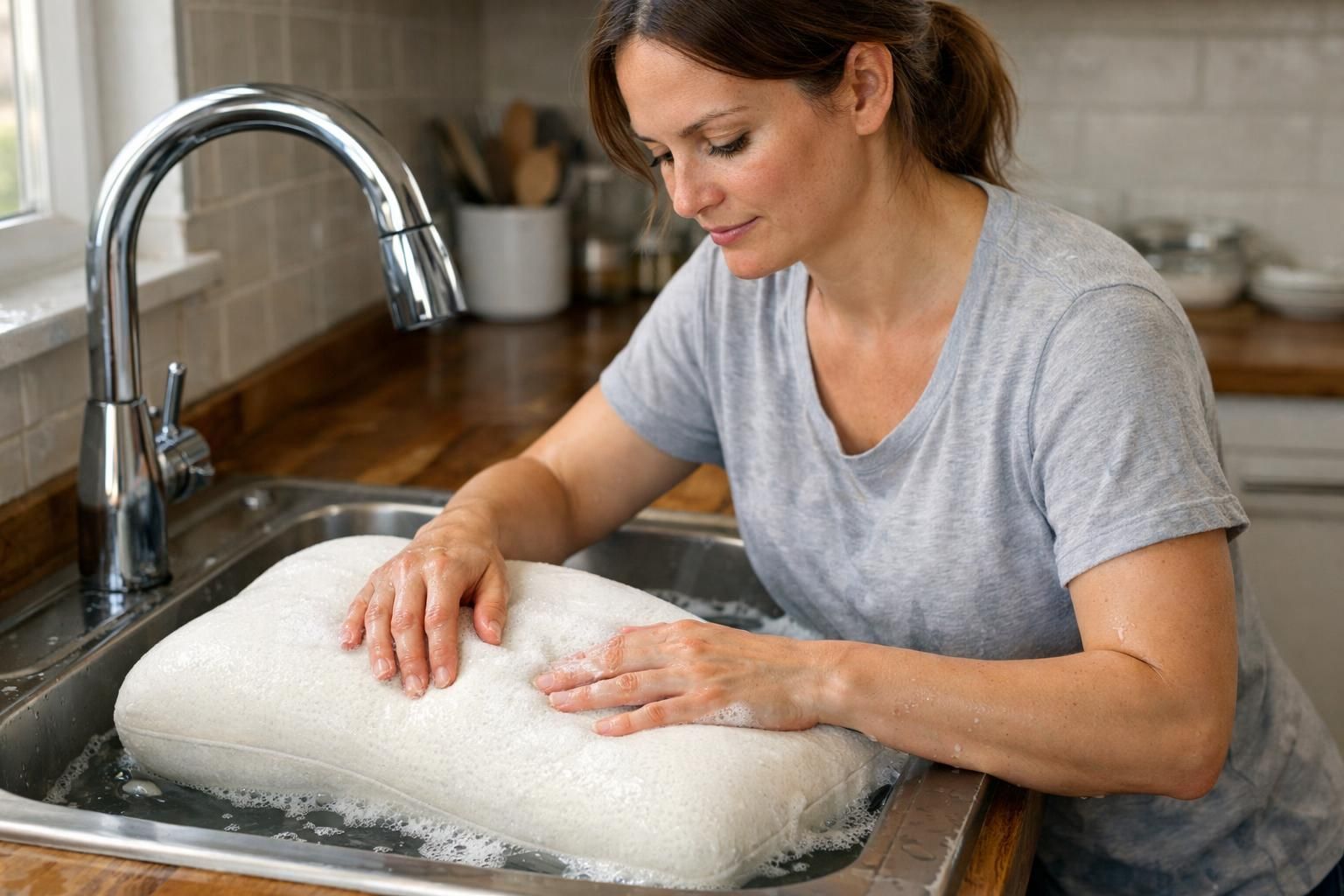
Most households get the best results by machine washing pillows that are labeled safe to wash, and hand washing only the materials that truly need it. Consumer Reports has noted that, if a pillow can handle laundering, washing every three to six months is a solid target for most homes.
For machine washing, a front-loading washer is often gentler on bulky items because it tumbles instead of stirring with an agitator.
| Pillow materials | Machine washable? | Best wash choice | Drying notes |
|---|---|---|---|
| Down pillows / feather pillows | Often yes (check care tag) | Gentle cycle, mild detergent, extra rinse | Low heat or air-fluff, dryer balls to break clumps |
| Polyester fill | Often yes (check care tag) | Delicate cycle, warm water if allowed | Low heat, pause to reshape between cycles |
| Memory foam pillows | Usually no | Spot clean foam, wash covers if allowed | Air dry flat, good airflow |
| Latex pillows | Usually no | Spot clean, light rinse only if label allows | Air dry flat, keep out of high heat |
Detergent is another common trip-up. Many home laundry guides in recent years have pushed smaller doses for modern detergents, and Tom’s Guide has even highlighted that about two tablespoons of liquid detergent can be enough for an average load in many machines, with adjustments for soil level and water hardness.
- Balance the load: Wash two pillows at once, or add towels if the care label allows it.
- Use an extra rinse: Residue can trap odors and irritate sensitive skin.
- Skip the bleach dispenser: Bleach can weaken fabrics and damage fills, especially down and foam.
Drying Techniques for Fluffiness
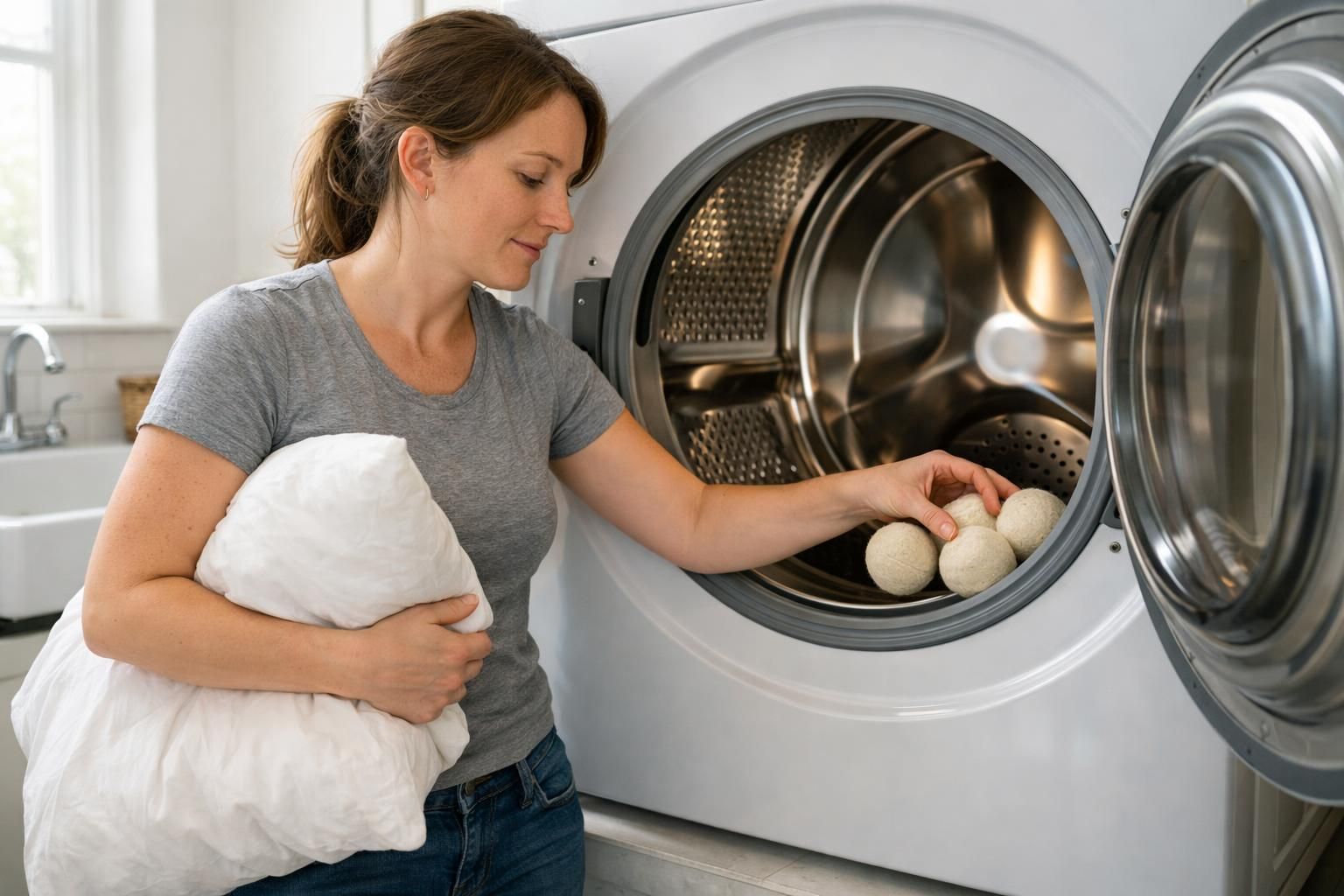
Homeowners can air-dry pillows outside on a bright, breezy day for a fresh finish, and many cleaning pros suggest doing this periodically even between full washes.
- Use dryer balls: Add 2 to 4 dryer balls to keep fill moving and reduce clumps.
- Tennis balls for drying: Clean tennis balls can work in a pinch, but they can be noisier and some people notice a rubber smell.
- Choose safer heat: Low heat for synthetics, and air-fluff or very low heat for down if the label allows tumble dry.
- Check the thickest area: Squeeze the center and corners; any cool, heavy feel can signal dampness.
For quick freshening without a full wash, homeowners can run the clothes dryer on an air-fluff setting for about 15 to 20 minutes, then let the pillow cool fully before judging dryness and loft.
The gentle wash matters too, and this is easier when the cycle is matched to the fabric, such as a gentle cycle with mild detergent.
Cleaning Comforters at Home
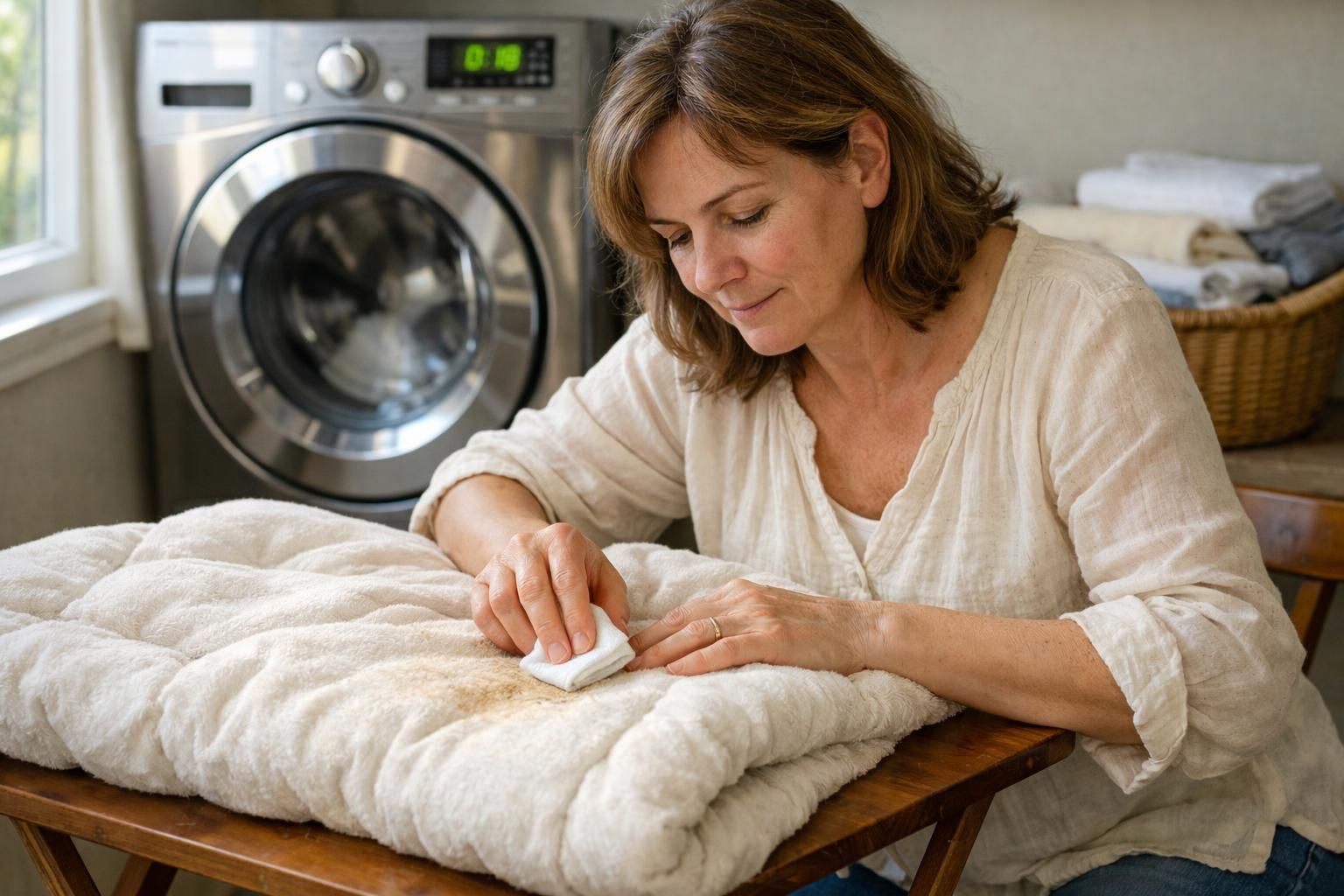
A comforter is basically a giant sponge for body oils, sweat, and crumbs, especially in homes with kids who love breakfast-in-bed. Homeowners can clean comforters at home by checking the care label, spot-treating stains with stain remover, washing in a front-loading washer on a gentle cycle with mild detergent, then drying fully with dryer balls or low heat to keep down and microfiber fills fluffy.
Review the Care Instructions
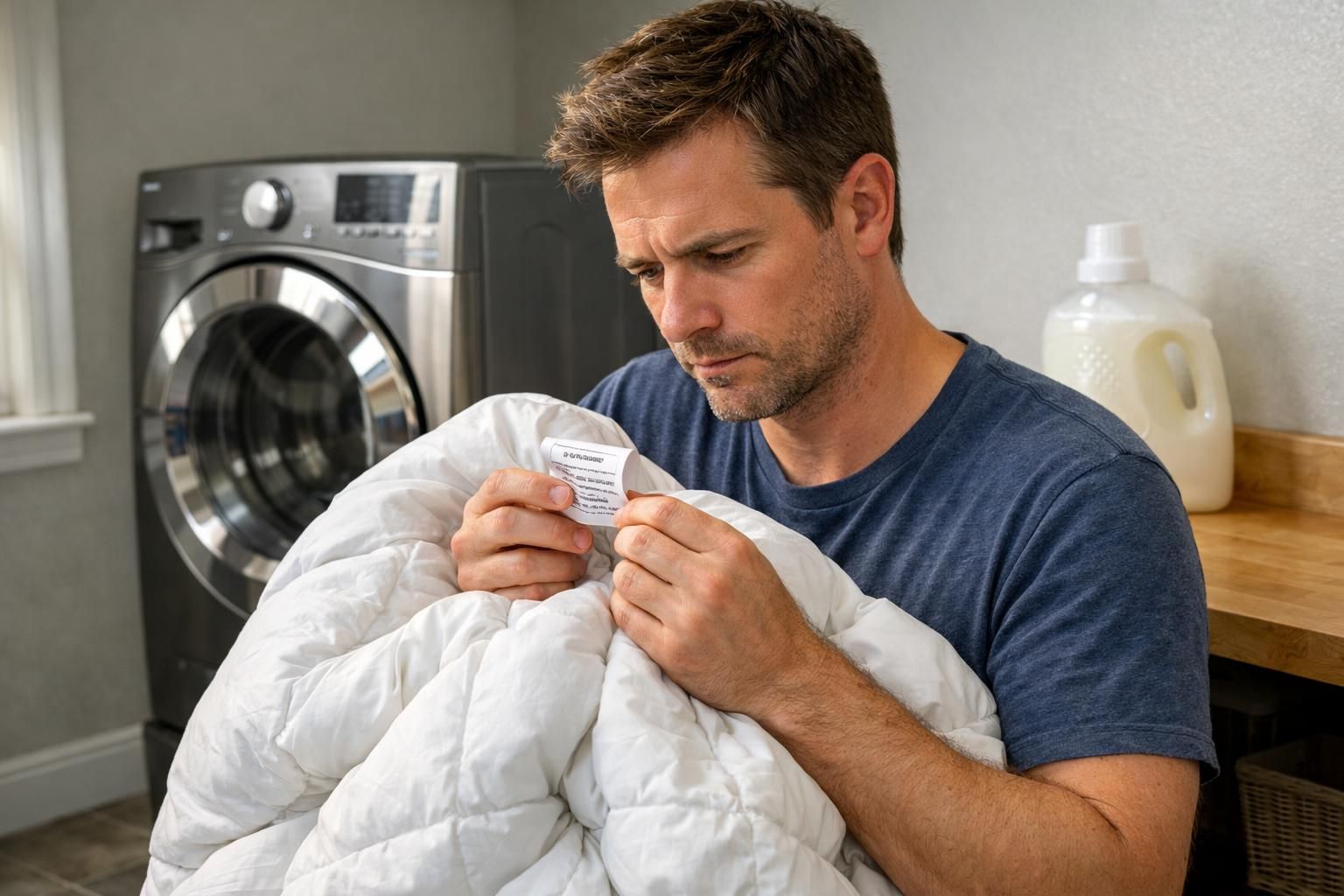
The homeowner reads the care label on each comforter before any washing. Dry clean only means just that, and pushing it through a washing machine can shrink the shell fabric or wreck the fill.
If the label allows machine washing, cold water and a gentle cycle reduce stress on stitching and baffles. Skipping fabric softener also helps, because softener can coat fibers and reduce loft over time.
- Down fill: Look for notes about low heat and long drying time.
- Microfiber shells: Gentle cycle reduces pilling and snags.
- Special finishes: If the tag warns against bleach, keep the bleach dispenser off limits for that load.
Spot Cleaning Stains
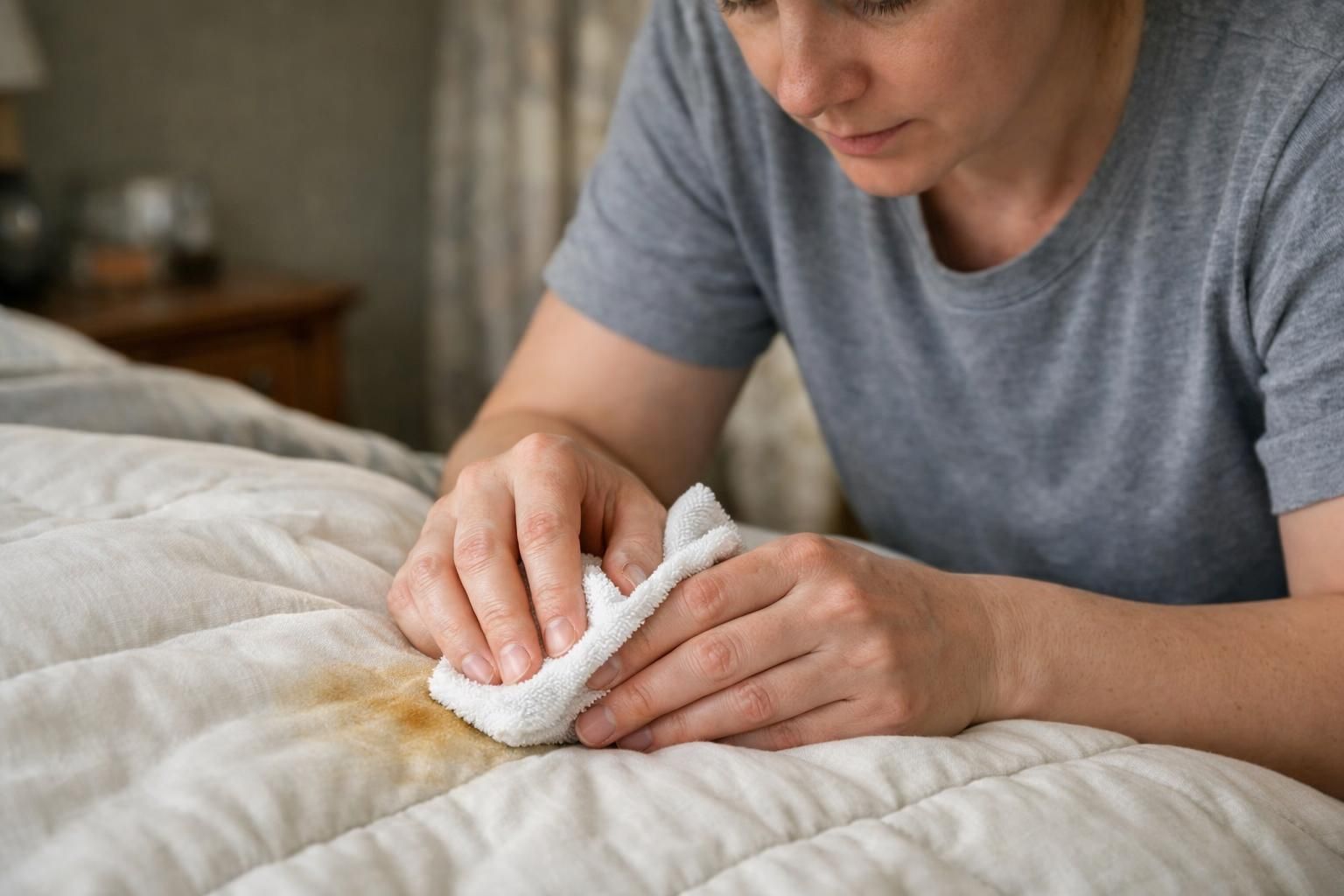
Spot cleaning keeps small spills from turning into a full comforter wash day. Homeowners can mix a small amount of mild detergent with warm water, then blot the stain with a clean cloth.
Blotting beats rubbing. Rubbing can spread the stain and grind it into the fibers, which is extra frustrating on light-colored bedding.
- Food: Lift solids first, then blot with suds from mild detergent.
- Body oils: A stain remover labeled for grease can help before the wash.
- Pet accidents: Blot immediately, then treat, then fully air-dry the area before placing it back on the bed.
Washing in a Large-Capacity Washer
Spot cleaning fixes small marks, and a full wash handles the overall âlived-inâ layer of oils and dead skin cells. The comforter needs space to move, otherwise detergent and water cannot circulate.
Homeowners can use a large-capacity washer at home if the comforter tumbles freely. If it packs the drum like a tight ball, a laundromat machine with a bigger drum is usually the safer choice.
| Quick fit check | What to do |
|---|---|
| Comforter tumbles and shifts during the cycle | Proceed on bulky or gentle cycle, use mild detergent, add an extra rinse. |
| Comforter stays pressed against the drum | Stop and move to a bigger machine, tight loads can trap detergent and tear seams. |
Water use is another hidden reason not to overload. An EPA WaterSense guide has shown that newer front-loading washers can use far less water per load than older top-loading machines, so the comforter needs enough room for the smaller water volume to rinse it clean.
- Cycle: Bulky or gentle cycle.
- Detergent: Use a small amount of mild detergent, then add an extra rinse to reduce residue.
- Extra help: Dryer balls later, to keep clumps from forming while drying.
Drying Comforters Thoroughly
Comforters can feel dry on the outside while staying damp in the corners. That damp core is where musty odors start.
Homeowners can tumble dry on low heat, and plan on multiple cycles for thick fills. Pausing to pull the comforter out, shake it, and redistribute the fill can cut down on wet pockets.
- Add dryer balls: They help separate layers so warm air reaches the center.
- Check corners: Corners and stitched channels often hold moisture the longest.
- Go low and slow: High heat can scorch shells and damage some synthetic fills.
Maintaining Mattress Toppers
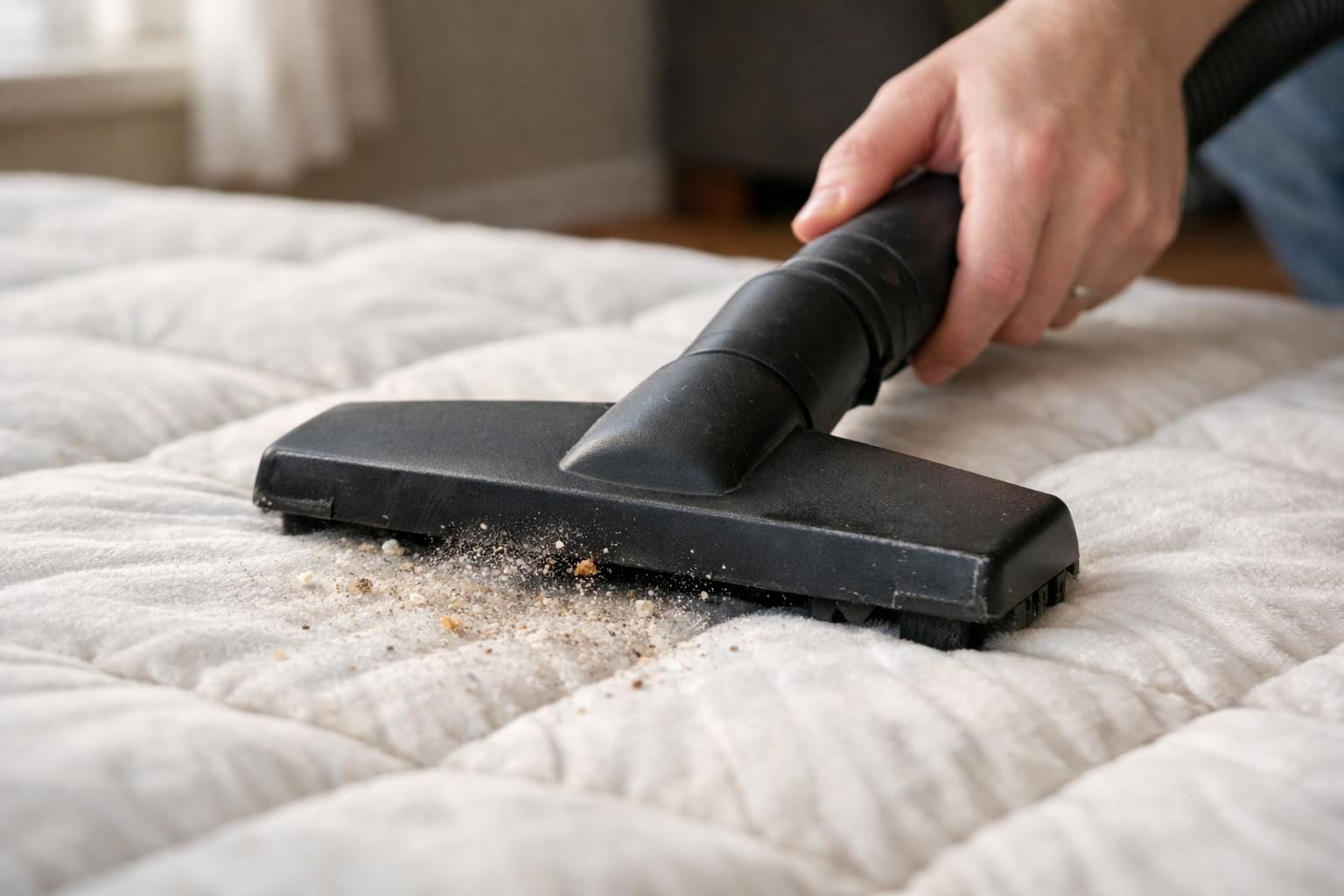
Mattress toppers quietly collect the same grime as a mattress, plus crumbs and spills. Regular vacuuming and fast spot cleaning do most of the work and help the topper last longer.
Vacuum Regularly
The homeowner should vacuum a mattress topper at least once a week if pets, kids, or allergies are in the home. For lower-traffic guest rooms, once a month can be enough.
A handheld vacuum or an upholstery attachment works best on foam toppers that cannot be washed, and a brush attachment helps pull debris from seams.
- Both sides: Vacuum the top, then flip and vacuum the underside.
- Seams first: Dust and dead skin cells settle into edges and stitched areas.
- Cover counts: If the topper has a removable cover, washing the cover often keeps the foam cleaner.
Spot Clean Stains
Spot cleaning works best right after a spill. Homeowners can blot with a dry towel, then use a small amount of mild detergent mixed with warm water on a cloth.
Foam should not be soaked. Over-wetting is one of the quickest ways to create lingering odor and slow drying inside the topper.
- Blot, do not scrub: Scrubbing can tear foam and push stains deeper.
- Rinse lightly: Wipe with a clean damp cloth to lift leftover soap.
- Dry with airflow: A fan in the room speeds drying without heat damage.
Deep Cleaning with Mild Detergent
Some toppers have machine washable covers, and a few thin fiber toppers are fully machine washable. Foam toppers, especially memory foam and latex, usually do better with surface cleaning only.
If a topper is labeled machine washable, homeowners can use a front-loading washer on a gentle cycle with cold water, then run an extra rinse to help prevent detergent residue. For foam, homeowners can deep-freshen by vacuuming slowly and deodorizing with baking soda, then vacuuming again.
- Machine washable topper: Gentle cycle, mild detergent, extra rinse.
- Foam topper: Vacuum, spot clean, then allow plenty of air-dry time.
Air Drying Mattress Toppers
Air drying is the safest default for toppers, especially foam. Homeowners should lay the topper flat on a clean surface in a well-ventilated area.
Thicker foam can take a long time to dry all the way through. Some cleaning guides for foam bedding even suggest planning for a full day of drying time after spot cleaning, especially in humid homes.
- Dry flat: Hanging can stretch and warp foam.
- Flip for even drying: Turn it every few hours so the underside does not trap moisture.
- No dryer unless allowed: High heat can damage foam structure quickly.
Homeowners should put the topper back on the bed only after it feels fully dry, including seams and any quilted layers.
Tips for Prolonging Cleanliness

Most families do not need to deep clean bedding every week. Small habits, like barriers and a realistic schedule, keep pillows, comforters, and toppers from getting out of hand.
Use Protectors for Pillows, Comforters, and Toppers
A parent can use zippered pillow protectors and a mattress cover to block sweat, spills, and dust mites from sinking into the fill. This one step often makes pillow maintenance much easier, especially in kids’ rooms.
For households managing allergies, the American Academy of Allergy, Asthma & Immunology recommends encasing pillows and mattresses, and it also notes washing bedding weekly in hot water around 130 degrees Fahrenheit to reduce dust mites.
- Pillow protector: Keeps oils off the pillow and extends pillow lifespan.
- Topper cover: Takes the stain risk instead of the foam underneath.
- Easy laundry win: Protectors wash faster than bulky inserts.
Wash Bedding Components Regularly
Sheets and pillowcases usually need weekly washing, because they take the most direct contact. Comforters, pillows, and toppers can follow a slower rhythm based on use, kids, pets, and allergies.
| Item | Typical home schedule | What to do |
|---|---|---|
| Sheets and pillowcases | Weekly | Warm water if allowed, mild detergent, dry fully. |
| Pillow protectors and pillow covers | Every 2 to 4 weeks | Gentle cycle, extra rinse if they feel âsoapy.â |
| Washing pillows (machine washable types) | Every 3 to 6 months | Wash in pairs, gentle cycle, dry with dryer balls. |
| Comforters | 1 to 3 times per year | Spot clean between washes, low-heat drying. |
| Mattress toppers | Vacuum weekly, deep clean seasonally | Spot clean spills fast, dry flat with airflow. |
Homeowners should also wash bedding components separately when possible. Overstuffing the washing machine often means poor rinsing, which leaves detergent behind.
Rotate and Fluff Items to Maintain Shape
The homeowner can rotate and fluff bedding every few weeks to spread wear. This is especially helpful for down pillows, feather pillows, and any comforter fill that likes to shift.
Foam pillows should be reshaped gently, because compressing them hard can stress the material over time.
- Fluffing pillows: Hand fluff daily, then tumble on air-fluff if the label allows.
- Rotate toppers: Turn head-to-foot to reduce body impressions.
- Shake comforters: A quick shake re-spreads fill before bedtime.
Avoid Excess Moisture to Prevent Mold
Moisture is the fastest way to turn âcleanâ into âmusty.â Thick fills and foam can trap water deep inside, even if the surface looks dry.
- Do not soak foam: Spot clean and blot instead of saturating.
- Dry completely: Keep drying until the thickest areas feel dry and light.
- Store smart: Use a cool, dry closet, and avoid packing items while they are still warm from the dryer.
After a spill, airflow helps more than heat. A fan and open windows often do a better job than blasting high temperature on delicate materials.
Common Mistakes to Avoid
Most bedding problems come from three mistakes: harsh products, cramming the washing machine, and stopping the dryer too soon. The fix is simple, keep it gentle, give items space, and dry all the way through.
Using Harsh Detergents
A homeowner should stick with mild detergent and skip bleach and fabric softener for most pillows and comforters. Harsh products can weaken shells, leave residue, and trigger skin irritation in sensitive sleepers.
- Less detergent: Too much laundry detergent can trap odors and attract dirt.
- No bleach dispenser: Bleach can damage down, feather, and many dyed fabrics.
- Extra rinse: A second rinse often helps families dealing with eczema or fragrance sensitivity.
Overloading the Washer
Overloading blocks movement, which blocks cleaning. Pillows and comforters need room to tumble so water and detergent can move through the fill.
Homeowners can wash pillows in pairs to balance the load, and should stop the cycle if the drum cannot turn freely.
- Better clean: Space helps detergent reach the center of the item.
- Better rinse: Crowded loads hold soap, which can leave stiff spots.
- Less wear: Seams and baffles last longer when they are not under strain.
Insufficient Drying
Insufficient drying is the easiest way to get mildew and that stubborn musty odor. Thick comforters and down pillows can need multiple low-heat cycles, with reshaping between cycles.
Foam toppers and many memory foam pillows should air dry flat, and homeowners should not put them back on mattresses until they are fully dry throughout.
- Check corners: Corners dry last in comforters and toppers.
- Use dryer balls: They help separate layers so warm air reaches the core.
- Pause and fluff: Breaking up clumps mid-dry speeds the finish.
Conclusion
A family can keep beds fresh by cleaning pillows, comforters, and mattress toppers on a steady schedule, instead of waiting for odors and stains to show up.
Homeowners should read the care tag first, then use a front-loading washer or other washing machine setting that gives bulky items room to tumble, with a gentle cycle and mild detergent.
Stains lift faster with quick stain removal, and dryer balls or clean tennis balls for drying help with fluffing pillows and keeping down from clumping.
Foam items usually need spot cleaning and patient air drying, and protectors do a lot of the heavy lifting by blocking sweat, dead skin cells, and dust mites from sinking into the fill.
Step-by-Step Cleaning Guide
Step-by-Step Cleaning Guide
- Check the Tag: Always check the manufacturer’s care instructions first.
- Remove Covers: Take off pillowcases and protectors to wash separately.
- Pre-Treat Stains: Use a mixture of mild dish soap and water, or hydrogen peroxide, to spot-treat yellow stains, letting it sit for 30 minutes.
- Machine Wash: Wash two pillows at a time to keep the washer balanced. Use warm or cold water on a gentle cycle.
- Extra Rinse: Run an extra rinse cycle to ensure all soap is removed, as buildup can cause clumping.
- Dry Thoroughly: Dry on low heat, adding dryer balls or clean tennis balls for drying to fluff. Ensure they are completely dry to prevent mold.
Special Care Instructions
- Memory Foam/Solid Foam: Do not submerge in water. Remove the cover to wash, and spot-clean the foam with a damp cloth and mild detergent.
- Hand Washing: If a machine is not recommended, soak pillows in a tub with water and a tablespoon of detergent for 30 minutes, then rinse thoroughly.
Maintenance Tips
- Use Protectors: Use zippered pillow protectors to prevent sweat, oils, and allergens from reaching the pillow, which helps keep them cleaner longer.
- Frequency: Wash pillows every 3 to 6 months.
- Freshen Up: Put pillows in the dryer on an “air fluff” (no heat) setting for 20 minutes to remove dust.
FAQs
1. How often should I wash pillows, comforters, and mattress toppers?
Wash bedding every 3 to 6 months, and wash mattress toppers or comforters when they look or smell dirty. Regular pillow maintenance helps cut dust mites and dead skin cells and extends pillow lifespan.
2. Can I machine wash down pillows, feather pillows, memory foam pillows, or latex pillows?
You can machine wash down pillows and feather pillows on a gentle cycle in a front-loading washer, with mild detergent and warm water temperature. Do not machine wash memory foam pillows or latex pillows, spot clean them or hand wash pillows by dabbing with a cloth.
3. How do I remove stains and keep pillows fluffy?
Treat stains fast with a stain remover and follow the washing instructions on the label. Dry with dryer balls or tennis balls for drying to help fluffing pillows, and skip the bleach dispenser unless the care tag allows it.
4. Should I use a washing machine or hand washing pillows for pillow cleaning?
Use machine washing pillows on a delicate cycle when the tag allows, and use hand washing pillows for fragile or shaped pieces. A front-loading washer is gentler than a top loader, but always check the washing instructions first.
5. How do I fight dust mites and allergens in bedding?
Wash covers and pillow protectors in hot water if the label permits to remove dust mites and dead skin cells. Add pillow protectors and pillow covers to your routine, and vacuum mattress toppers to help pillow maintenance.
6. When do I need dry cleaning or other special care?
Choose dry cleaning or have items dry cleaned when the tag or pillow materials list says dry clean only. For tricky fabrics or if you want to be safe, follow washing instructions and take comforters or specialty toppers to a pro, do not gamble with a favorite pillow.