
Feel like cleaning eats your day, yet the house still looks off? Many parents and homeowners want a faster routine that actually works. The core trick in any smart cleaning order is simple, and easy to miss: start high, finish low.
Dust falls as ceilings, shelves, and tops of cabinets get wiped. If you clean the floors first, falling dust lands on the clean floors and you have to redo your work. No thanks.
This guide lays out an easy top-to-bottom system using practical cleaning supplies like microfiber cloths and an all-purpose cleaner. It includes quick tips for each room, time-savers that multitask while products soak, and where a vacuum cleaner or glass cleaner fits best.
Ready for a cleaner house in less time? Let’s get to it.
Key Takeaways
- Work high to low. Hit ceiling fans and shelves first, then finish with floors so dust does not fall on clean areas.
- Declutter before scrubbing, and use the right tools. Microfiber cloths, an all-purpose cleaner, and a HEPA vacuum cut time and help with allergies.
- Clean bathrooms first. Let products soak while you handle other rooms, then mop all floors last for a crisp finish.
- Use the back-to-front method in each room. Start farthest from the exit, then move toward the door to avoid walking on clean floors.
- Plan monthly deep cleaning like refrigerator cleaning or grout treatment. Adjust routines based on family size, pets, or events.
Why Cleaning in the Right Order Matters
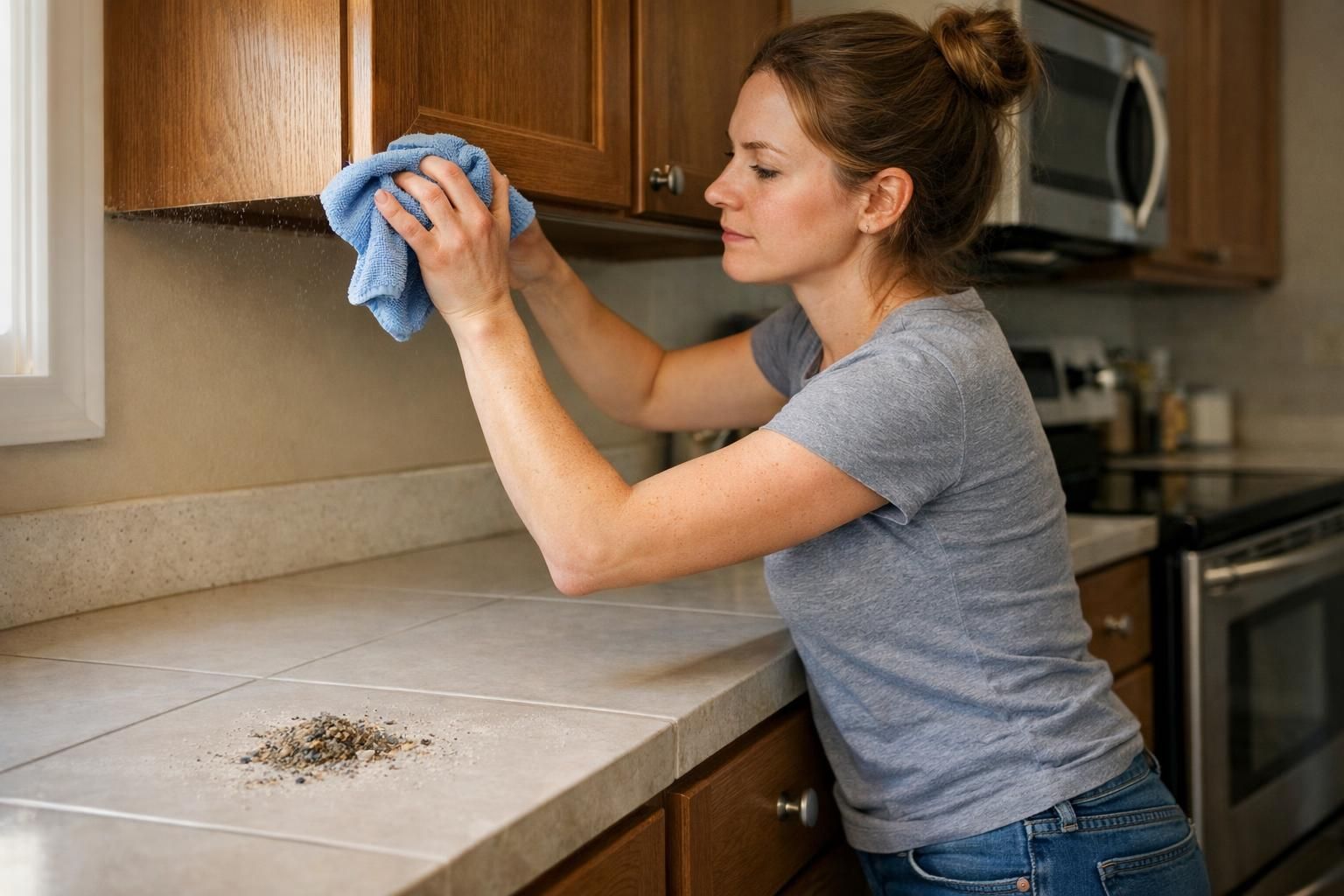
Dust from ceiling fans, cabinet tops, and light fixtures drifts onto lower surfaces. Starting high keeps that debris from landing on places you already wiped. Floors stay cleaner when they are saved for last.
Following a clear cleaning order lowers stress for busy parents who juggle household chores and kids. Using a house cleaning checklist keeps tasks moving without repeat work.
Pros use the same system because it boosts speed and consistency. It works in laundry rooms, bedrooms, kitchens, and bathrooms at home too.
General Guidelines for Efficient Cleaning
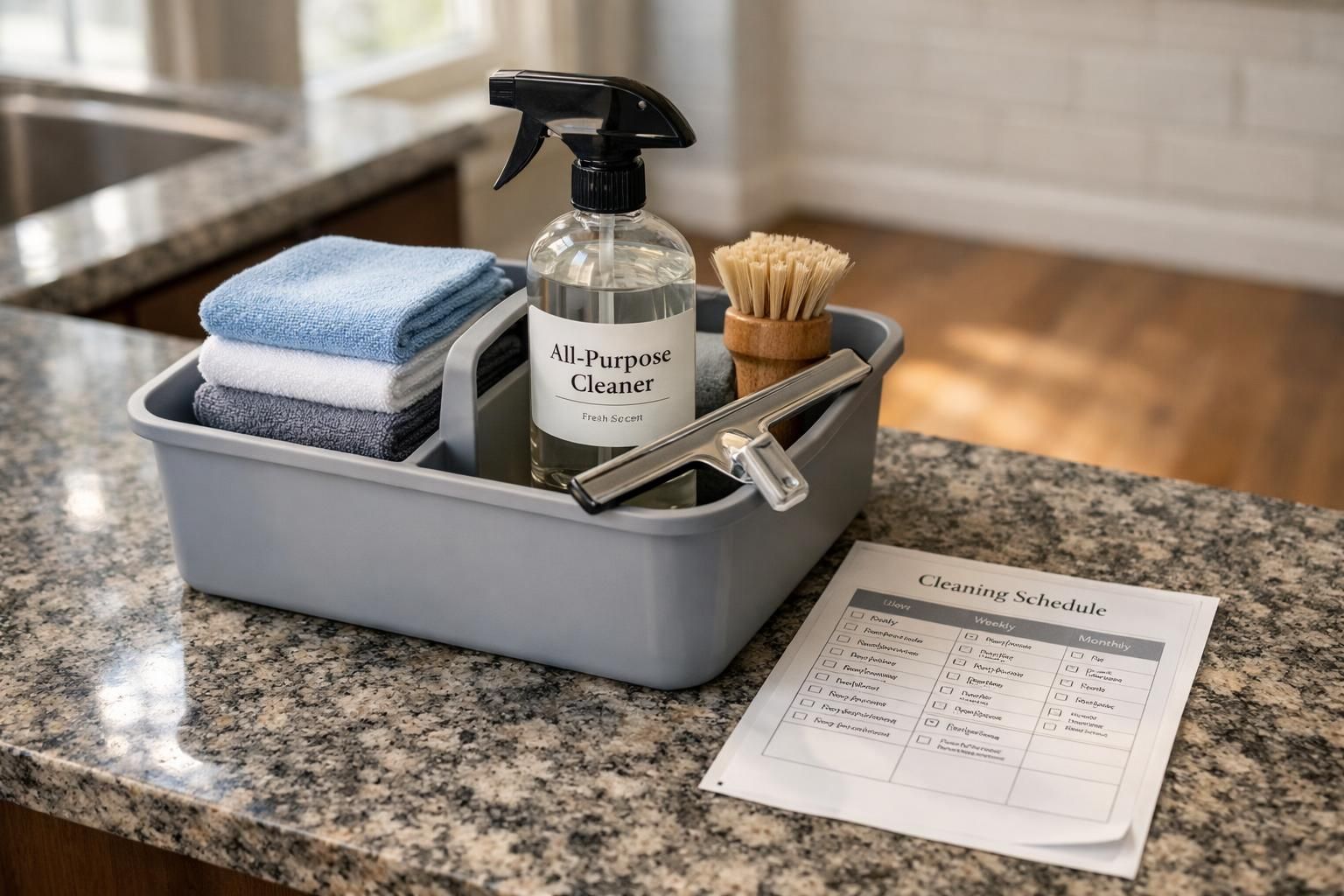
Good cleaning starts with a quick plan and reliable tools. Microfiber cloths pick up dust fast. An all-purpose cleaner covers most surfaces without swapping bottles every minute.
Small habits speed things up before the vacuum or glass cleaner even comes out.
To clean your house efficiently, start by decluttering and tidying each room. Put away loose items, clothes, and general mess to clear surfaces. Dust high surfaces by wiping ceiling fans, light fixtures, shelves, and picture frames.
Wipe windows, mirrors, countertops, and baseboards to remove streaks. Clean high-touch areas by disinfecting doorknobs, light switches, and handles. Vacuum carpets, upholstery, and hard floors before mopping. Mop hard floors starting from the farthest corner while working your way out.
Declutter First
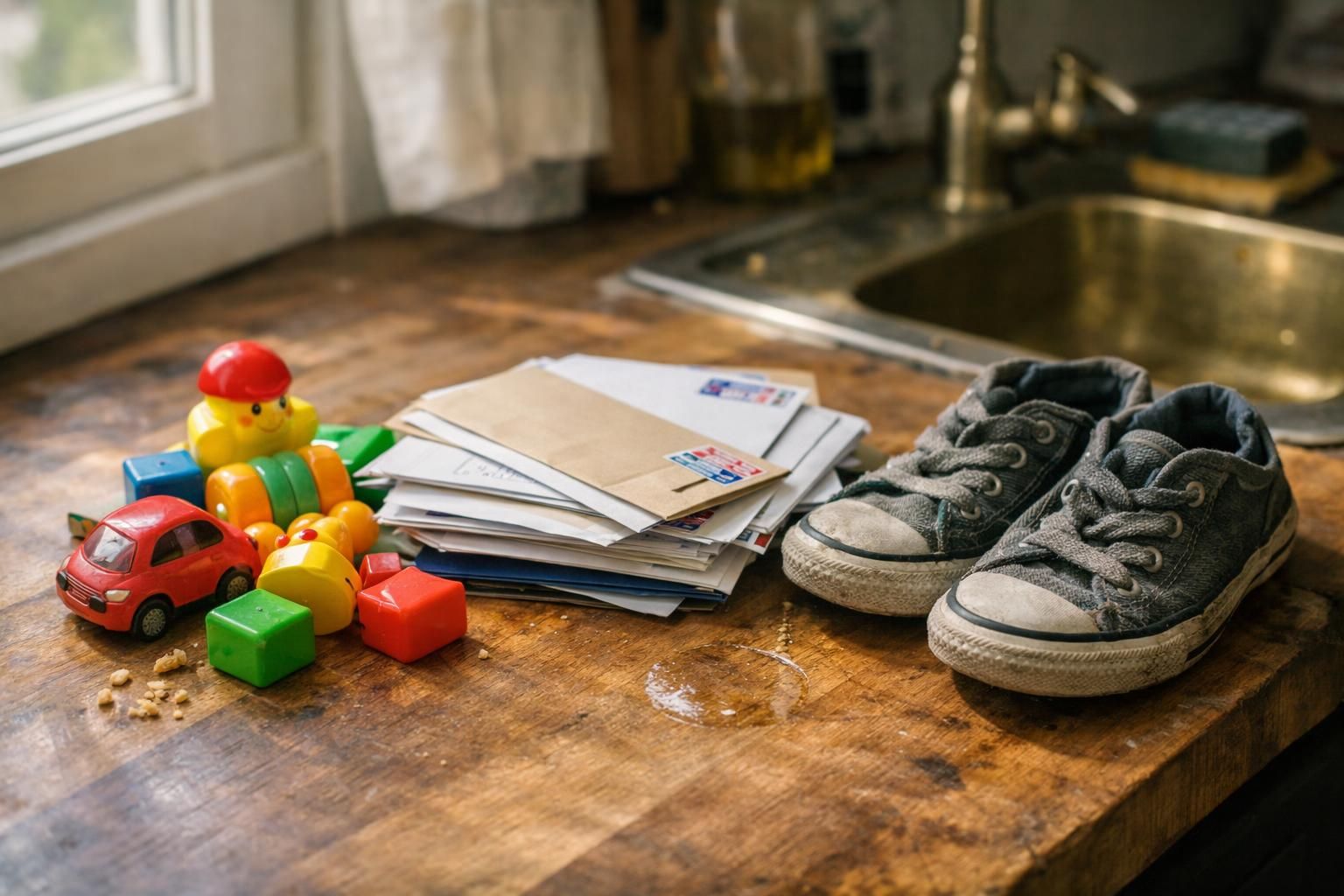
Toys on the floor, shoes by the door, and laundry piles slow everything down. Clearing surfaces first lets a microfiber cloth actually reach the dust instead of skipping around it.
Kitchen counters wipe faster when they are empty. Fewer items to move means fewer stops and restarts.
Break big rooms into zones so the job feels smaller. Parents get quicker wins in high-traffic spots like sinks and stovetops, which also helps during deep cleaning.
Cleaning services start with decluttering because less stuff traps less dirt. In kids’ rooms, sorting toys first leaves a clear path to vacuum carpets without clogs. This step makes tricky tasks like bathtub cleaning or refrigerator cleaning simpler later.

Work Top-to-Bottom and Back-to-Front
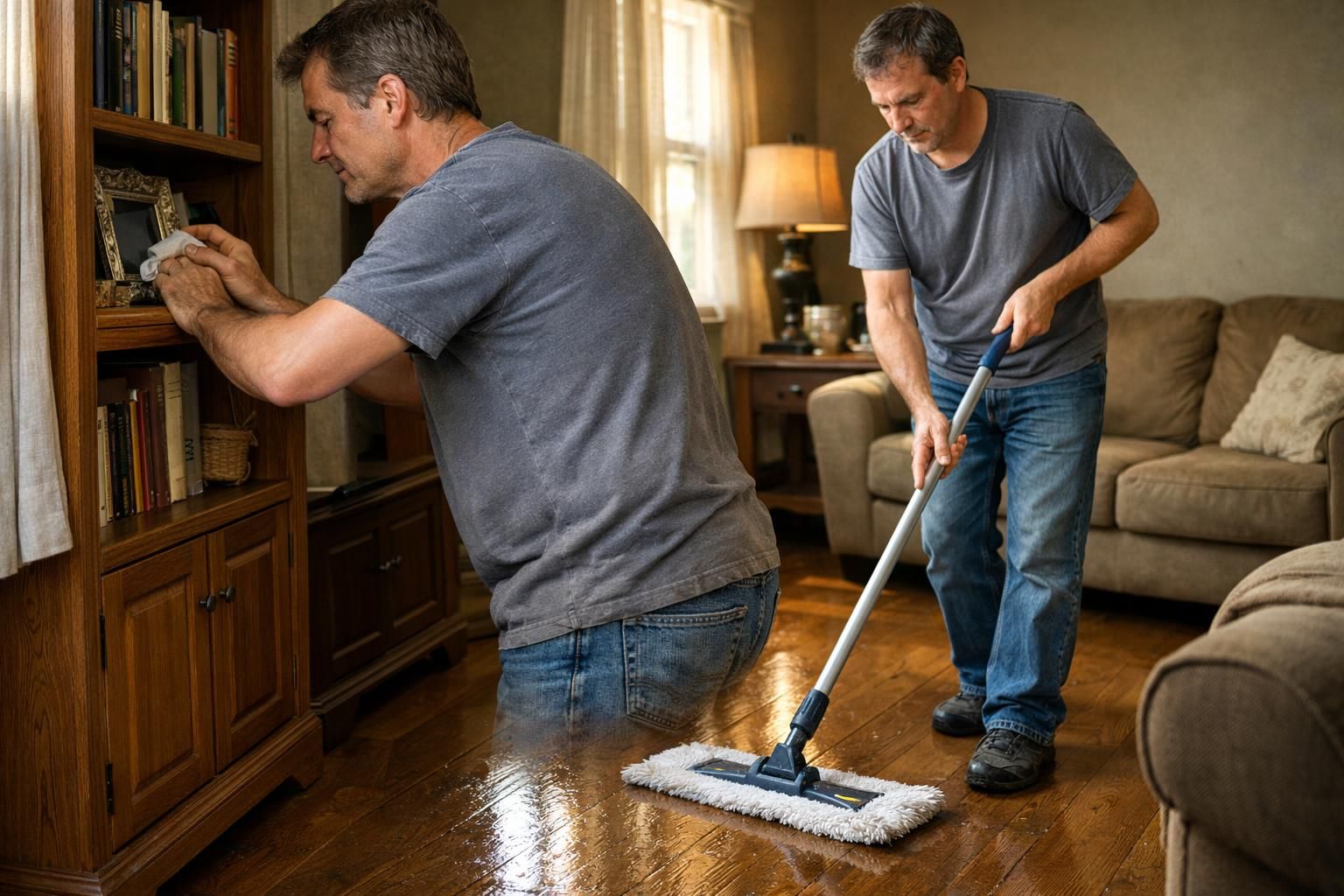
Dust ceiling fans and upper shelves first. Loose dust will fall, so hit tall bookcases and windowsills before lower tables. A microfiber cloth catches cobwebs in corners, then move down to switches and doorknobs with an all-purpose cleaner.
Work from the back of the room toward the exit. That keeps feet off vacuumed carpet and newly mopped tiles. In kitchens, clean around and behind the fridge or oven first, then move forward to the doorway.
Save floors for last. Mop from the far corner toward your exit. Rinse sections about 4 by 4 feet for a pro-level result.
Use the Right Tools and Supplies
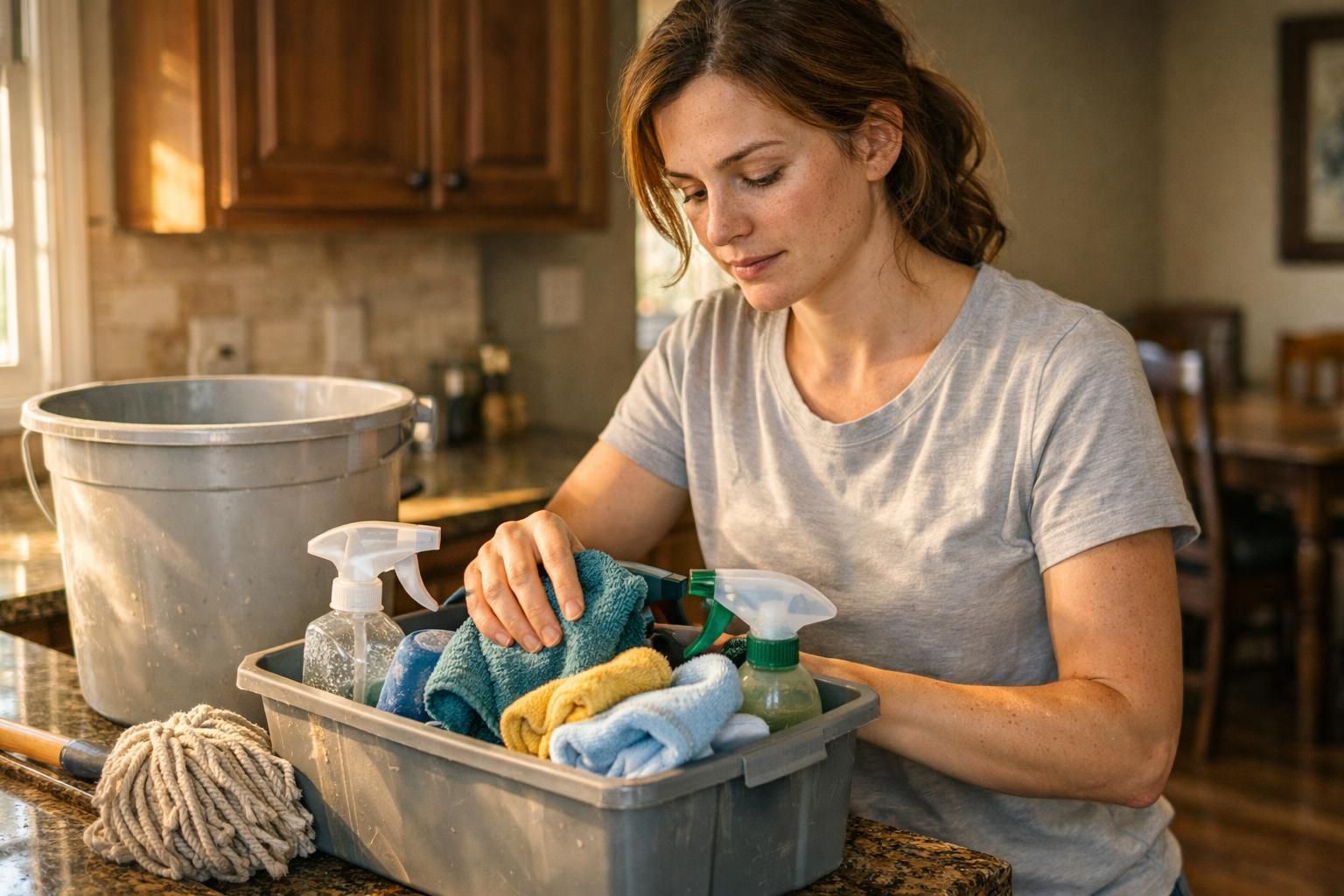
Microfiber cloths lift dust and grime from countertops, window sills, and furniture without scratches. A vacuum cleaner with a HEPA filter traps tiny particles from carpets and hard floors. HEPA means High-Efficiency Particulate Air, which helps reduce allergens.
Use floor-safe solutions on hardwood, tile, or laminate. For tubs, sinks, toilets, and grout, try sponges, baking soda paste, vinegar spray, or bleach on tough stains. Grout is the thin material between tiles.
Keep a simple cleaning caddy ready. Include: dish soap for greasy stove tops, toilet bowl cleaner, a bucket, mop, glass cleaner, spray bottles of all-purpose solution, a small squeegee for windows, towels, and an old toothbrush for tight corners or sink drains.
High-touch areas like doorknobs and light switches need frequent disinfecting. Always check appliance labels before using cleaners on screens or a gas range. Safety first, and never mix bleach with ammonia.
The Best Order to Clean Your House
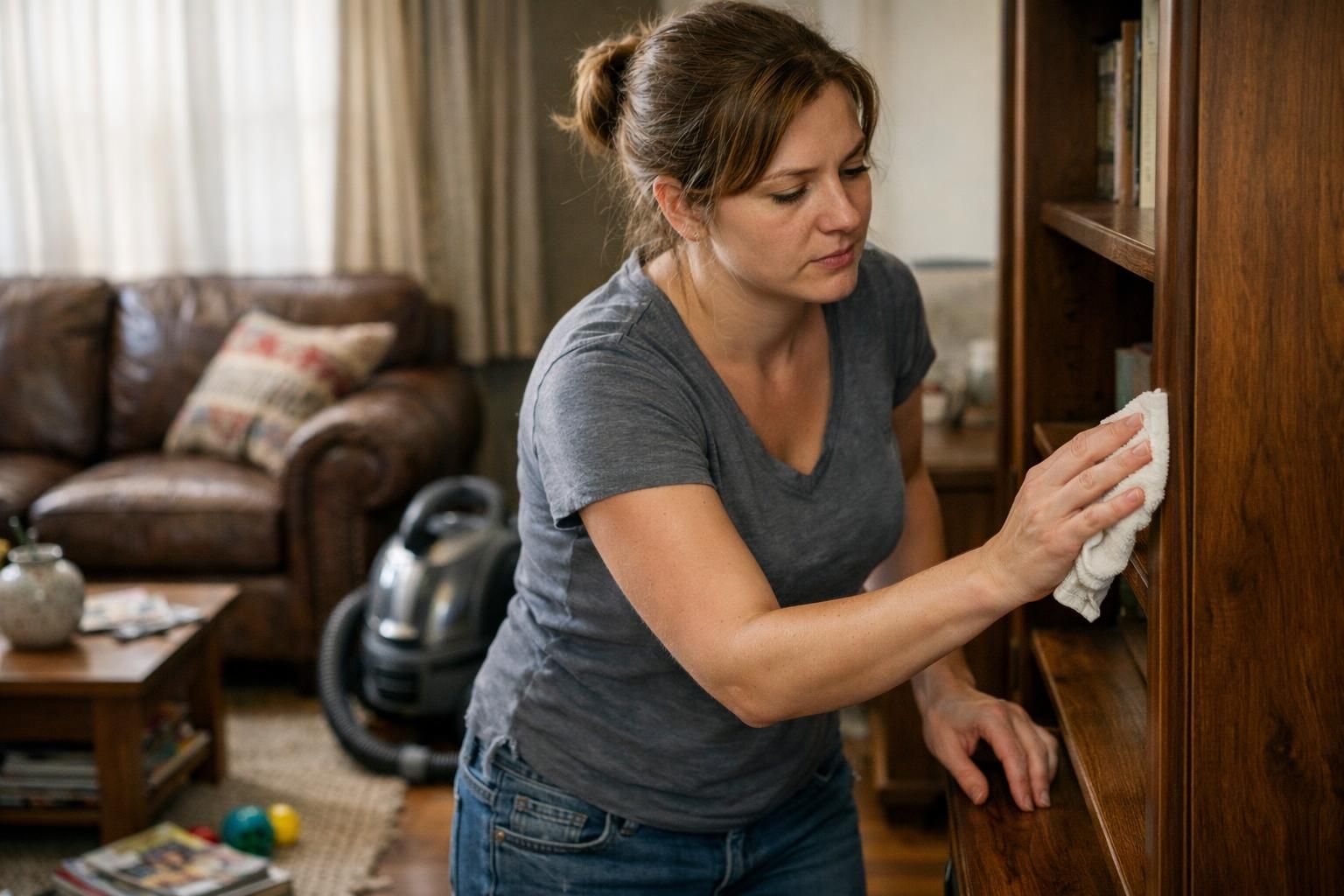
Cleaning pros swear by top to bottom, room by room. Once that rhythm clicks, cleaning feels smoother and faster.
Start with the Bathroom
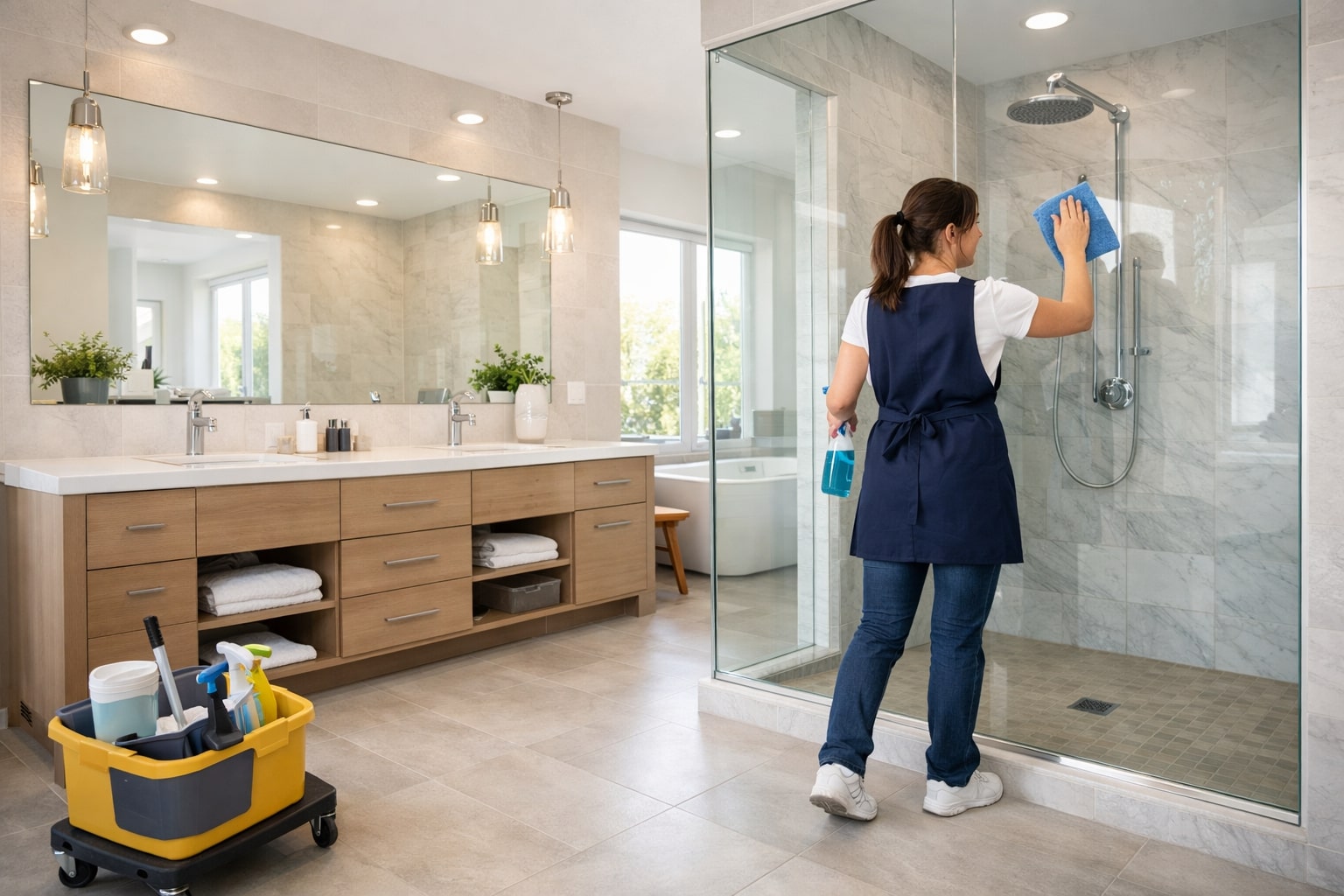
Begin with bathroom cleaning so products have time to work. Spray an all-purpose cleaner or grout cleaner on showers, tubs, and toilets first. While it soaks, wipe mirrors with glass cleaner and clear counters with a microfiber cloth.
Use a scrub brush for tile lines and tight corners. An old toothbrush reaches around faucets and along grout near the bathtub.
Disinfect the toilet bowl and handle, then hit switches and door hardware. Let cleaners sit about ten minutes when possible to cut through soap scum faster. Mop bathroom floors after all scrubbing is finished, not before.
Swap in a fresh bath mat for a quick style and comfort upgrade.
Dust and Organize High Surfaces
Next, go after high surfaces. Ceiling fans and fixtures collect thick dust if skipped for weeks. A long-handled microfiber duster knocks out cobwebs on ceilings and in corners without dragging out a step stool every five minutes.
Always go top to bottom because dust floats downward. Start with cabinet tops and shelves, then window sills and blinds. For allergy relief, use a HEPA vacuum on drapes and trim.
Finish by tidying items on high shelves. A simple left-to-right pass keeps things fast and consistent.
Clean High-Touch Areas
Disinfect doorknobs, light switches, and faucet handles. Wipe appliance handles and stair rails with a microfiber cloth and a disinfecting spray.
Phones, tablets, and remotes need careful cleaning with electronics-safe products. Cabinet pulls get touched all day, so include them too. High-traffic spots in kitchens and bathrooms may need weekly attention, sometimes daily with kids.
Hit the front of the refrigerator, microwave buttons, and dishwasher panels with glass cleaner if they are glossy. Finish this step before moving to floors.
Vacuum and Sweep Floors
Vacuum after dusting so you catch what settled. Give extra passes on high-traffic paths to grab pet hair and crumbs. Use attachments along edges and baseboards where grit hides.
On hard floors, a broom can pick up heavy bits before vacuuming. Use the upholstery tool on sofas and chairs. Do a quick pass under beds, behind doors, and under couches where dust piles up fast.
Regular vacuuming makes later deep cleaning easier because dirt does not get ground in.
Mop Hard Floors Last
After the vacuum, mop hard floors. Doing this step last prevents sticky trails from earlier scrubbing. Use an all-purpose cleaner or a surface-specific solution for tile or laminate.
Start in the far corner and work toward your exit. Rinse and mop each small section twice for a streak-free look. Let floors dry before anyone walks through to avoid prints and slips.
Store microfiber cloths and cleaning supplies right after. A single sweep of all mopping at the end saves time and keeps results sharp.
Room-by-Room Cleaning Tips
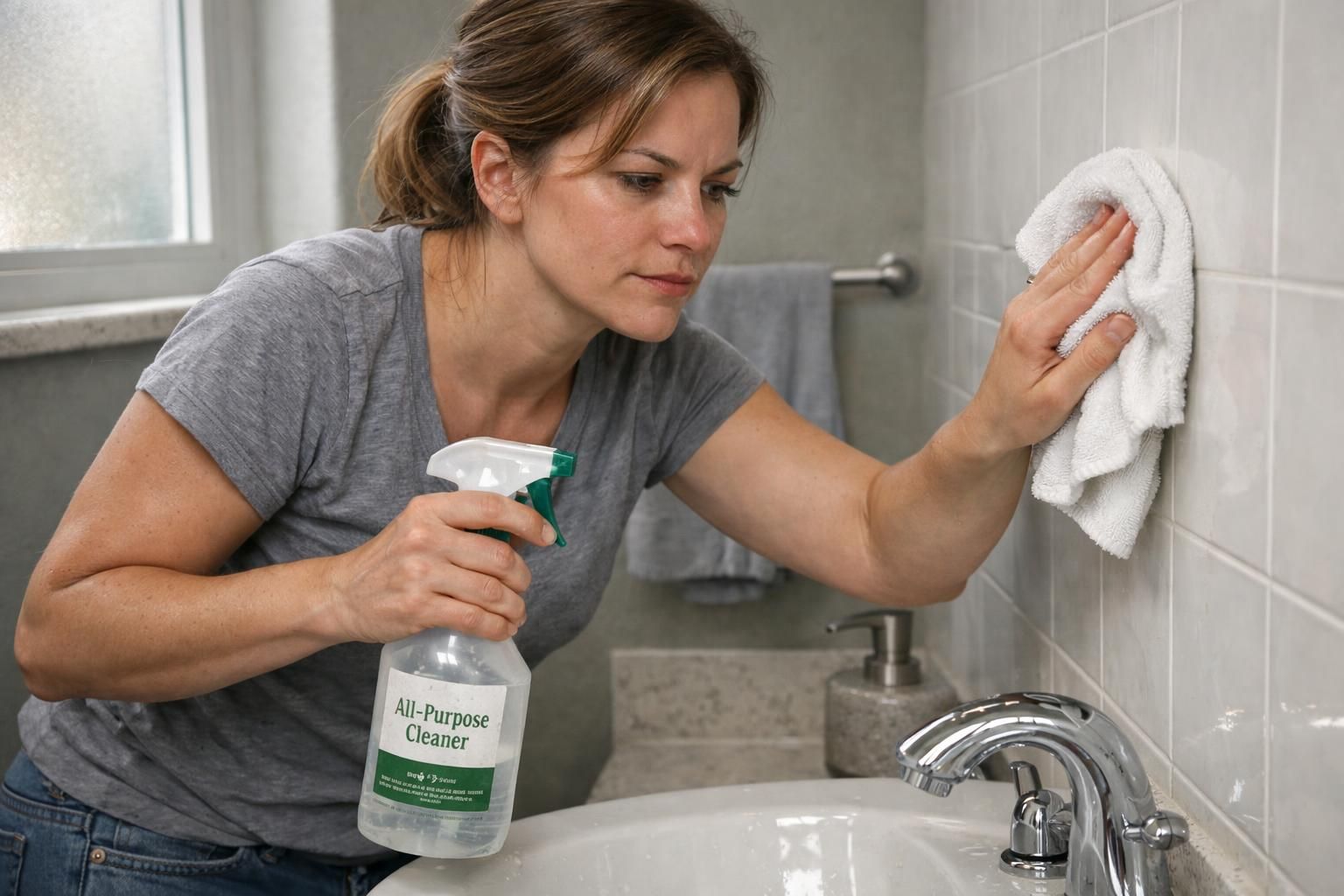
These quick tips help each space shine with the same simple tools, like microfiber cloths, an all-purpose cleaner, and glass cleaner.
Bathroom: Apply Cleaners, Scrub, and Sanitize
Spray tub and shower walls first, then let them soak while you handle mirrors. Wipe glass with glass cleaner until streaks vanish. Scrub sinks and faucets next, targeting hard water spots around the base of the handles.
Use a toothbrush and tile cleaner or baking soda paste for grout lines. Clean the toilet last with a disinfectant made for bowls, including under the rim where germs hide.
Wipe high-touch spots like handles and switches with an all-purpose spray. Mop only after surfaces are done so footprints do not come back. Good habits here keep odors down and soap scum from taking over.
Kitchen: Clean Appliances, Wipe Counters, and Scrub the Sink
Start kitchen cleaning by loading the oven hood filters into the dishwasher. Next, wipe the microwave, refrigerator, and dishwasher with products that match manufacturer guidance.
Use an all-purpose cleaner on most counters. For stainless fronts, glass cleaner or a stainless-safe spray gives a bright finish. Let oven or dishwasher cleaners sit while you do other tasks to save time.
Sanitize high-touch spots like the refrigerator handle and microwave keypad. Finish with sink cleaning after crumbs fall from other jobs. Baking soda and a soft scrub pad leave a kitchen sink fresh, without scratches.
For stuck-on mess around the burners, a small brush lifts gunk fast on both electric and gas stovetops.
Bedroom: Dust, Organize, and Make the Bed
Dust top shelves and ceiling fans first, then dressers and nightstands. A microfiber cloth keeps wood surfaces safe. Clear clutter from tabletops and drawers as you go.
Have kids toss dirty clothes in a basket while you sort books and small toys. Make the bed daily. A smooth bed sets a calm tone for the whole room.
Vacuum under the bed where dust collects. Tidy the closet weekly or monthly to stop piles from growing. These small habits keep bedroom cleaning short and sweet.
Living Room: Declutter, Dust, and Vacuum Upholstery
Pick up scattered toys, remotes, and chargers first. Use bins to corral everything quickly. Group decorations on shelves for a clean look.
Dust from the top down on shelves and furniture. Use a soft brush tool on sofas and cushions. Lift pillows and vacuum the seams so crumbs do not hide out.
Wipe window smudges with glass cleaner. Use safe sprays on wood tables. Follow maker instructions when cleaning TVs or game consoles so nothing gets damaged.
Dining Room: Wipe Surfaces and Clean Floors
Kids leave sticky fingerprints, and pets shed. Wipe tables and chairs with an all-purpose cleaner. Use glass cleaner on glossy spots if needed.
Disinfect high-touch areas like switches and chair backs. Dust and polish wood with a microfiber cloth. Vacuum crumbs or sweep the floor, then mop last for a full reset.
Spot-clean spills fast so they do not set. Clear homework piles and random bags off the table after meals.
Laundry Room: Wipe Machines and Organize Supplies
Wipe the washer and dryer front and top surfaces. A microfiber cloth with all-purpose cleaner keeps them looking new. Clean the lint trap before each load. It helps airflow and reduces fire risk.
Wash detergent drawers and dispensers often to prevent gunk. Store stain removers and softeners on open shelves or in easy bins. Disinfect handles and knobs where hands touch the most.
Clear the folding area so stacks do not take over. Sweep and mop to control dust. Deep clean machines monthly to fight odors in the washing machine drum.
Pro Tips for Faster and Better Cleaning
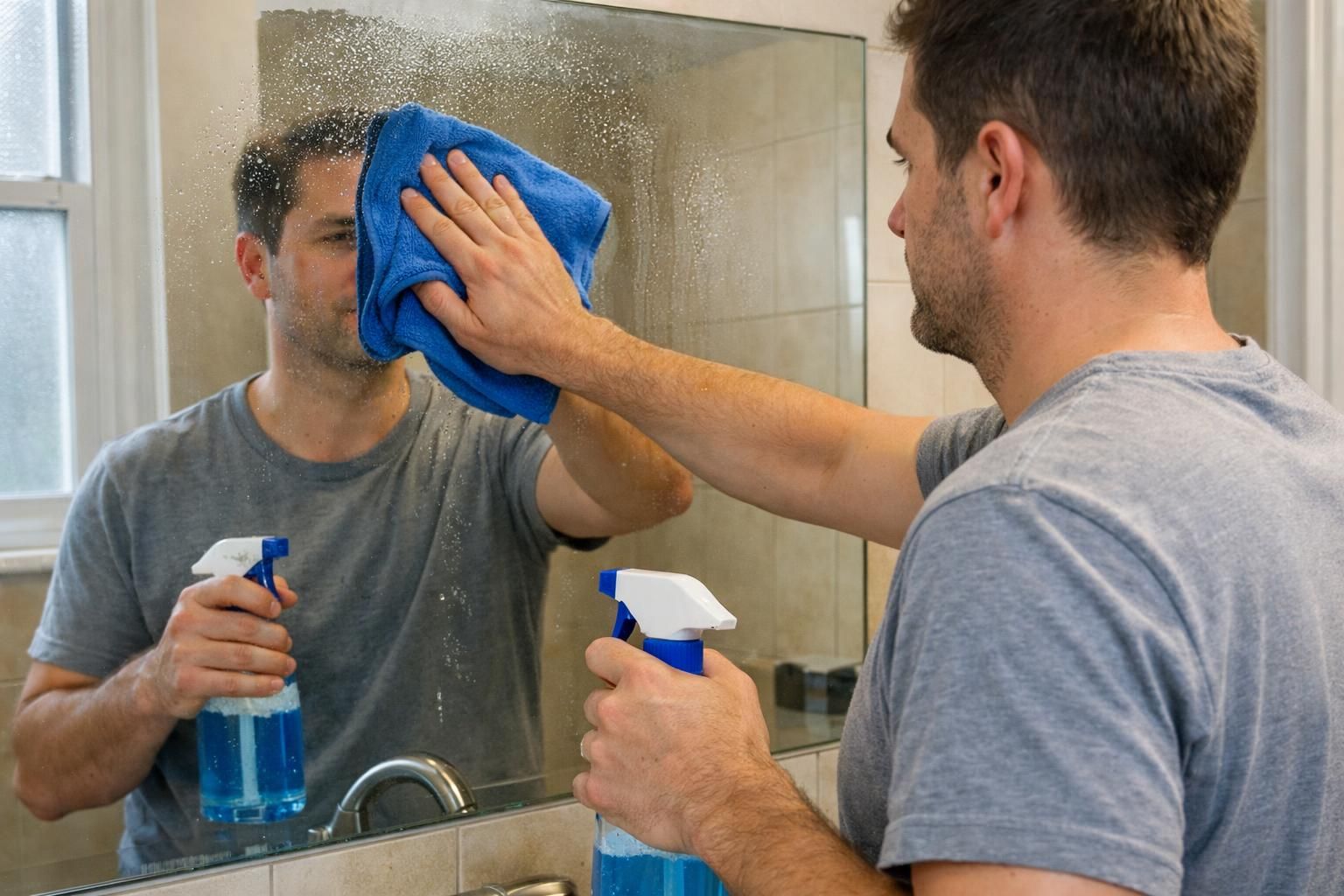
These quick moves make a massive difference. A few smart pauses, a microfiber cloth, and the right spray can save hours.
Let Cleaners Soak While You Multitask
Let grout cleaner sit on tile while you clean mirrors and the sink. Spray the tub with an all-purpose cleaner and come back five minutes later. The soak time does the hard work.
Drop greasy vent filters into the dishwasher before starting kitchen cleaning. Add toilet bowl cleaner, then wipe the counter and mirror while it works. This two-for-one approach cuts total time.
Keep rooms ventilated when using strong products. Open a window or run a fan for safety.
Tackle One Room at a Time
Work one space completely, then move on. Use a house cleaning checklist so nothing gets missed, even tight edges or grout lines. Finish each room’s sink cleaning or mirror pass before heading out.
Assign bedrooms using a simple bedroom cleaning checklist so the whole family helps. Keep supplies close to avoid trips to a cabinet in another hall.
Try a 20-minute timer per room. It keeps energy high and prevents overwhelm.
Start from the Farthest Room and Work Toward the Exit
Begin in the room farthest from the front door. Kids and pets wander, so this protects clean floors from surprise footprints.
Use this path for sweeping and mopping, especially on deep cleaning days or move-out cleans. Start with back bedrooms, then head through living areas toward the entry.
Plan your route for multi-level homes. Professionals favor this method because clean areas stay clean.
Make sure to have all your cleaning supplies ready before you start each session. Gather microfiber cloths, glass cleaner, all-purpose cleaner, grout cleaner, and a HEPA vacuum. This preparation boosts cleaning efficiency and reduces time spent on each task.
Adjusting the Order Based on Preferences
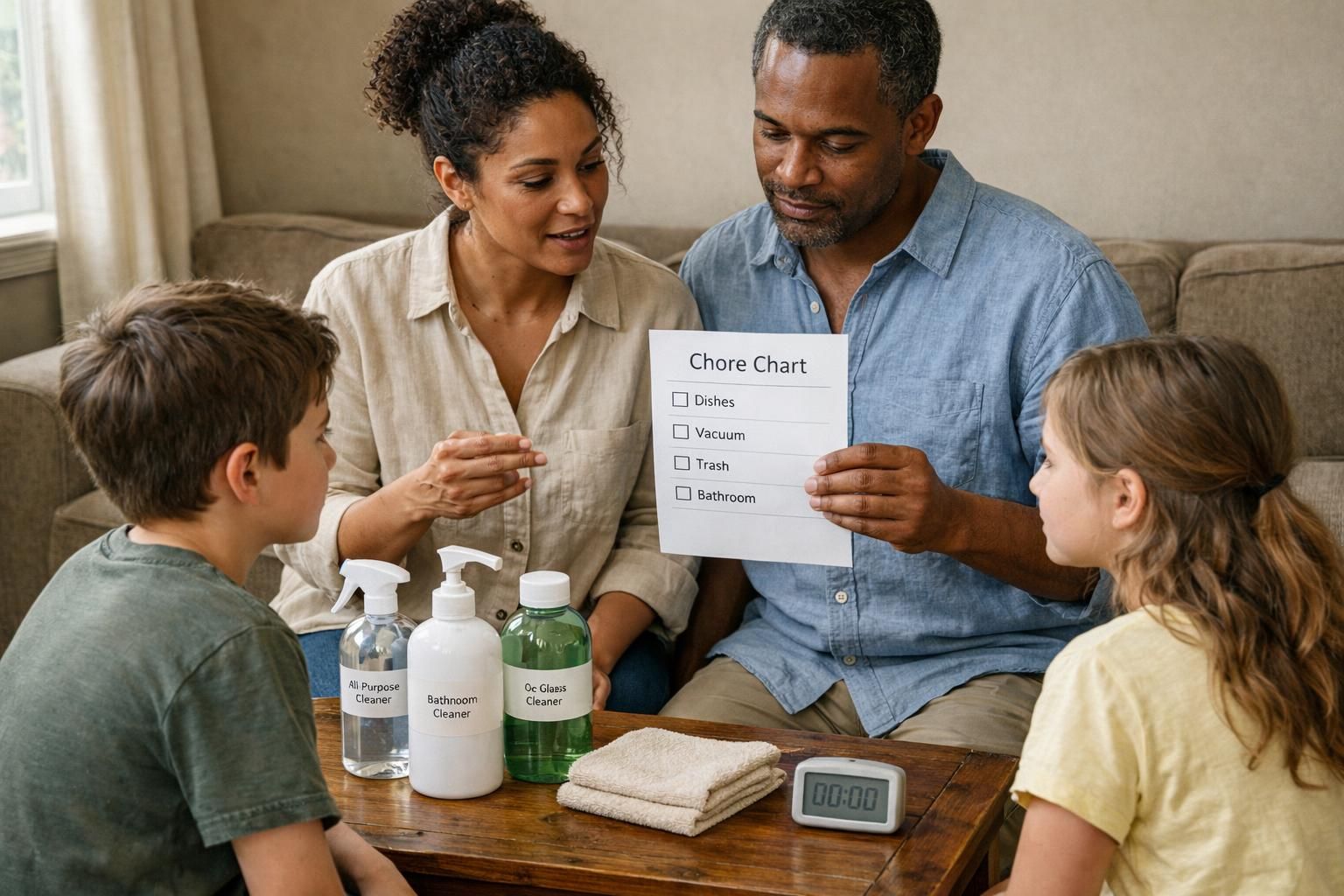
Families with kids or pets often place bathrooms first. Bustling kitchens may need more frequent wipe-downs after meals or gatherings.
Bigger households split chores so each person covers a favorite or most-used space. Someone with allergies might start with window cleaning and ceiling fans for relief.
Many swap harsh sprays for vinegar and baking soda, especially for sensitive skin. Short on time? Let grout cleaner soak while wiping counters in another room. That tiny change matters.
Deep tasks like refrigerator cleaning or dryer vent checks can be weekly or monthly, based on use. Some families assign days of the week, like bathroom Monday and kitchen Tuesday, to prevent pileups. Small tweaks reduce stress and keep the home comfortable.
How Often Should You Deep Clean?
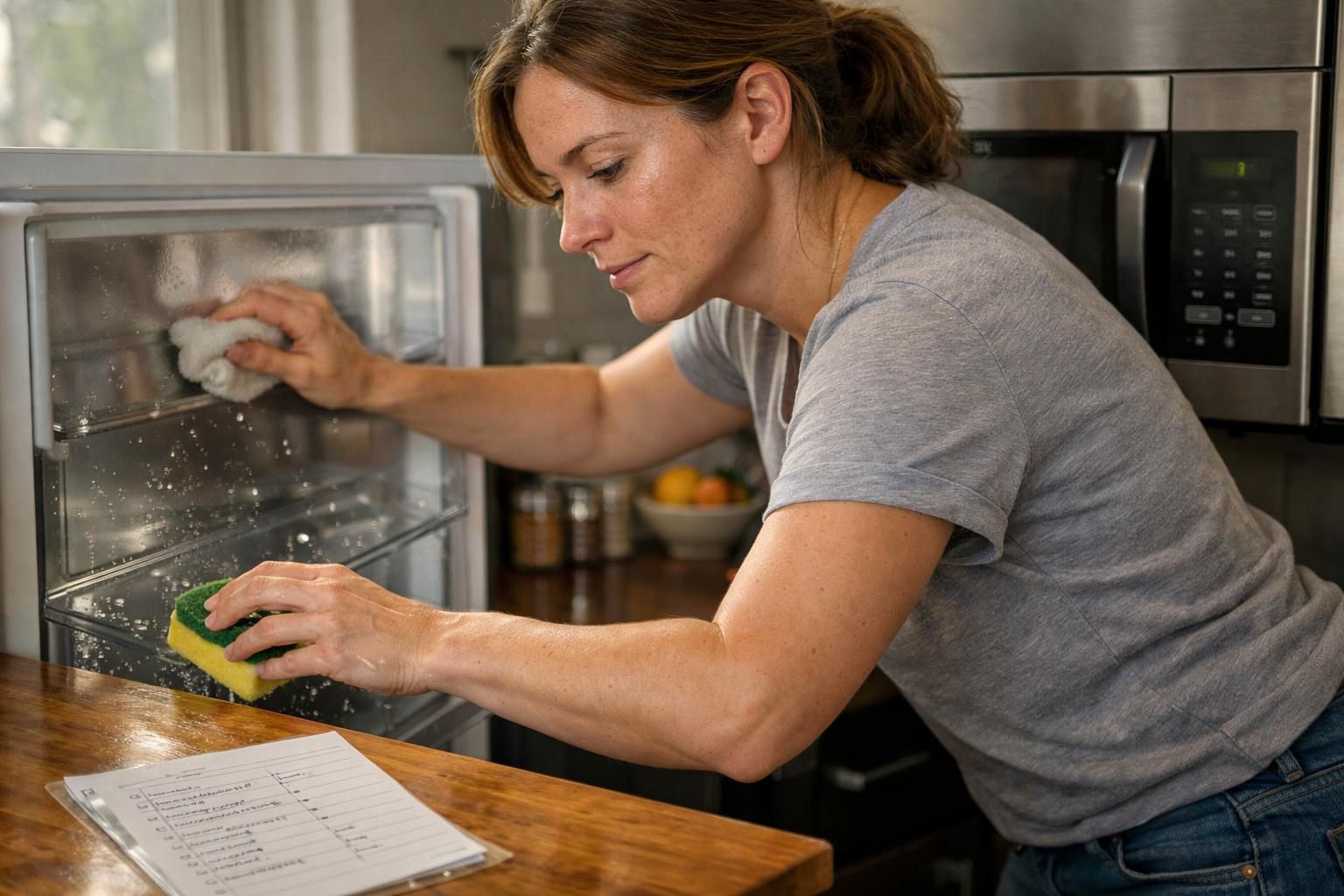
Most homes do well with a deeper clean each month. Add refrigerator cleaning, closet resets, and washing the shower curtain to that list. More frequent kitchen cleaning and bathroom cleaning keeps buildup low between those sessions.
Set monthly reminders for dishwasher cleaning and microwave cleaning. Grout cleaner sessions and window cleaning can be seasonal, or more often for allergy-prone families.
Keep a house cleaning checklist to track mopping floors, vacuuming carpets, and disinfecting high-touch spots. Moving out soon? Professional cleaning services can help meet lease standards and protect the security deposit.
Adjust timing before parties or busy weeks. Flexibility is the real secret to staying on top of it.
Conclusion
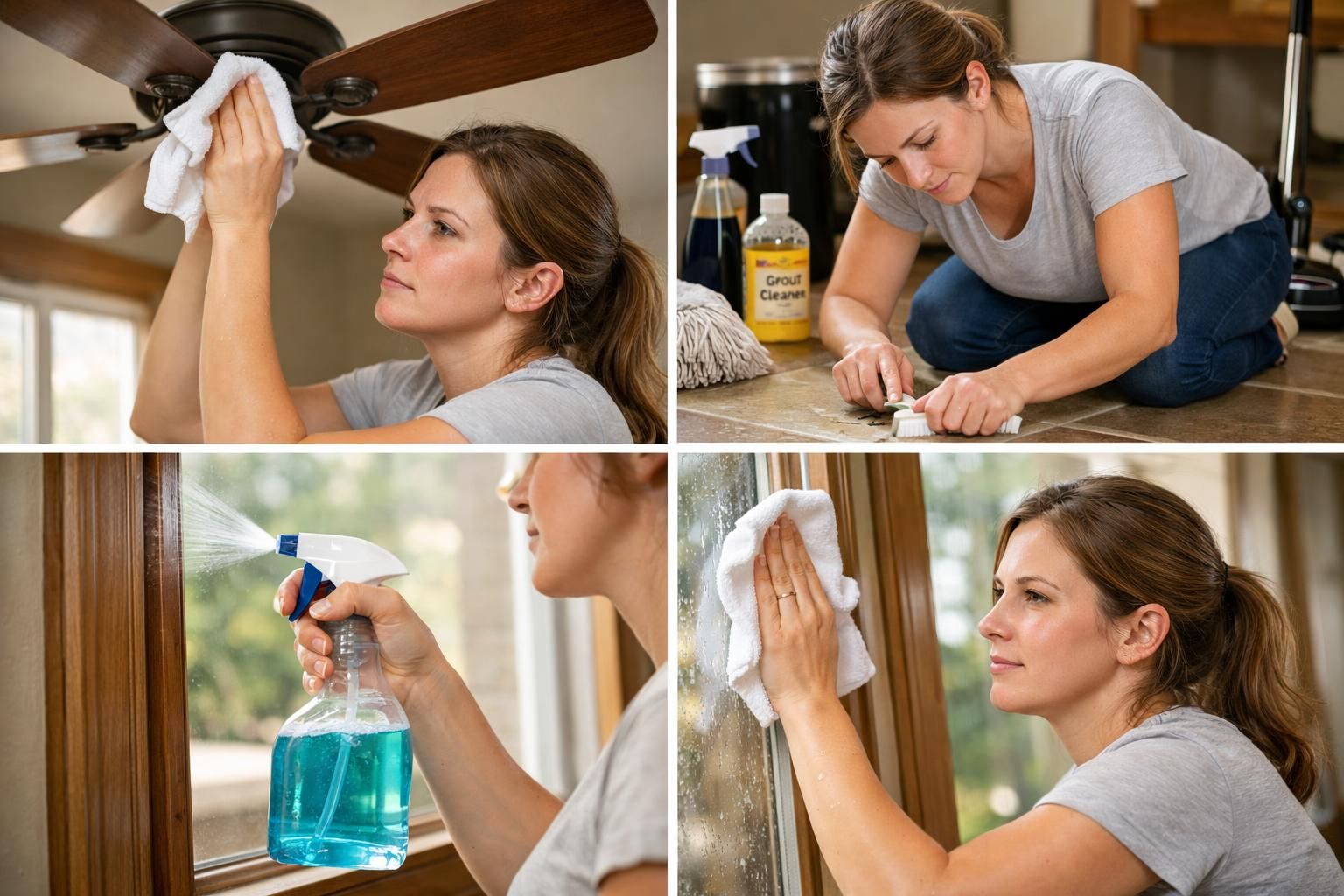
Clean from the top down, then finish with the floors. That simple cleaning order prevents repeat work. Start with bathrooms so products can soak while you move on. Use an all-purpose cleaner for most surfaces, a vacuum cleaner for carpets and rugs, and glass cleaner on mirrors and doors.
In bedrooms, making the bed anchors the space and sets a calm tone. A short house cleaning checklist keeps the family aligned and stops chores from snowballing into deep cleaning marathons.
End with one final mop pass. Work smarter, not harder. The result is a tidy home, less stress, and more free time for real life.
FAQs
1. What is the best order to clean a house for maximum efficiency?
Start at the top with ceiling fans and light fixtures. Dust before you vacuum carpets or mop floors, so debris falls down as you go. Move on to window cleaning, then tackle bedroom cleaning by making the bed and wiping surfaces with microfiber cloths.
Next, focus on kitchen cleaning; scrub stovetops, wipe counters, handle refrigerator cleaning, dishwasher cleaning, and microwave cleaning last in this space.
2. Which supplies do I need for deep cleaning every room?
Gather an all-purpose cleaner, glass cleaner for windows and mirrors, grout cleaner for tile work in bathrooms or kitchens, microfiber cloths that trap dust well without scratching surfaces, plus a vacuum built to handle carpets or hard floors.
3. How can I keep my kitchen spotless during routine cleans?
Wipe down countertops daily after meals using an all-purpose spray. Clean up spills right away so they don’t stick around like unwanted guests at a party.
4. Do professional cleaners follow checklists when tackling homes?
Yes; most professional cleaning services use detailed house-cleaning checklists covering everything from sink cleaning to bathtub cleaning and even bedroom cleaning tasks like making beds or dusting baseboards.
5. Should I call in help if chores pile up faster than dirty socks?
If life gets busy or grime wins out over elbow grease despite your best efforts maybe it’s time to call in professional cleaning services or even ask a handyman about repairs while you’re at it!