Dirty baseboards have a way of sneaking up. One quick inbox check, then boom, dust along the trim. Cleaning baseboards should not require hours of bending or sore knees.
Here is the good news. A vacuum cleaner with a soft brush, plus a microfiber cloth, removes grime fast without back pain. This guide shares home cleaning tips that cut time and effort.
Expect practical cleaning hacks, simple tools, and safe cleaning solution ideas that work. You will stop dreading deep cleaning day and keep trim bright with minimal fuss.
Key Takeaways
- Use long handles, like flat mops and microfiber cloths on a pole, to clean low trim without bending.
- Dust once a week to block dirt buildup. Many pros say this can cut monthly deep cleaning by more than half.
- Secure a cloth or dryer sheet to a broom with rubber bands or clips. This gives easy reach along walls.
- Choose gentle mixes, like vinegar and water for routine jobs, and baking soda paste for stuck-on spots.
- Avoid soaking baseboards or using abrasive pads. Too much water warps wood, and rough tools damage paint.
The Importance of Regular Baseboard Cleaning
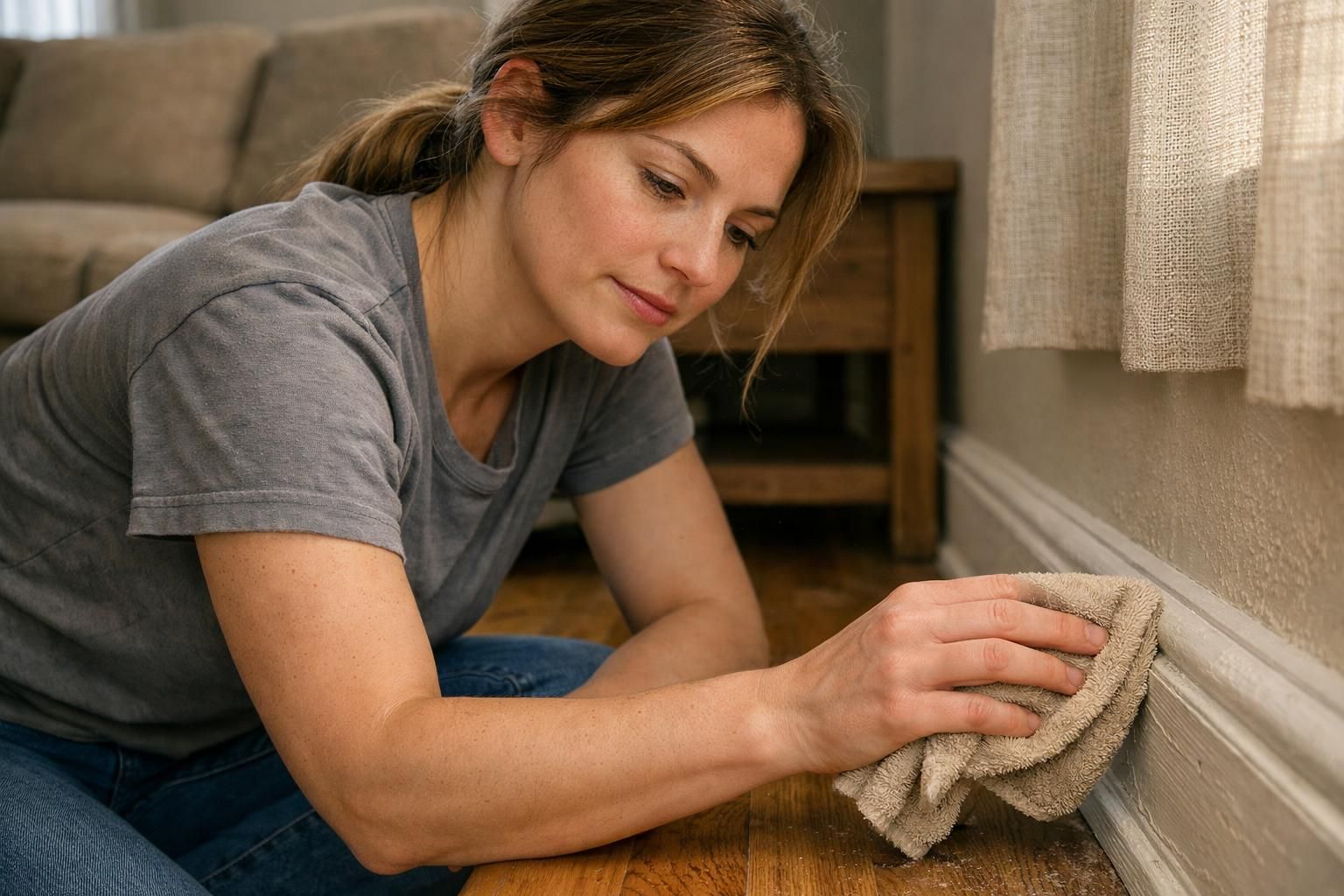
Dusty trim makes clean floors look dirty. Quick wipe downs keep edges fresh and stop grime from sticking hard.
Boosting Overall Cleanliness
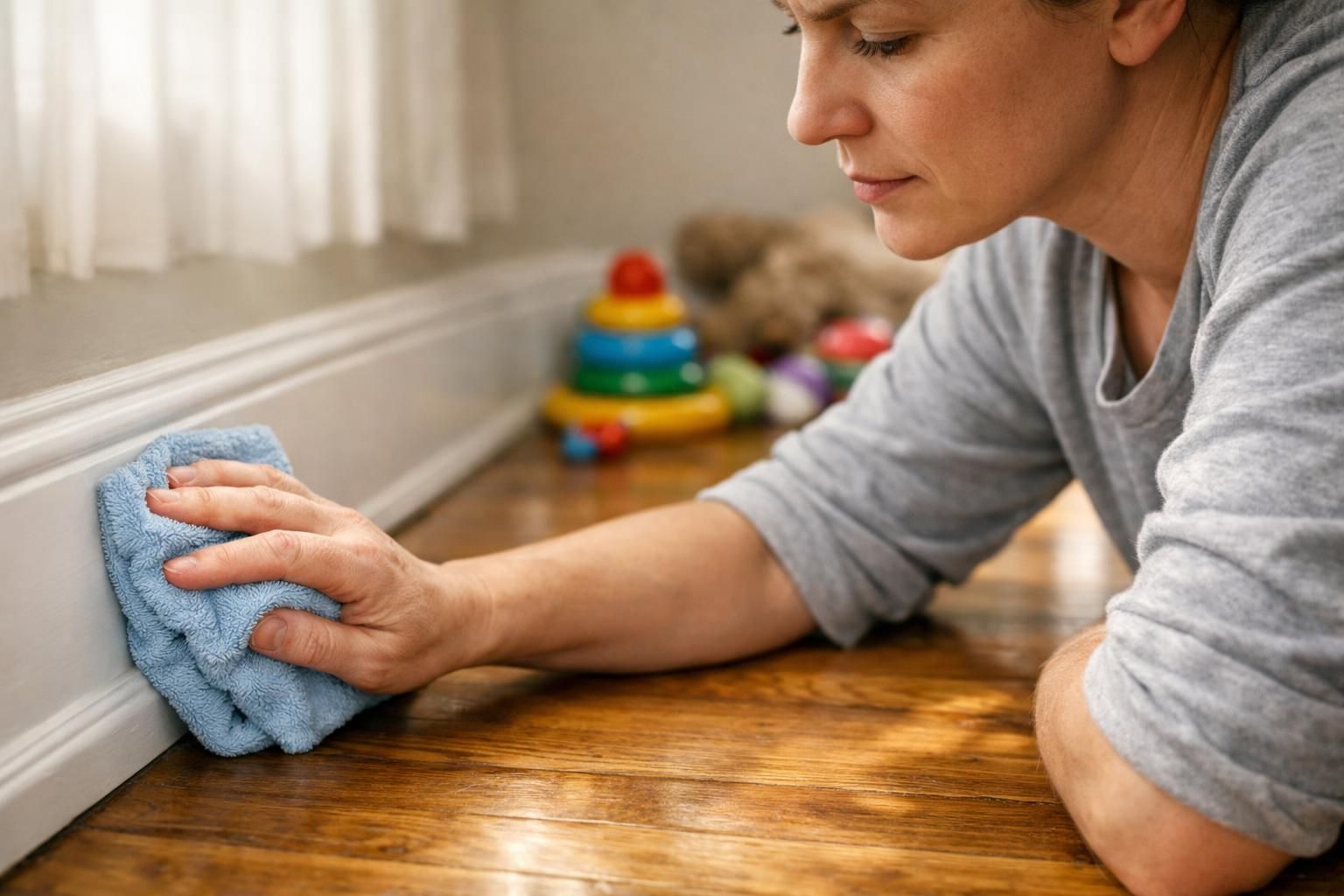
Clean baseboards support the rest of the room. Less dust on edges means fewer allergens stirred up by feet and pets. A microfiber cloth or flat mop helps parents stay upright, which makes upkeep easier in busy homes.
Clear, scuff-free trim signals a tidy space to guests. It also helps the whole room feel fresher between deep cleans.

Preventing Dust and Grime Accumulation
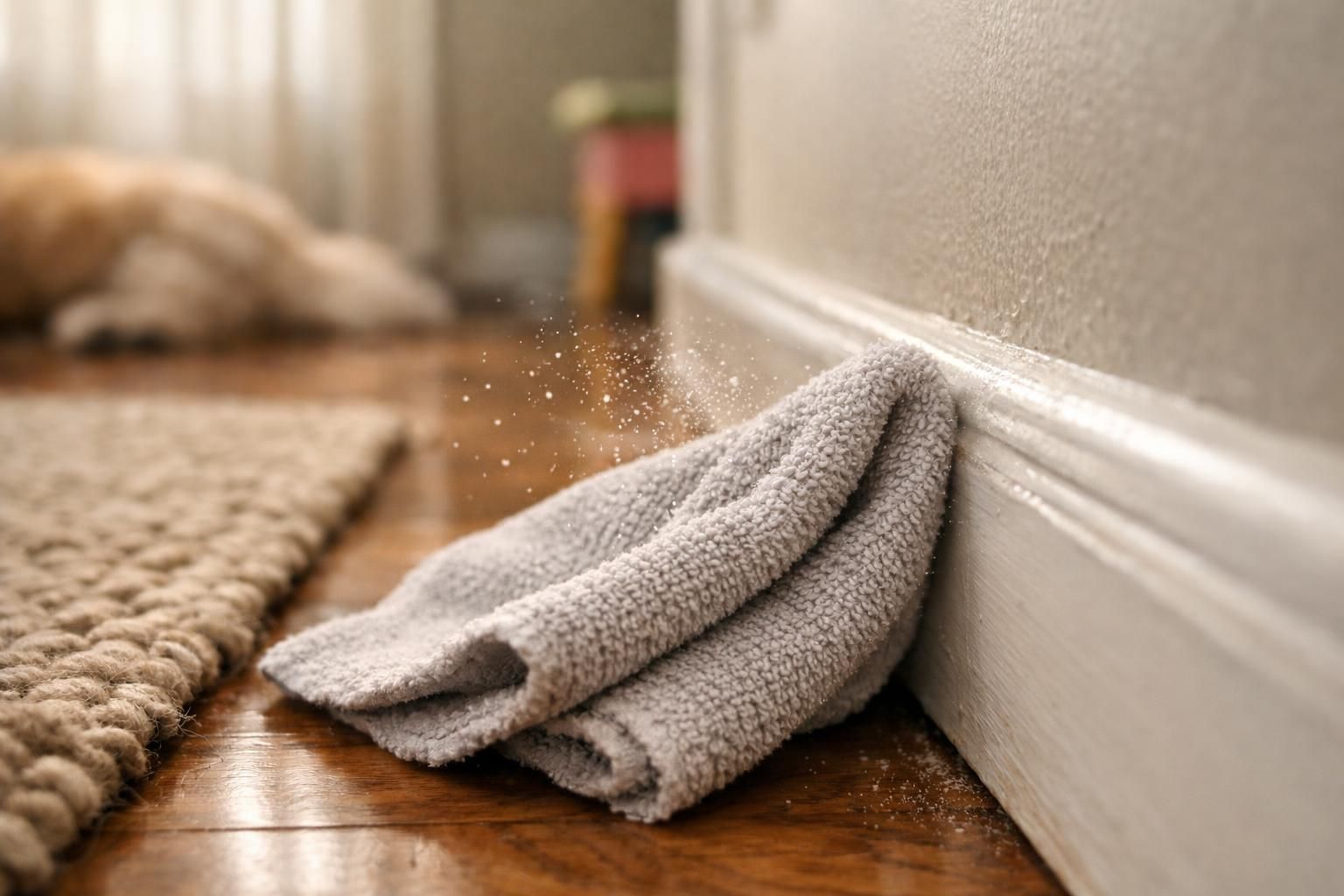
Dust loves quiet edges. Skip a week and it piles up fast, which turns a quick chore into a slog. A dry microfiber cloth or flat mop once a week stops the mess before it sticks.
Tools like rubber-banded sponges on broom handles reach every inch without kneeling. A swipe with a dryer sheet after cleaning adds a light static layer, so dust is less likely to settle again.
Essential Tools for Efficient Baseboard Cleaning
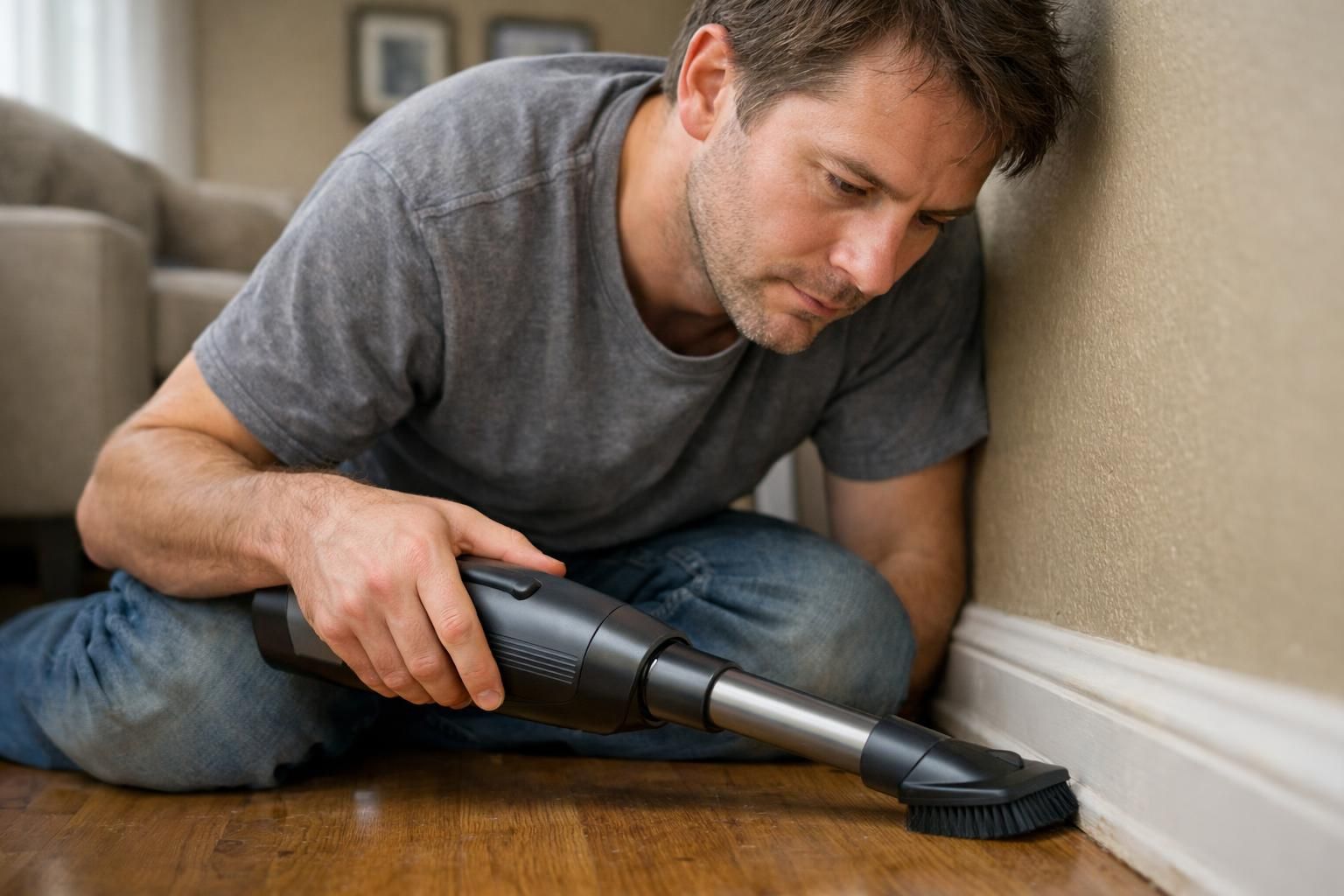
A few smart tools make baseboard cleaning faster, safer, and easier on the back.
Necessities: Microfiber Cloths and Flat Mops
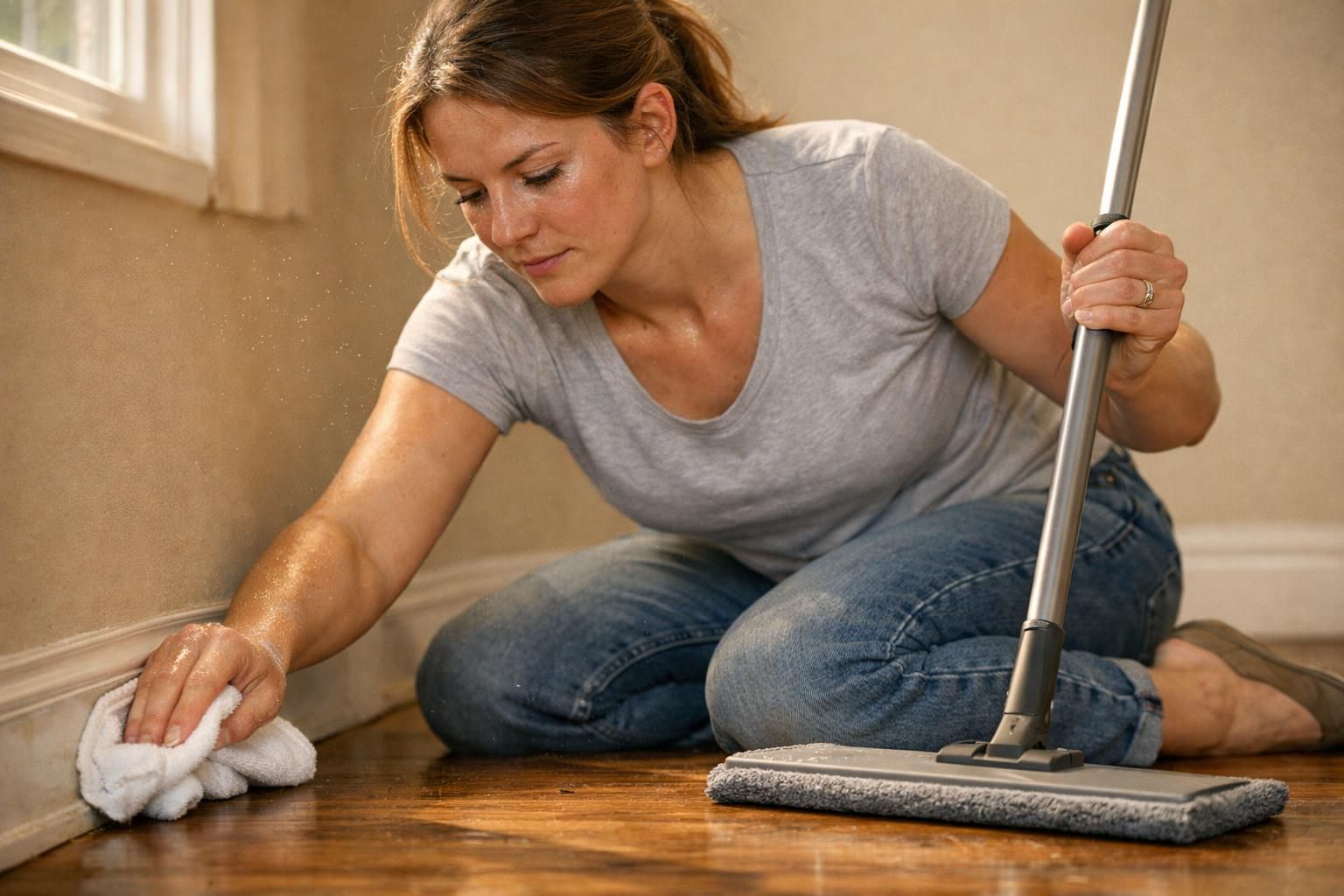
Microfiber grabs dust and hair better than paper towels. A flat mop adds reach and keeps knees off the floor. Paired together, they turn baseboard cleaning into a quick pass.
- Use microfiber cloths to trap dust, pet hair, and pollen in one swipe.
- Attach a cloth to a flat mop for standing-height cleaning along long walls.
- Secure the cloth with rubber bands or clips for a snug fit on corners.
- Lightly dampen the cloth with a gentle cleaning solution for sticky film.
- Alternate dry and damp passes to cover both loose dust and spots.
- Swap old sponges for microfiber, which holds grime without leaving lint.
- Use this combo across the house to reduce dirt buildup with less effort.
Simple gear, less strain, fewer excuses. That is the win.
Utilize Rubber Bands or Clips

Turn a regular broom into a low-trim tool. Wrap a clean cloth around the head and fix it with two thick rubber bands or firm binder clips. The cloth stays put through turns and along edges.
This trick lets anyone glide along baseboards while standing tall. Dust disappears, corners get done, and backs stay happy.
Choose the Right Cleaning Solution
A mix of white vinegar and warm water tackles everyday dirt without harming paint. For tougher marks, make a baking soda paste, which is a thick mix of soda and water that lifts grime gently. In greasy kitchens, a mild degreaser helps without harsh fumes.
Test any cleaner on a hidden spot first. A quick check protects delicate finishes. With a safe solution and a microfiber cloth, years of film loosen fast.
Now it is time to set up a quick, no-bend routine that anyone can follow.
Easy Steps to Clean Baseboards Without Bending
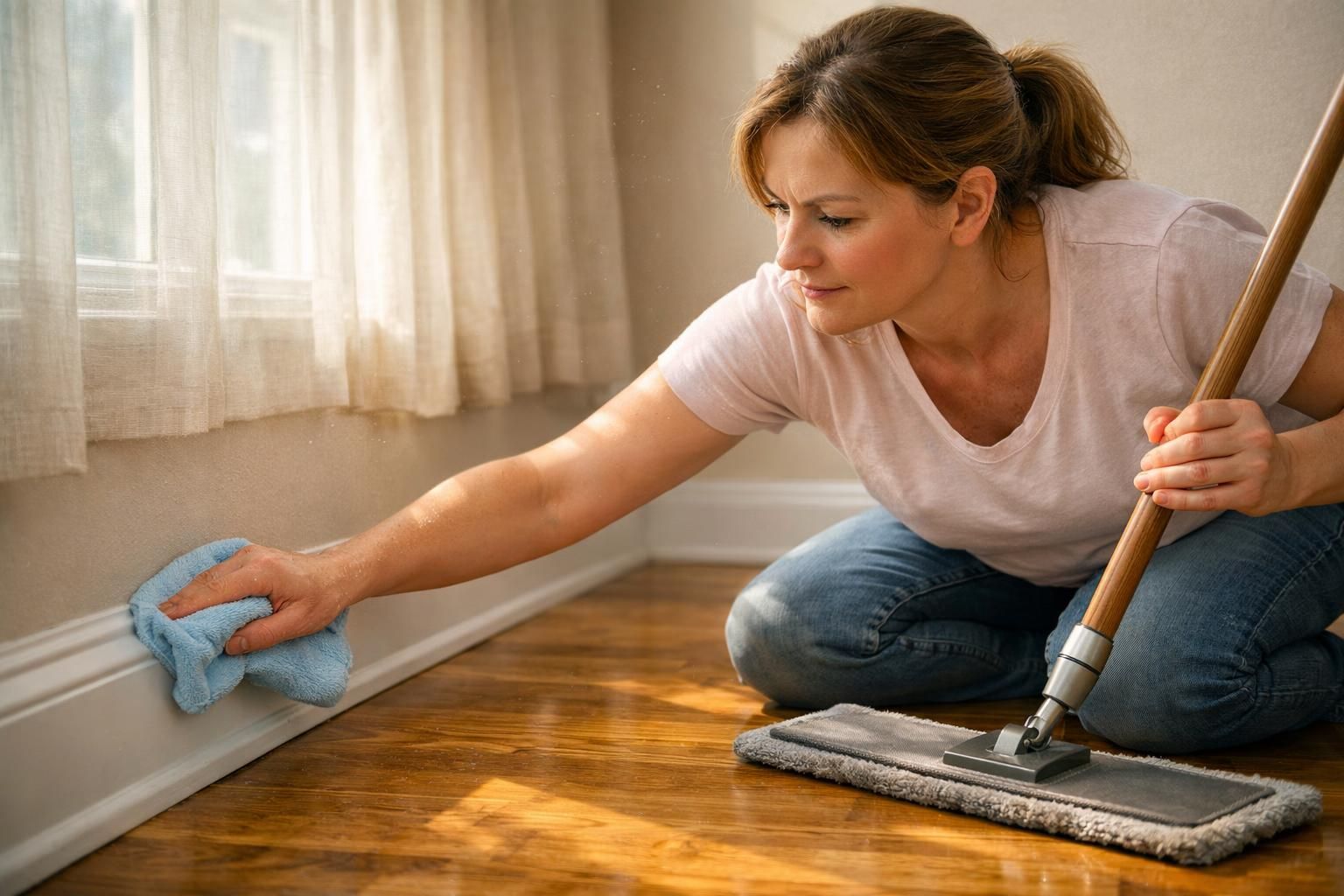
Skip knee pain. A few simple moves, plus a long handle, deliver clean edges fast.
Start with Dusting Baseboards
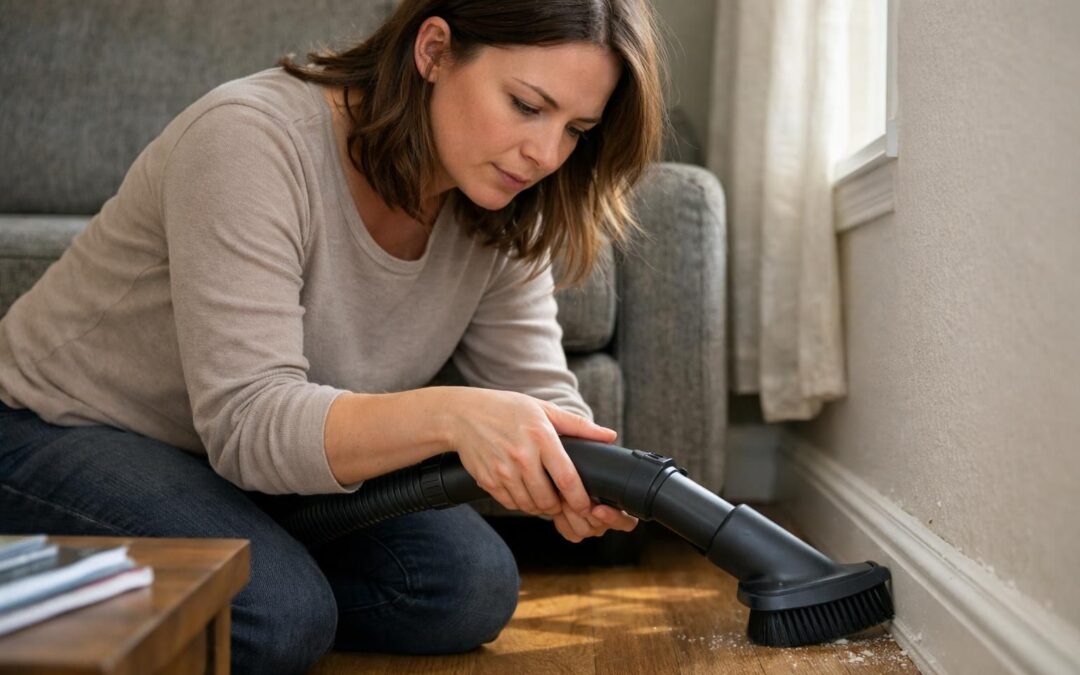
Begin with a vacuum cleaner using a brush attachment, or use a microfiber duster. A weekly pass keeps grit from sticking to paint and caulk. That saves hours later.
Families can finish rooms quickly with long-handled tools instead of crouching. Regular dusting also helps allergy sufferers by cutting the fluff that floats back into the air.
Attach and Use a Microfiber Cloth on a Broom
Wrap a damp microfiber cloth around a broom or flat mop, then secure it with rubber bands or clips. The cloth should be snug so it does not slip on corners. This setup lets kids and adults wipe while standing, which turns a chore into a short task.
Microfiber grabs pet hair and sticky dust better than old socks or paper towels. Add a light spray of cleaner for spots, then keep moving down the wall.
Wipe and Clean Using Your DIY Tool
Work in steady, overlapping strokes. Focus on edges and corners where dust hides. Rinse or swap the cloth as soon as it looks dirty, or you will smear grime instead of removing it.
Parents on tight schedules can cover a hallway in minutes. Even stubborn dirt softens with a clean, damp cloth and light pressure.
Remove Scuffs with a Melamine Sponge
A melamine sponge, often sold as a Magic Eraser, erases scuffs fast. Dampen it, squeeze well, then rub marks with a gentle touch. It lifts shoe lines, crayons, and mystery streaks without heavy scrubbing.
In 2023 tests, many rated melamine sponges about 3 out of 5 for baseboards, yet they still shine on small trouble spots. Keep one near supplies for quick fixes between cleanings.
Quick Hacks for Speedy Baseboard Cleaning
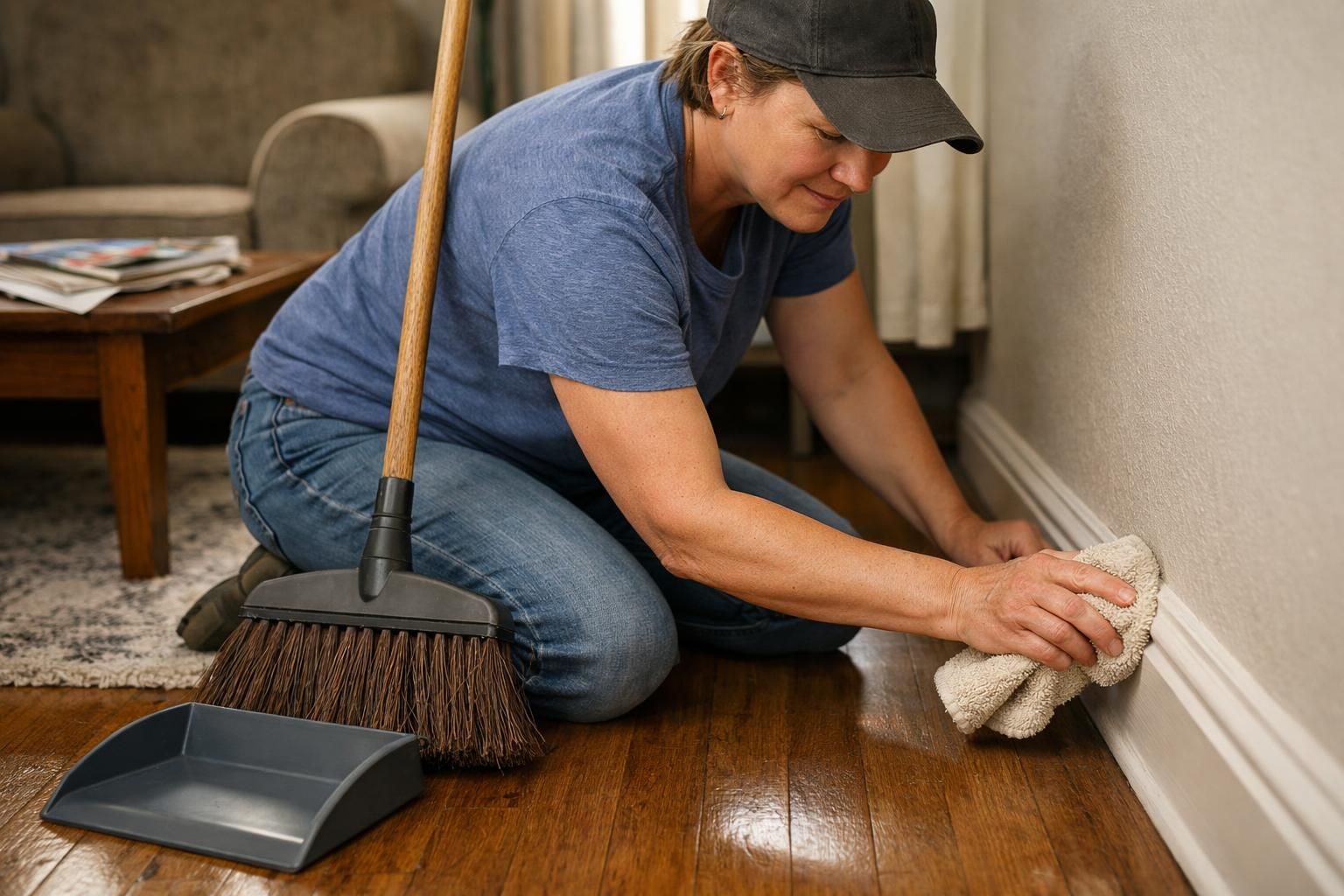
Shortcuts are welcome here. A few low-cost tweaks make routine passes quicker.
Apply Dryer Sheets to Repel Dust
Dryer sheets hold an electrostatic charge that pulls in dust. Wrap one on a flat mop or broom and swipe along the trim. The sheet lifts fine particles and leaves a light film that helps repel new dust.
Keep a few sheets in the cleaning caddy next to the microfiber cloth. Many home cleaners report this trick saves time during monthly deep cleaning cycles.
Employ Cotton Swabs for Tight Spots
Small grooves and corners trap grime that cloths miss. Dip a cotton swab in diluted vinegar or soapy water, then detail the tight spots. It works behind heater pipes and in decorative ridges.
Use the same method on window sills and outlet plates during the pass. This quick detail keeps trim looking sharp until your next deep cleaning session.
Integrate the Use of a Baseboard Buddy
After the small stuff, a Baseboard Buddy speeds up the long stretches. Its flexible head hugs the trim so the pad cleans the top, face, and edge in one swipe. That means less time per wall and fewer missed spots.
Attach a microfiber pad, spritz your cleaner onto it, and glide. Families with back issues often find it cuts total time in half.
Natural and Homemade Cleaning Mixtures
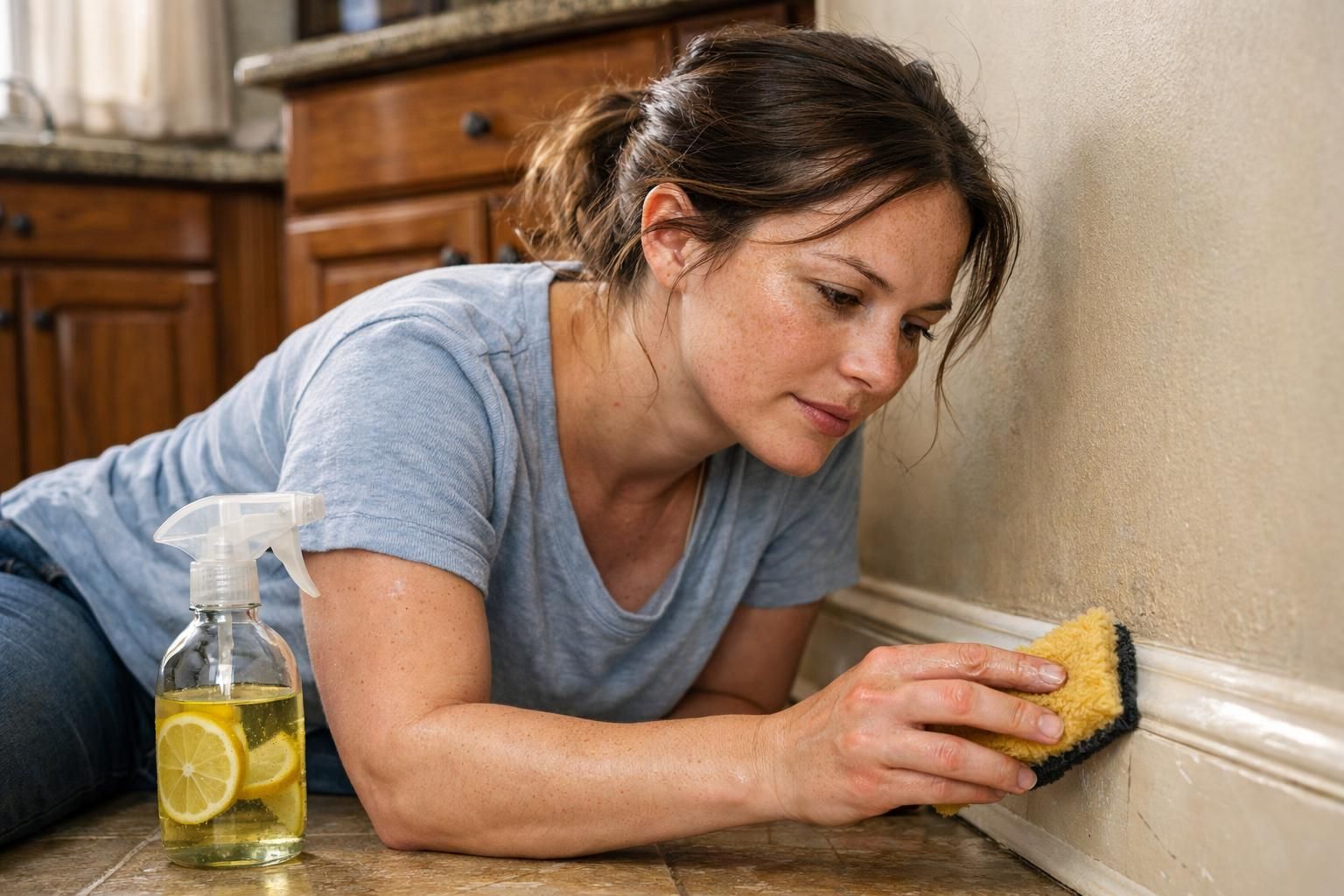
Store shelves are full of sprays, yet pantry staples often do the job for less money and fewer fumes.
Mix Vinegar with Water for a Natural Solution
Combine equal parts white vinegar and warm water in a spray bottle or bucket. Use a microfiber cloth by hand or on a flat mop. This cleaning solution cuts through light film and leaves paint looking bright.
Parents value this mix around kids and pets because it is gentle and effective. For marks from shoes or paws, spray and wipe, then follow with a dry pass.
Create a Baking Soda Paste for Tough Grime
For stubborn scuffs, mix three parts baking soda with one part water. Apply a small amount to the spot, let it sit for five minutes, then wipe with a damp cloth. The mild grit loosens grime without harsh scrubbing.
This paste is a go-to for busy homes. It clears dried spills and scuffs while protecting finishes.
Strategies to Maintain Clean Baseboards Longer
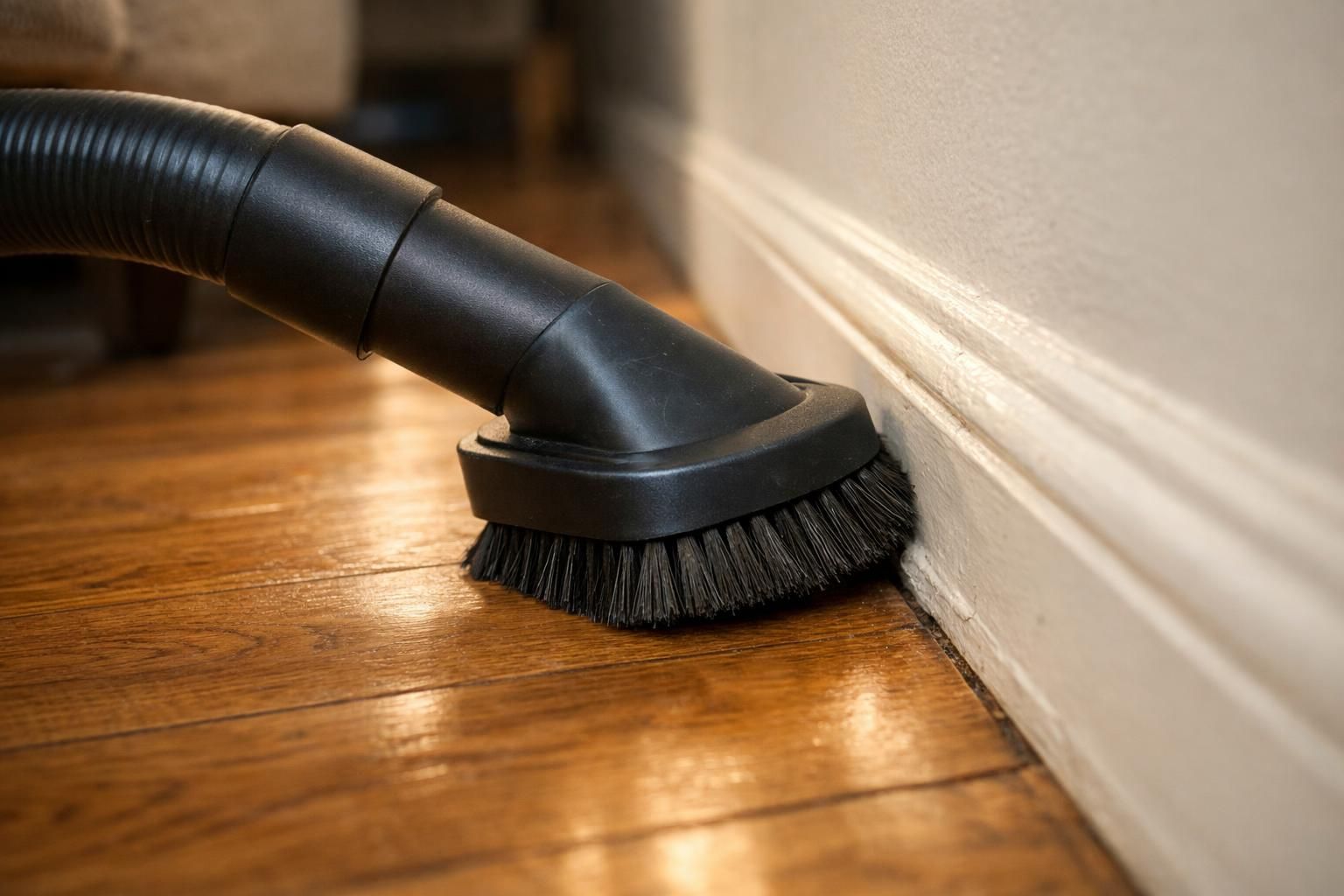
Keeping trim clean is much easier than restoring it after months of neglect. A simple schedule prevents that ground-in layer.
Implement Regular Dusting Routines
Dust once a week using a duster, vacuum brush, or cloth on a pole. Homes with kids or pets will notice fewer sneezy particles floating around. A quick standing pass keeps the job easy and short.
This habit makes future deep cleaning lighter. It also preserves paint, since less grit rubs against the surface.
Conduct Monthly Baseboard Wipe-Downs
Give each room a monthly wipe with a lightly damp microfiber cloth on a flat mop. Use long, steady strokes. High-traffic areas may need two passes for shoe marks and finger smudges.
Follow with a dry pass to remove any leftover moisture. A final swipe with a dryer sheet helps slow new dust.
Apply a Dryer Sheet Barrier to Reduce Dust Buildup
After cleaning, rub a fresh dryer sheet along the trim. The anti-static coating helps repel dust, so edges stay cleaner longer. Unscented versions work well for sensitive noses.
Paired with weekly dusting, this small step can cut the number of scrubbing sessions. Less dust landing means less dust to lift later.
Common Baseboard Cleaning Errors to Avoid
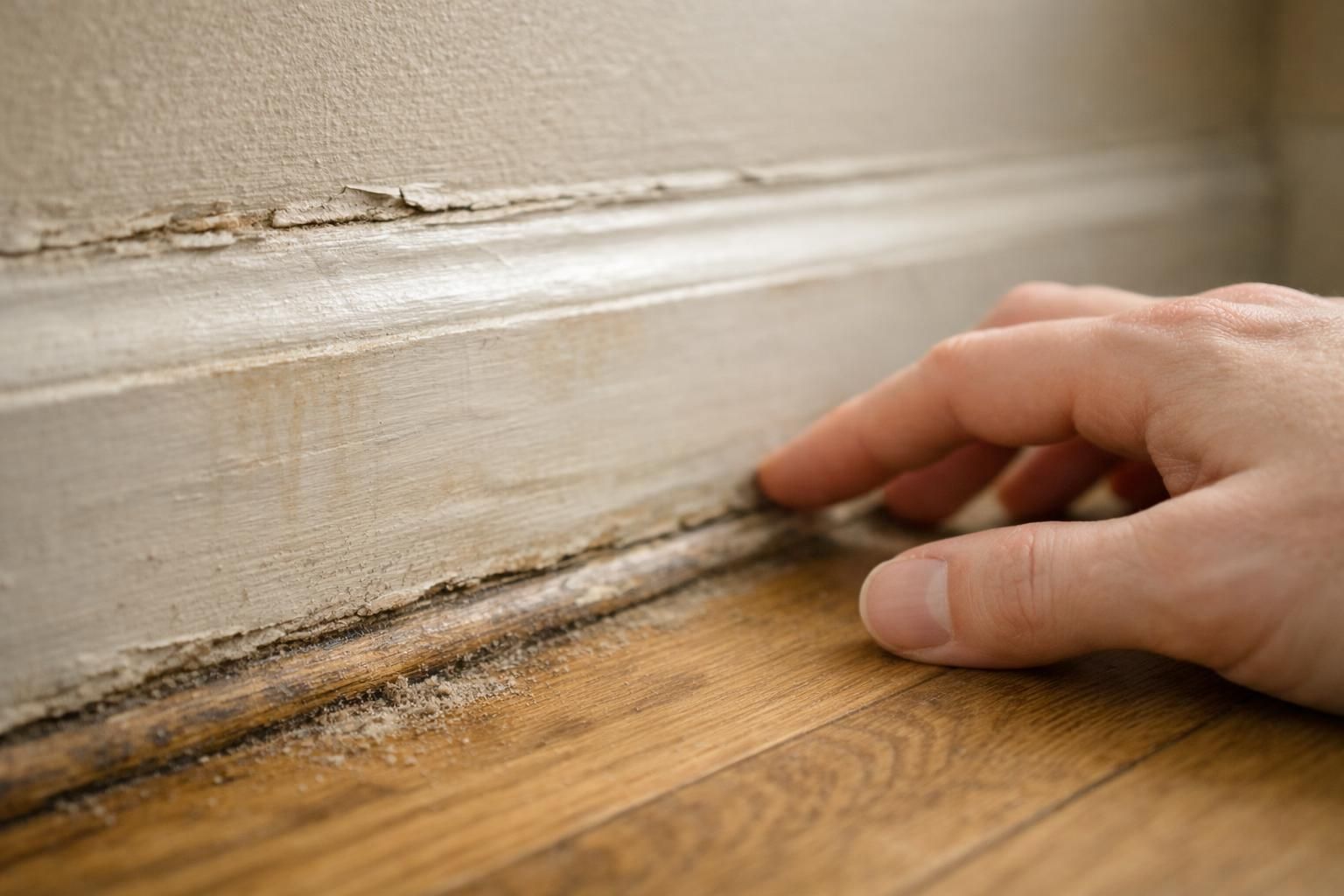
A few habits make the job harder than it needs to be. Skip these and the work stays simple.
Avoid Excessive Use of Water
Too much water seeps into wood and drywall. That can cause swelling, peeling paint, or even hidden rot. Keep cloths damp, not dripping, and wipe up any puddles in corners.
Using less water also prevents streaks. Surfaces dry faster and look better.
Skip Harsh Scrubbing with Abrasive Materials
Rough pads scratch paint and leave dull tracks that grab more dust next time. Steel wool and heavy scouring pads are overkill for trim.
Choose soft tools like microfiber cloths and melamine sponges. With the right cleaner and a gentle touch, scuffs lift without harming the finish.
Conclusion
Baseboard cleaning does not have to wreck a back or a weekend. With a vacuum cleaner, a microfiber cloth, and a gentle cleaning solution, clean trim is a fast win. Use weekly dusting, monthly wipe downs, and a dryer sheet finish to prevent heavy buildup.
Small routines beat marathon scrubbing every time.
Additional Tips and Checklist for Baseboard Maintenance
Use this checklist to keep baseboard maintenance efficient and safe:
- Dust baseboards at least once a week with a vacuum brush or microfiber duster.
- Create a no-bend cleaning tool by attaching a damp microfiber cloth to a broom or flat mop using rubber bands or clips.
- Spray a light cleaning solution such as a vinegar/water mix or dish soap solution onto the cloth for regular cleaning.
- Wipe down baseboards in steady, overlapping strokes to remove both loose dust and any sticky residue.
- Use a melamine sponge on any scuffs or tough spots, then follow with a damp cloth to remove residue.
- Conduct monthly wipe-downs to keep trim bright and reduce dirt buildup.
For different surfaces, tailor your approach: For wood baseboards, use a soft microfiber cloth with a gentle cleaning solution. For tile or painted surfaces, test any cleaning solution on a small area before regular use. Minimize water use to prevent damage.
Step-by-Step Quick Clean
- Dust first: Use your vacuum’s brush attachment or a microfiber duster to remove loose dust and cobwebs.
- Create your tool: Dampen a microfiber cloth with warm water and a few drops of dish soap or a vinegar/water solution, then wring out excess liquid.
- Attach to broom: Wrap the damp cloth around the head of a broom or flat mop and secure it with rubber bands or clips.
- Wipe down: Run the tool along the baseboards, rinsing the cloth as it gets dirty.
- Tackle scuffs: For stubborn marks, use a melamine sponge gently and then wipe clean with a damp cloth.
FAQs
1. What is the fastest way to clean baseboards without bending over for hours?
Grab a microfiber cloth and attach it to a broom or mop handle. Spray your favorite cleaning solution on the cloth, then glide it along the dirty baseboards. This method boosts cleaning efficiency and keeps you upright.
2. Can I use household items for quick baseboard maintenance?
Yes, dryer sheets work wonders for wiping away dirt buildup from baseboards. They not only pick up dust but also help repel future grime, making deep cleaning less frequent.
3. How do I keep my home’s trim clean between major house chores?
Regularly swipe your baseboard with a dry microfiber cloth during routine home cleaning sessions. This simple hack prevents stubborn dirt buildup and saves time later.
4. Are there any easy hacks if my internet browser crashes while searching for tips?
If Internet Explorer fails you mid-search, don’t panic; just grab what you have at hand like dryer sheets or an old sock sprayed with cleaner to tackle those dirty baseboards fast.
5. Do I need special products or can I checkout with just basics on my credit card?
No fancy tools needed here; most effective solutions are already in your pantry or laundry room. A basic cleaning solution and common household items will get those baseboards sparkling without breaking the price barrier or web standards of cleanliness!